In the global field of hepatocellular carcinoma (HCC) treatment, the synergistic use of targeted therapy and immunotherapy has led to breakthrough progress, significantly prolonging survival for patients with advanced disease and bringing renewed hope to countless individuals. Yet medical progress never stands still. How to further transcend existing treatment paradigms and unlock deeper survival benefits remains a persistent goal for clinicians worldwide.At ESMO 2025, the interim results of the TALENTOP study made a major impact on the HCC community. Through a rigorously designed prospective phase III clinical trial, the study not only confirmed the remarkable potential of atezolizumab plus bevacizumab as first-line therapy in the conversion treatment of advanced HCC, but—crucially—provided the first robust clinical evidence that patients initially deemed “unresectable” may achieve significant clinical benefit from surgical resection once systemic therapy renders them resectable.
This finding offers powerful validation for the concept of conversion therapy in advanced HCC and may ultimately redefine global treatment strategies for unresectable disease.
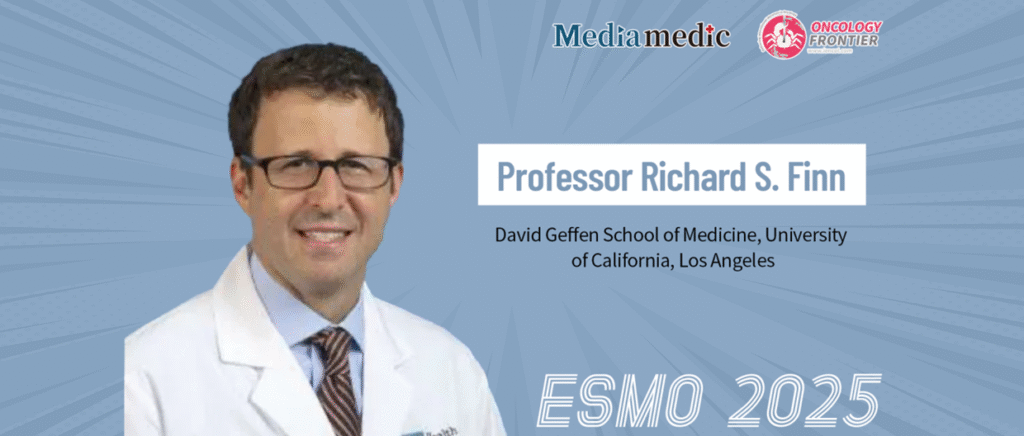
In an exclusive interview with Oncology Frontier, Richard S. Finn, a leading international authority in HCC and Professor at the David Geffen School of Medicine at UCLA, provided in-depth insights into the clinical significance and global implications of the TALENTOP study. He emphasized that this research represents not only a crystallization of Chinese clinical innovation, but also a body of evidence with universal relevance, offering valuable guidance for future guideline updates and clinical practice worldwide.
Interpreting the TALENTOP Study:
Clinical Validation of the Conversion Therapy Concept**
Oncology Frontier:
How do you interpret the interim results of the TALENTOP study presented at this year’s ESMO Congress, and what is their clinical significance?
Professor Richard S. Finn
We know that the only curative treatment for HCC is surgical resection. Unfortunately, most patients are not eligible for surgery, and even among those who undergo resection, the risk of recurrence remains substantial.
Over the past few years, there has been significant progress in systemic therapy for HCC. In my view, one of the most important breakthroughs was the IMbrave150 trial reported in 2020, which demonstrated that combining the PD-L1 antibody atezolizumab with the anti-VEGF antibody bevacizumab significantly improved overall survival compared with sorafenib alone, while also increasing objective response rates, disease control rates, and progression-free survival (PFS).
Once we have a treatment with a relatively high objective response rate, the next logical questions arise: Can this therapy be applied earlier in the disease course? And can patients who are initially considered “unresectable” due to tumor biology be converted to a resectable state after achieving tumor control or response?
This was precisely the rationale behind the TALENTOP study. The trial was conducted in China, in part because there is a larger population of potentially surgical candidates—many with hepatitis B–related HCC who are generally younger.
The study enrolled patients with macrovascular invasion but no extrahepatic spread, with vascular involvement ranging from VP1 to VP4—features that are typically considered unresectable. Standard treatment consisted of atezolizumab plus bevacizumab. Eligible patients first received three cycles of atezolizumab plus bevacizumab, followed by one cycle of atezolizumab monotherapy, after which tumor control was assessed. Patients achieving partial response (PR) or stable disease (SD) were then randomized to either a “surgery plus maintenance therapy” group or a group that continued atezolizumab plus bevacizumab alone.
Based on the currently available data, time to treatment failure (TTF)—defined as the time from randomization to first documentation of treatment failure (local recurrence or progression, extrahepatic metastasis, or death)—was significantly improved in patients who underwent surgery compared with those who continued systemic therapy alone.
This finding has multiple important implications. First, it suggests that a subset of patients with vascular invasion who are initially unresectable may become candidates for surgical resection after achieving good tumor control with atezolizumab plus bevacizumab. Second, it raises the critical question of whether these patients may ultimately be cured. We are still awaiting mature overall survival (OS) data to answer this definitively.
Conceptually, however, the idea that systemic therapy can convert previously incurable patients into potentially curable ones is highly disruptive—in a positive sense—because in the history of HCC, we have never had systemic agents this effective.
Many colleagues are eager to see longer-term follow-up data, particularly pathological findings from resected specimens, such as residual tumor burden or improvements in microvascular invasion. Even in the absence of these details at present, I believe the concept of conversion therapy (or stage migration) deserves focused attention. For patients initially deemed unresectable but who respond well to treatment, their cases should be repeatedly re-evaluated in multidisciplinary team (MDT) discussions together with surgical colleagues to assess resectability.
It is important to note that this study began several years ago, and the data presented thus far represent an interim analysis. Longer follow-up is still required.
Implications for Western Practice and Future Research Directions
Oncology Frontier:
How do you see the prospects of applying the conversion therapy model to unresectable HCC patients in Europe and North America? Are there plans for similar prospective studies focusing on conversion therapy?
Professor Richard S. Finn
In Western populations, the proportion of patients who can undergo surgical resection is generally lower—not only because of tumor burden, but also because many patients have significant underlying liver disease, such as cirrhosis.
That said, there is a subset of patients who may be physiologically fit for surgery in terms of liver reserve and performance status, yet are considered unresectable from an oncologic standpoint due to tumor extent. Even in Western countries, if such patients demonstrate a strong response to atezolizumab plus bevacizumab, they should be considered candidates for potentially curative surgery.
Therefore, while the applicability of this approach may be broader in China, the concept of neoadjuvant therapy followed by surgery and postoperative maintenance or adjuvant therapy has already been validated in other malignancies, particularly melanoma.
This leads to several key concepts: First, conversion from unresectable to resectable disease. Second, the importance of immunotherapy in both preoperative and postoperative settings.
There are ongoing studies exploring these strategies. Importantly, this treatment paradigm also opens the door to deeper investigation of tumor biology and biomarkers, as tissue samples are available for analysis, and circulating tumor DNA (ctDNA) is an area of intense interest in HCC research.
We look forward to additional data, but based on the TALENTOP results to date, we find the findings extremely encouraging.
Beyond the Limits of Resectability:
Potential to Transform HCC Treatment Guidelines**
Oncology Frontier:
Do you believe the TALENTOP study will drive changes in advanced HCC treatment strategies? Could future international guidelines be updated based on these findings?
Professor Richard S. Finn
Will this change our clinical practice? I believe it supports a notion that many of us have long suspected but lacked definitive evidence to confirm—that for patients who respond well to systemic therapy, more definitive, potentially curative strategies should be considered, rather than relying indefinitely on drug therapy alone.
In the long term, as more mature follow-up data become available, these conclusions may well be incorporated into clinical guidelines. That said, guideline development typically requires higher levels of evidence than a single study from one region.
Nonetheless, this work will undoubtedly stimulate extensive discussion within MDT forums. More importantly, it is essential that these data be disseminated broadly across the medical community, as they provide strong empirical support for a treatment philosophy that many believed to be correct: patients initially classified as unresectable who achieve meaningful responses to systemic therapy can be reconsidered for curative surgery, followed by maintenance treatment.
We are truly living in an exciting era—systemic therapy advances in HCC are continually pushing boundaries and offering more patients the possibility of cure.