For patients with locally advanced head and neck squamous cell carcinoma (LA-HNSCC) at high postoperative risk, the standard of adjuvant concurrent chemoradiotherapy (CRT) has remained unchanged since 2004—despite persistent rates of recurrence and metastasis. Recently, the NIVOPOST-OP trial, led by Yungang Tao of Gustave Roussy Cancer Center, was published in The Lancet, delivering the first definitive breakthrough in nearly 20 years.By integrating nivolumab with standard postoperative CRT, the trial significantly improved 3-year disease-free survival (DFS) to 63%, establishing a new global benchmark for adjuvant treatment in high-risk resected HNSCC. Importantly, this strategy offers a pathology-driven, precision adjuvant paradigm that is highly applicable to Chinese patients and complementary to neoadjuvant approaches commonly used in China.
Oncology Frontier invited Professor Tao for an in-depth discussion on the clinical impact of NIVOPOST-OP, its relevance to Chinese practice, and the next frontier of multimodal immunotherapy combinations in HNSCC.
Q1: How Will the NIVOPOST-OP Trial Reshape the Treatment Landscape for Resectable LA-HNSCC?
Professor Yungang Tao: The GORTEC 2018-01 / NIVOPOST-OP trial, initiated by the French Head and Neck Oncology Research Group (GORTEC), represents a watershed moment in postoperative management of high-risk HNSCC. Following its plenary presentation at ASCO and subsequent publication in The Lancet, this Phase III, international, multicenter trial enrolled 680 patients with resected high-risk HNSCC across Europe.
The study evaluated whether adding nivolumab, a PD-1 inhibitor, to standard postoperative CRT (cisplatin plus radiotherapy) could improve outcomes. The results were unequivocally positive:
- 3-year DFS increased from 52% to 63%
- The primary endpoint was met with high clinical and statistical significance
To put this into perspective, since postoperative CRT became standard in 2004, numerous global trials failed to surpass this benchmark. NIVOPOST-OP is therefore the most meaningful advance in two decades for this patient population.
Crucially, the safety profile remained manageable, with no unexpected toxicity or compromise in treatment tolerance. Given the clear efficacy–safety balance, I firmly believe NIVOPOST-OP will change routine clinical practice and should be rapidly incorporated into NCCN, ESMO, and CSCO guidelines, fundamentally reshaping global standards of care for high-risk postoperative HNSCC.
Q2: How Should Chinese Clinicians Apply These Findings Given Epidemiologic Differences Between East and West?
Professor Yungang Tao: This is a highly important question. The etiologic landscape of HNSCC differs markedly between China and Western countries. In China, tobacco and alcohol exposure remain the dominant drivers—particularly in oral cavity cancers—whereas HPV-associated oropharyngeal cancer, more prevalent in the West, still represents a minority in China.
Notably, NIVOPOST-OP was specifically designed with this distinction in mind. Only ~5% of enrolled patients were HPV-positive, meaning the trial population was overwhelmingly HPV-negative and exposure-related—closely mirroring the real-world Chinese patient profile. This makes the data highly generalizable to Chinese clinical practice.
In China, a large proportion of patients present with locally advanced disease, and postoperative pathology frequently reveals extranodal extension (ENE) or positive surgical margins—precisely the high-risk cohort targeted in NIVOPOST-OP. For this substantial patient population, postoperative CRT plus immunotherapy represents a clinically actionable, evidence-based strategy to reduce recurrence.
While I greatly respect and support China’s extensive work in neoadjuvant immunotherapy plus chemotherapy, NIVOPOST-OP introduces a complementary paradigm:
Rather than relying exclusively on preoperative induction, clinicians can perform optimal surgery first, then apply pathology-guided risk stratification to deliver precisely intensified postoperative immuno-CRT.
This approach may offer a more targeted and pragmatic solution for many Chinese patients.
Q3: What Are the Next Steps to Further Improve Outcomes in Advanced HNSCC?
Professor Yungang Tao: Although NIVOPOST-OP raised 3-year DFS to 63%, nearly 40% of patients still relapse, indicating substantial room for improvement.
Future optimization should focus on three major dimensions:
1. Timing and Duration of Immunotherapy
Comparisons are needed between strategies such as:
- Perioperative (neoadjuvant + adjuvant) immunotherapy for up to 18 months (e.g., KEYNOTE-689)
- Shorter adjuvant-only regimens such as the 8-month course used in NIVOPOST-OP
Determining the most cost-effective and biologically optimal approach will be critical.
2. Subgroup-Specific Strategies
- Unresectable LA-HNSCC, where multiple prior combination attempts failed
- HPV-positive disease, where treatment de-escalation may be appropriate
These populations require tailored immunotherapeutic integration rather than uniform intensification.
3. Multimodal Combination Innovation
Immunotherapy offers unparalleled combinatorial flexibility. Promising directions include:
- PD-1 × VEGF bispecific antibodies (immune activation + anti-angiogenesis)
- EGFR-targeted ADCs and bispecific ADCs
- Dual-target bispecific antibodies (EGFR/TGF-β, EGFR/c-Met)
- Personalized cancer vaccines (e.g., Transgene data reported at ASCO)
- Cellular therapies (CAR-T, TCR-T, TIL) combined with PD-1 blockade
These approaches can be explored across neoadjuvant, concurrent CRT, and adjuvant settings, offering multi-mechanistic pressure on tumor resistance.
Taken together, diversified, mechanism-driven combinations are poised to deliver the next wave of breakthroughs in HNSCC survival.
Expert Profile

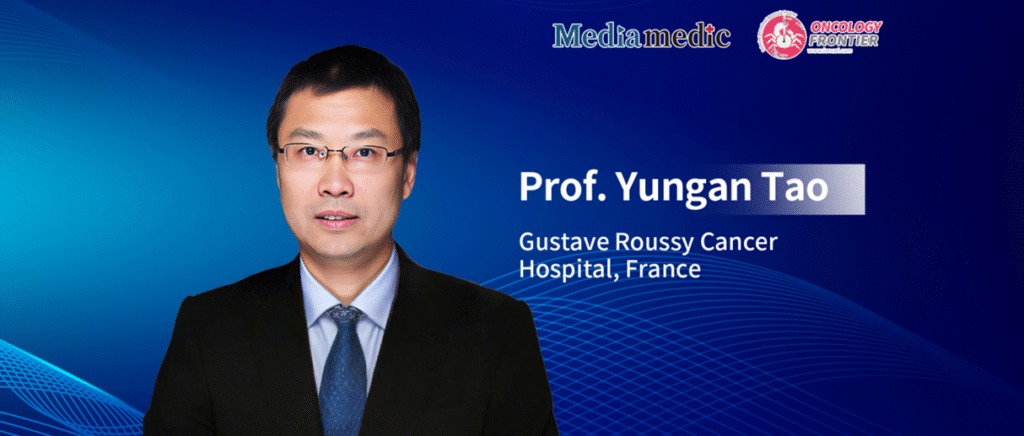
Professor Yungang Tao Gustave Roussy Cancer Center, France Internationally recognized leader in head and neck oncology, principal investigator of the NIVOPOST-OP trial, with a long-standing focus on precision radiotherapy, immunotherapy integration, and translational clinical research in HNSCC.