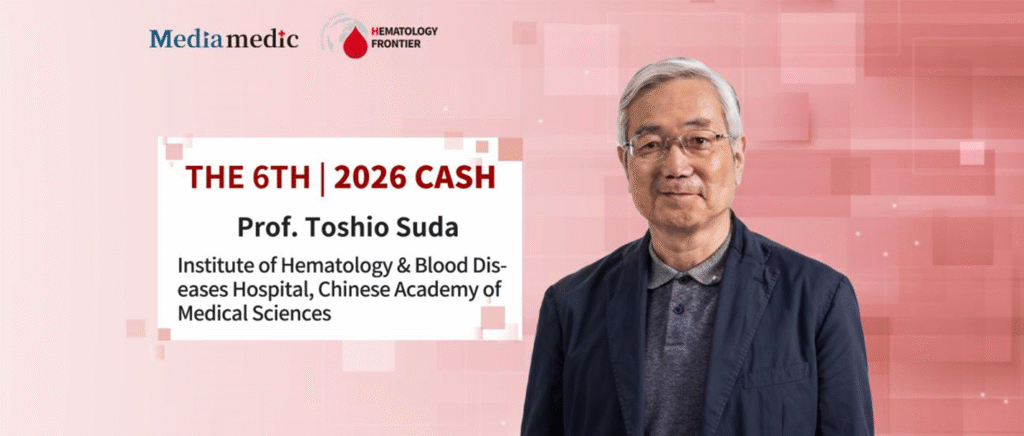
Editor’s Note: As a new year begins, global leaders in hematology gathered in Tianjin from January 9–11, 2026, for the 6th China Hematology Discipline Development Conference (CASH). This year’s congress introduced its first-ever International Forum, establishing a new bridge for in-depth dialogue between Chinese and global hematology communities. As one of the Forum Chairs, Professor Toshio Suda of the Institute of Hematology & Blood Diseases Hospital, Chinese Academy of Medical Sciences, brings both international perspective and profound academic influence to the field. Oncology Frontier – Hematology Frontier invited Professor Suda to share the vision behind launching the International Forum, reflect on its key highlights and collaborative achievements, and offer strategic insights on strengthening China’s integration into the global hematology landscape, further advancing international scientific exchange.Oncology Frontier – Hematology Frontier:
CASH 2026 has launched its first International Forum to create a new platform for academic exchange between Chinese and international hematology communities. As a Forum Chair, could you share the motivation and significance behind establishing this initiative? What highlights should participants pay particular attention to?
Professor Toshio Suda:
The International Forum represents a major innovation within the CASH Congress, bringing together experts and scholars from eight countries, including China, for high-level, systematic, and in-depth academic exchange across multiple frontier topics in hematology and related disciplines.
Despite the forum lasting only about four hours, the intensity and depth of discussion generated strong enthusiasm and positive feedback, with many participants expressing a desire for continued and expanded international dialogue in future CASH meetings.
Notably, prior to the scientific sessions, the Institute signed Memoranda of Understanding (MOUs) with academic institutions in Bangladesh and Egypt, marking a meaningful step forward in expanding global academic partnerships.
Science has no borders. Strengthening international collaboration allows us not only to share cutting-edge knowledge, but also to draw inspiration from diverse cultural and scientific perspectives. This cross-cultural intellectual synergy lies at the heart of the International Forum’s founding vision and remains its core mission.
Oncology Frontier – Hematology Frontier:
You joined the Institute of Hematology & Blood Diseases Hospital, Chinese Academy of Medical Sciences in April 2024. What influenced this decision, and what recommendations do you have for strengthening China’s integration into the global hematology community?
Professor Toshio Suda:
In several areas, Chinese hematology research has already reached world-leading standards, standing shoulder-to-shoulder with Europe and the United States.
Looking ahead, I believe Chinese researchers should further deepen their international engagement—not only by publishing high-quality scientific papers, but also by actively participating in global academic communication, joint research initiatives, and long-term international collaboration.
True scientific leadership requires both strong research output and meaningful global dialogue.
Expert Profile
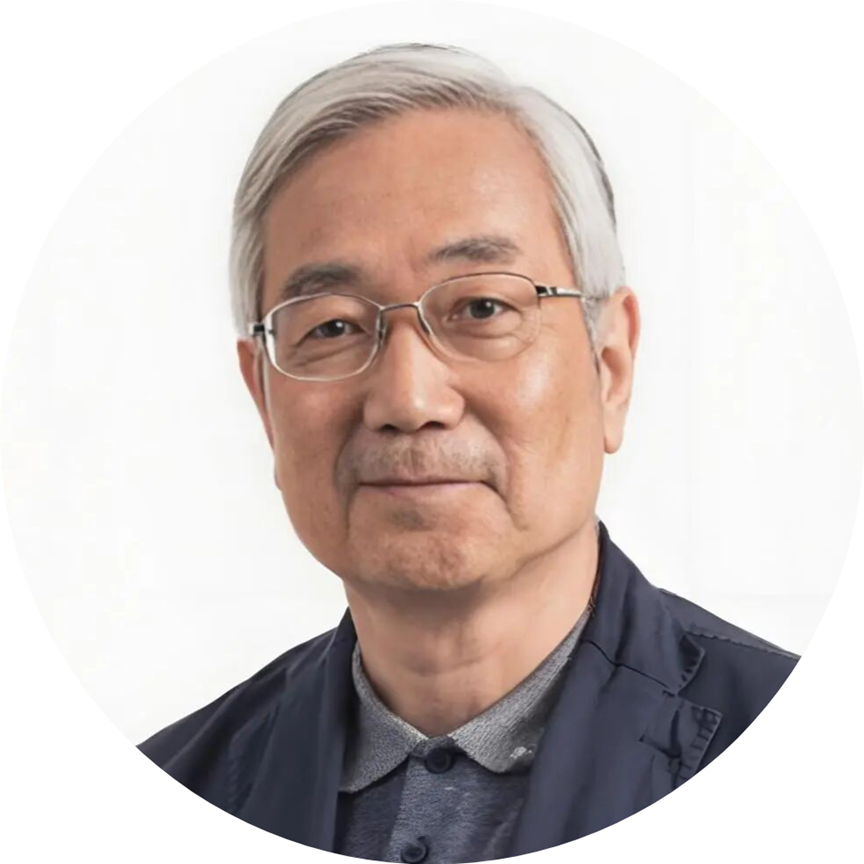
Professor Toshio Suda
Institute of Hematology & Blood Diseases Hospital, Chinese Academy of Medical Sciences
Professor Toshio Suda has dedicated decades to research on hematopoietic stem cells (HSCs) and the cancer-associated hematopoietic stem cell microenvironment. His pioneering work includes:
- The purification of HSCs
- Identification of cytokine signaling pathways in hematopoiesis
- Characterization of the bone marrow stem cell niche
- Discovery of the endosteal HSC niche (Cell, 2004)
- Groundbreaking research linking oxidative stress to stem cell aging (Nature, 2004; Nature Medicine, 2006)
His research has demonstrated that the stem cell microenvironment regulates HSC behavior through direct adhesion and soluble factors such as cytokines, chemokines, and extracellular matrix components, collectively maintaining tissue homeostasis.
Professor Suda’s long-term mission is to translate microenvironment-based discoveries into clinical cancer therapies, while advancing stem cell transplantation and hematologic disease treatment.
Major Honors
- Metcalf Award (ISEH)
- Mentor Award (ISEH)
- E. Donnall Thomas Lecture & Award (ASH)
- Singapore MRC Senior Translational Research Award (STaR)
Editorial Role
- Editor-in-Chief, Experimental Hematology