A Comprehensive Review of Annual Advances and Guideline Updates, and a Look Ahead at New Trends in Clinical Practice 丨Northern Breast Cancer Salon
Editor’s Note As the year turns, another landmark academic gathering approaches. As one of the most influential annual academic events in the field of breast cancer in China, the Northern Breast Cancer Salon · Annual Advances Review is set to open in Beijing. Since its inception, the Northern Salon has remained committed to highlighting cutting-edge research and building consensus, with the goal of advancing standardized and individualized breast cancer care in China.
This year’s meeting will feature dedicated breast cancer forums, a comprehensive review of treatment advances in 2025, and a special session on updates to the 2026 CSCO Breast Cancer Guidelines. The program will systematically summarize major domestic and international research achievements over the past year in surgery, pathology, radiotherapy, and subtype-specific treatment, with a focus on evidence that has truly changed clinical practice. In addition, real-world issues such as novel drug development and reimbursement through national medical insurance will be discussed, providing key references for the upcoming 2026 Edition of the Chinese Society of Clinical Oncology (CSCO) Breast Cancer Guidelines.
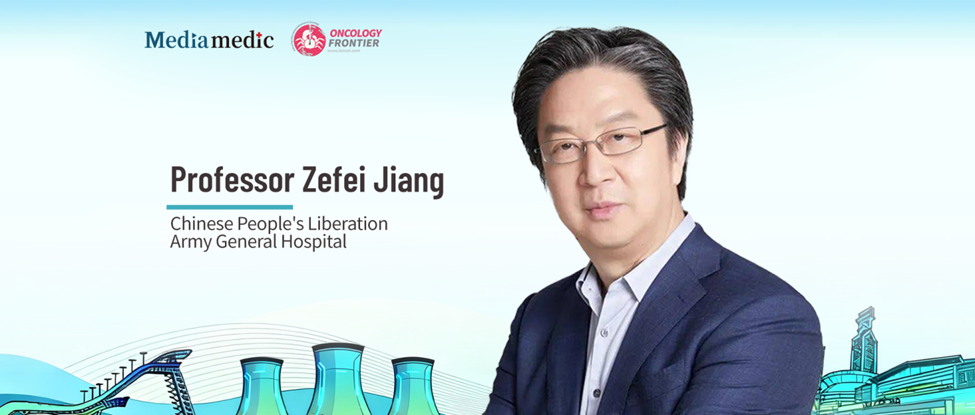
On the eve of the meeting, Oncology Frontier invited Professor Zefei Jiang, Congress Chair, President-Elect of CSCO, and Professor at the Chinese PLA General Hospital, to preview the highlights of this year’s meeting, share key annual advances, and offer insights into future changes in guidelines and clinical practice. We sincerely invite colleagues nationwide to join the discussion and work together to advance breast cancer care in China.
01
Oncology Frontier: Professor Jiang, the Northern Breast Cancer Salon has grown into a vibrant and enduring academic brand. Beyond sharing cutting-edge advances, what spirit or values do you hope this platform can pass on to clinicians? What new highlights can we expect this year?
Professor Zefei Jiang: As the Northern Salon of CSCO Breast Cancer, we have now been running for more than twenty years. Every January, we bring together experts from across the field to review the major domestic and international advances in breast cancer research over the past year. This year is no exception—we have invited multidisciplinary experts in surgery, radiotherapy, pathology, and medical oncology.
In medical oncology, we will systematically review annual research progress across three major disease categories and treatment stages. The past year has seen remarkable advances in breast cancer: in triple-negative breast cancer, new breakthroughs have emerged in immunotherapy, antibody–drug conjugates (ADCs), and bispecific antibodies; in HER2-positive disease, ADCs have shown important progress across multiple settings, from second-line advanced disease to first-line, adjuvant, and neoadjuvant therapy; and in hormone receptor–positive breast cancer, several targeted therapies have reported new clinical trial results.
Another distinctive feature this year is the recent update of the national medical insurance formulary. Many drugs that were previously available only through clinical trials have now been included in reimbursement. This provides a critical foundation for updating clinical guidelines. During the guideline discussion sessions at this meeting, we will also address special clinical scenarios such as male breast cancer, malignant phyllodes tumors, and breast cancer in young patients. Although high-level evidence in these areas is limited, clinicians urgently need consensus-based guidance. Through this annual review of advances, we aim to comprehensively summarize the year’s academic progress and, on that basis, contribute to the update of the 2026 CSCO Breast Cancer Guidelines.
02
Oncology Frontier: The CSCO Breast Cancer Guideline Update Discussion is a key component of this year’s Salon. In previous updates, the expert panel has gradually incorporated considerations of drug accessibility and cost-effectiveness alongside evidence-based medicine. How will this year’s update further integrate patient needs and bring greater “humanistic warmth” to breast cancer care?
Professor Zefei Jiang: Guideline updates are always grounded in scientific evidence and tailored to the realities of accessibility in China. Scientific evidence comes from global research advances, and today many international studies include active participation from Chinese investigators and large numbers of Chinese patients. For example, in studies of trastuzumab deruxtecan (T-DXd), Chinese researchers—including Professor Zhi-Min Shao, Professor Jiong Wu, and myself—have served as key contributors, generating data that will directly benefit Chinese clinical practice and patients.
At the same time, innovative drugs developed by domestic pharmaceutical companies through original clinical research will also be incorporated into our guideline discussions. As more novel agents receive regulatory approval and are included in medical insurance coverage, therapies that were previously limited by accessibility—and therefore ranked as second- or third-tier recommendations—may now be upgraded. This will allow more patients to receive effective and affordable treatments in a timely manner.
03
Oncology Frontier: The nationwide lecture tour for the 2025 CSCO Breast Cancer Guidelines has recently concluded successfully. In your view, how has this initiative contributed to improving standardized breast cancer care at the grassroots level in China? What areas remain for further optimization in aligning clinical practice with guidelines?
Professor Zefei Jiang: Since their release, the CSCO Breast Cancer Guidelines have been in use for seven to eight years. While this may not seem long, continuing medical education is an ongoing journey. New clinicians continuously enter the field, and healthcare policies are constantly evolving. All of this underscores the importance of adhering to guidelines while also respecting patient preferences and implementing individualized care.
As demonstrated by the Northern Breast Cancer Salon, it is essential to identify key academic questions, gather multidisciplinary perspectives across different clinical scenarios, and account for regional variations in clinical practice. Therefore, guideline dissemination and the promotion of standardized care are long-term endeavors. We will continue these efforts to ensure closer alignment between guidelines and real-world clinical practice.
04
Oncology Frontier: In 2025, breast cancer care has continued to advance along the path of precision and personalization, with landmark studies emerging across early and advanced disease, from neoadjuvant therapy to later-line treatment. Could you share the most important frontier developments of the past year and their potential impact on clinical practice?
Professor Zefei Jiang: Breast cancer treatment in 2025 has continued to move toward greater precision, and it can also be described as the “first year of ADCs.” A series of pivotal clinical trials have reported results. In triple-negative breast cancer, studies such as ASCENT-03 and ASCENT-04 have delivered important findings; in HER2-positive disease, ADC-focused trials including DB-05, DB-09, and DB-11 have continued to advance; and domestically developed innovative agents, such as those evaluated in the HORIZON-Breast01 (HB01) study, have also shown promising results.
These studies have not only reshaped international clinical practice but have also driven updates in treatment paradigms in China. As the “year of ADCs,” these advances will gradually be incorporated into clinical guidelines and further refine decision-making. We look forward to these innovations benefiting more patients in China as soon as possible and contributing to overall improvements in breast cancer outcomes.