| The 15th Shanghai Urologic Oncology Academic Conference
Editor’s Note: The 15th Shanghai Urologic Oncology Academic Conference was held in Pudong, Shanghai, bringing together leading experts in urologic oncology from China and abroad to discuss innovative treatment strategies for prostate cancer.
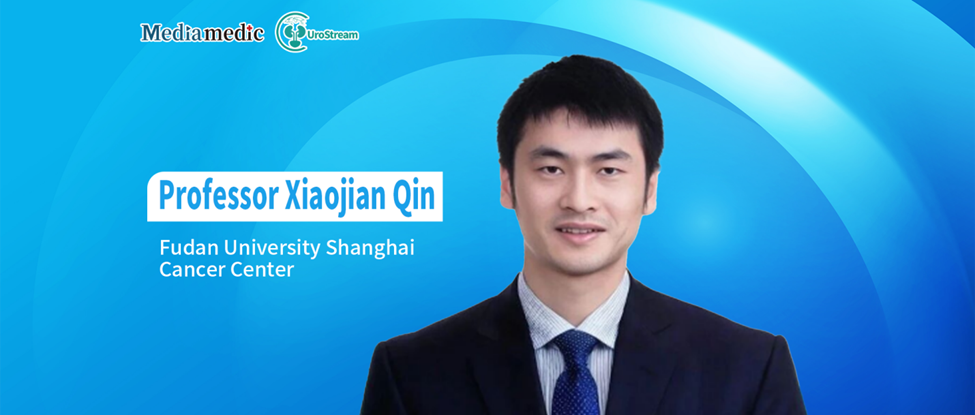
In the session dedicated to metastatic hormone-sensitive prostate cancer (mHSPC), Qin Xiaojian delivered an invited lecture entitled “Enzalutamide Enables Comprehensive Benefit in mHSPC Patients.” His presentation systematically reviewed the mechanistic advantages of enzalutamide, the pivotal clinical evidence supporting its use, and precision treatment strategies across different tumor-burden subgroups, offering practical guidance for real-world clinical decision-making.
A New Therapeutic Landscape for mHSPC
Professor Qin began by reviewing the epidemiology of prostate cancer in China, noting that more than half of patients with metastatic prostate cancer (mPCa) are already metastatic at initial diagnosis. Once metastasis occurs, disease progression is often rapid and long-term survival is significantly compromised. Before the era of second-generation androgen receptor (AR) inhibitors, the 5-year survival rate of metastatic disease remained at approximately 30%.
The introduction of novel hormonal agents, represented by enzalutamide, has fundamentally changed this landscape. For patients with mHSPC, the overarching treatment goals are to prolong survival while preserving quality of life, with intermediate goals focused on achieving deep and durable prostate-specific antigen (PSA) responses. Enzalutamide holds a clear first-mover advantage in this setting, as it was the first second-generation anti-androgen widely adopted after abiraterone.
Currently, enzalutamide is broadly recommended as a first-line option for mHSPC in both international NCCN guidelines and Chinese CSCO guidelines, regardless of whether patients present with low- or high-volume disease.
From a mechanistic perspective, Professor Qin emphasized that enzalutamide provides high-intensity AR pathway inhibition by blocking androgen binding, preventing AR nuclear translocation, and inhibiting AR–DNA interaction. Unlike abiraterone, which suppresses androgen synthesis and requires concomitant corticosteroids, enzalutamide does not require prednisone, thereby avoiding mineralocorticoid-related adverse effects.
Pivotal Evidence: ARCHES and ENZAMET
The clinical value of enzalutamide in mHSPC is primarily supported by two landmark international trials: ARCHES and ENZAMET.
In the ARCHES trial, which enrolled both high- and low-volume mHSPC patients, enzalutamide combined with androgen deprivation therapy (ADT) demonstrated robust and durable benefits compared with placebo plus ADT. The 5-year overall survival rate was improved by approximately 13%, while median radiographic progression-free survival (rPFS) reached 49.8 months, reflecting excellent disease control. Early use of enzalutamide also markedly reduced the risk of PSA progression, with particularly pronounced benefit observed in the Chinese subgroup.
Importantly, subgroup analyses showed consistent efficacy across all patient categories. Even after crossover from placebo to enzalutamide following unblinding, patients who received early enzalutamide maintained rPFS exceeding four years, underscoring the importance of early, high-intensity AR blockade.
The ENZAMET trial, despite its more complex design—including a subset of patients receiving concurrent docetaxel—further confirmed the long-term survival benefit of enzalutamide, demonstrating an approximate 10% improvement in 8-year overall survival. The study also highlighted the prognostic significance of deep PSA responses, showing that patients whose PSA declined to ≤0.2 ng/mL at seven months experienced superior survival outcomes. Enzalutamide substantially increased the proportion of patients achieving this depth of response.
Comprehensive Benefit Beyond Survival
Professor Qin emphasized that enzalutamide delivers a truly comprehensive benefit in mHSPC management. Beyond prolonging survival and delaying disease progression, it significantly improves PSA response rates and preserves patient quality of life.
Although both ARCHES and ENZAMET reported higher rates of certain treatment-related adverse events, the incidence of grade 3–4 toxicities and treatment-related deaths remained low. Overall safety was consistent with real-world clinical experience and considered manageable.
From a quality-of-life perspective, early enzalutamide use delayed deterioration in physical function and overall health status. These findings reinforce the value of enzalutamide not only in extending life but also in maintaining functional well-being over the long term.
Precision Stratification by Tumor Burden
In clinical practice, treatment stratification most commonly follows the high- versus low-volume classification defined in the CHAARTED study. Addressing high-volume disease, Professor Qin discussed the growing international consensus favoring triplet therapy (ADT plus docetaxel plus a second-generation AR inhibitor). While acknowledging this trend, he expressed cautious reservations.
Data from ARCHES indicate that ADT combined with enzalutamide alone can already achieve substantial survival gains in high-volume patients, with median overall survival extending beyond 80 months. Professor Qin questioned whether the routine addition of docetaxel is always necessary when potent AR inhibition already delivers significant benefit, noting that no trial has yet conclusively demonstrated superiority of triplet therapy over ADT plus a second-generation anti-androgen alone.
He further highlighted that enzalutamide meaningfully delays pain progression and quality-of-life deterioration in high-volume disease, outcomes that are highly relevant in advanced-stage management.
For low-volume mHSPC, ADT combined with a second-generation anti-androgen has become the standard approach. While abiraterone has shown more modest overall survival benefit in this subgroup, multiple studies confirm that agents such as enzalutamide provide durable survival advantages. Given the relatively favorable prognosis of low-volume patients, treatment decisions should carefully balance efficacy and tolerability—an area where second-generation anti-androgens demonstrate clear value.
Conclusion and Outlook
In closing, Professor Qin reaffirmed the central role of enzalutamide in the management of metastatic hormone-sensitive prostate cancer. He emphasized its strong and consistent efficacy across disease volumes, its predictable and manageable safety profile, and its ability to deliver comprehensive benefit by delaying progression, extending survival, and improving PSA response.
He highlighted that five-year overall survival rates now reach approximately 58% in high-volume mHSPC and nearly 77% in low-volume disease—figures approaching outcomes seen in earlier disease stages.
“It is precisely the widespread clinical use of high-intensity second-generation anti-androgens that has given even metastatic prostate cancer patients greater hope for long-term disease control,” Professor Qin concluded.
“Enzalutamide plays a critical role in delaying progression, prolonging survival, and preserving quality of life, ultimately delivering comprehensive benefit to our patients.”

Qin Xiaojian