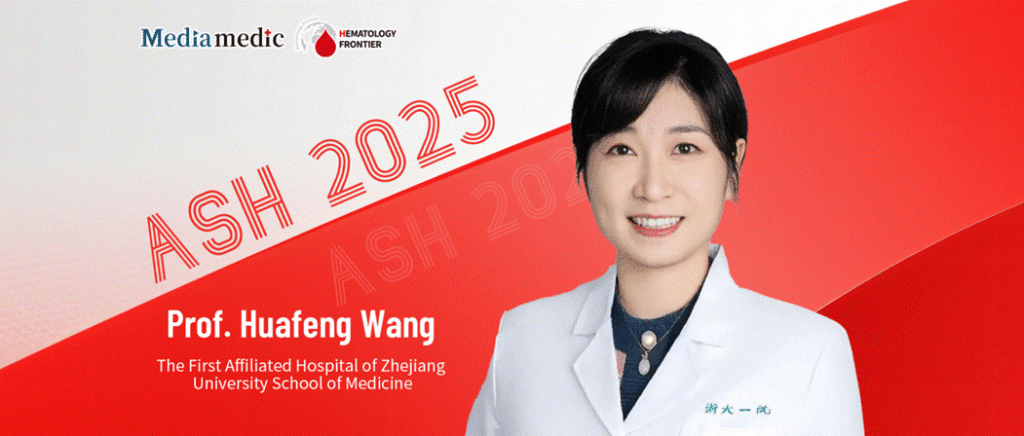
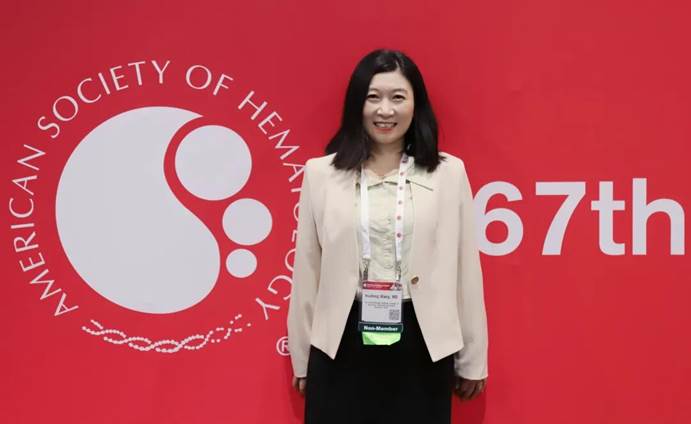
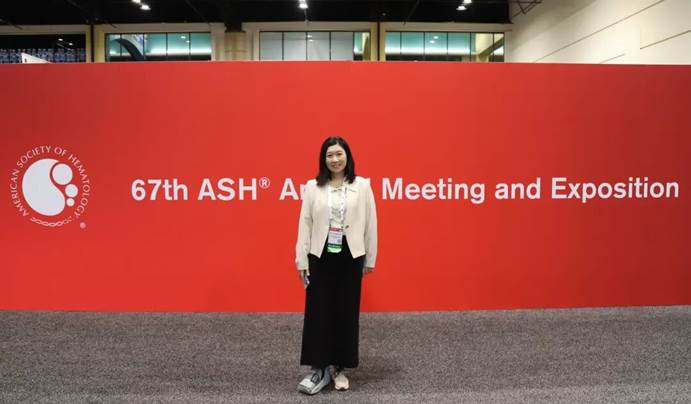
The 67th Annual Meeting of the American Society of Hematology (ASH) was held in Orlando, USA, from December 6 to 9, 2025, bringing together the latest research advances and clinical progress in hematology worldwide. At this year’s meeting, Professor Wang Huafeng’s team from The First Affiliated Hospital, Zhejiang University School of Medicine had six studies accepted, including one oral presentation and five poster presentations, with one poster receiving the ASH Outstanding Abstract Award. These achievements highlight the growing international academic influence of Chinese researchers in the field of acute leukemia.During the meeting, Oncology Frontier – Hematology Frontier invited Professor Wang Huafeng for an in-depth discussion of his oral presentation, “Decoupling and Fusing Multi-Omics Information to Reduce Redundancy for Acute Myeloid Leukemia Survival Prediction.” The interview focused on the model’s innovative applications in precise prognostic assessment, potential biomarker discovery, and its overall clinical value.

Oncology Frontier – Hematology Frontier:
Professor Wang, your team’s AMLSP model has made significant progress in multi-omics data integration, particularly in reducing redundancy and improving survival prediction accuracy. Could you explain how the model balances redundancy across different omics layers while ensuring predictive accuracy and interpretability?
Professor Wang Huafeng:
In this study, we first collected data from four publicly available acute myeloid leukemia (AML) cohorts, including TCGA_AML, TARGET, and two datasets from Oregon Health & Science University (OHSU). From these cohorts, we included all available mutation features and selected the top 100 genes with the highest expression variance to enhance sample discriminability.
We then constructed a deep learning framework to integrate these two data modalities for survival prediction. Specifically, we employed shared–private variational autoencoder (VAE) encoders to remove redundancy within each omics layer, a feature-alignment module to enhance cross-modal consistency, and a prototype-based information bottleneck (MOPIB) to compress high-dimensional inputs into survival-related latent representations. Finally, gated attention mechanisms were used hierarchically to generate individualized risk scores.
Model training utilized five-fold cross-validation combined with Bayesian hyperparameter optimization to enhance robustness. Each cohort was divided into training and independent test sets to prevent data leakage. Model performance was evaluated using complementary metrics: discrimination was assessed by the concordance index (C-index), risk stratification by Kaplan–Meier survival curves, latent structure visualization by t-SNE and UMAP, and key gene identification through integrated gradients.
To address challenges such as intra- and inter-omics redundancy and limited feature discriminability, we designed four core strategies:
- Intra-omics redundancy removal:
Gene expression and mutation data were processed through shared and private encoders with orthogonality constraints and reconstruction loss, enabling separation of common and modality-specific features and eliminating redundancy at the source. - Bimodal alignment:
Shared features from expression and mutation data were fed into a feature-alignment module, where contrastive alignment enforced close correspondence between paired samples in latent space, resolving cross-modal redundancy and achieving semantic consistency. - Information fusion and purification:
Aligned features were fused via cross-attention and further refined through the MOPIB module, which acts as an information bottleneck to retain survival-relevant patterns while filtering noise, yielding compact and clean multi-omics representations. - Survival risk prediction:
The fused representations were processed through gated attention and self-attention mechanisms to output continuous risk scores. Joint training with composite loss functions (including Cox loss, orthogonality constraints, and reconstruction/alignment losses) ensured accuracy, stability, and interpretability across diverse AML datasets.
Oncology Frontier – Hematology Frontier:
You mentioned that the model effectively identifies molecular markers associated with AML survival and uncovered novel candidate genes such as CRYGD, LAMC1, and LAMA1. What are the potential implications of these findings for AML prognostic assessment and clinical treatment? Do you believe these genes could serve as new therapeutic targets?
Professor Wang Huafeng:
This predictive model has significant clinical and research implications. On the one hand, it enables more precise prognostic stratification; on the other, it facilitates the discovery of novel biomarkers. Compared with the 2017 European LeukemiaNet (ELN) risk classification, our model demonstrates markedly improved stratification accuracy and can identify potential misclassifications in the ELN system—for example, cases incorrectly categorized as low risk despite being truly high risk, or vice versa.
By integrating transcriptomic and mutational data and performing balanced comparisons across multiple datasets, the model redefines low- and high-risk groups. The high-risk factors identified through this process are critical for future prognostic prediction and biomarker discovery. We have already shortlisted several promising candidates and are conducting biological validation experiments, with the goal of achieving eventual clinical translation.
Oncology Frontier – Hematology Frontier:
Your study incorporated multiple public AML datasets, and the AMLSP model demonstrated strong performance across them. From a clinical perspective, how generalizable is this model across different regions and platforms? Are there plans for further multicenter validation to support broader clinical adoption?
Professor Wang Huafeng:
This is an excellent question, as it addresses another important dimension of the model’s application. Beyond molecular feature identification, a prognostic model must demonstrate broad applicability. This is precisely why we incorporated four large, accessible datasets—comprising more than 1,000 patients in total—to enhance balance and precision.
We are now advancing to the next stage: real-world validation. In addition to the existing datasets, we are collecting multicenter real-world data and plan to first assess the model’s feasibility and reliability in real clinical settings. Subsequently, we aim to develop prospective prediction models and potentially incorporate additional omics layers and clinical variables to further optimize the current framework.
Summary of Professor Wang Huafeng’s Team at ASH 2025
01 | Abstract 393
Title: Decoupling and Fusing Multi-Modal Omics to Reduce Redundancy for Acute Myeloid Leukemia Survival Prediction (AMLSP)
Type: Oral Presentation
First Author: Shasha Zhang
Corresponding Author: Huafeng Wang
Highlights:
To address intra- and inter-modality redundancy and limited discriminative power in multi-omics AML prognostic modeling, this study proposed the novel AMLSP framework. Using shared/private encoders with orthogonality loss and cross-modal contrastive alignment, the model effectively decouples and fuses gene expression and mutation data. Based on 1,160 AML patients from TCGA, TARGET, and two OHSU cohorts, AMLSP achieved an average C-index of 0.8956. t-SNE and UMAP analyses demonstrated clear clustering by survival outcome and risk level. Kaplan–Meier analysis confirmed significant survival differences between risk groups (P < 0.05). Integrated gradient analysis identified known prognostic genes such as FLT3 and novel candidates including CRYGD and LAMC1, revealing biologically meaningful pathways and potential therapeutic targets.
02 | Abstract 2355
Title: CD84-CD3 bispecific antibody achieves potent anti-leukemic activity with favorable safety profile in Acute Myeloid Leukemia
Type: Poster (Outstanding Abstract Award)
First Author: Nan-Fang Zhuo
Corresponding Author: Huafeng Wang
Highlights:
This study identified CD84 as a promising AML target due to its high expression on leukemic blasts and minimal expression on normal hematopoietic stem cells. The novel CD84-targeting bispecific antibody BIS05-24 effectively activated T cells, induced cytokine release, inhibited AML colony formation, and demonstrated potent anti-leukemic activity in vitro and in patient-derived xenograft models, with favorable safety and specificity.
03 | Abstract 6134
Title: A Novel Random Survival Forest Model for Adult NPM1-Mutated Acute Myeloid Leukemia Patients
Type: Poster
First Author: Yiyi Yao
Corresponding Author: Huafeng Wang
Highlights:
A random survival forest (RSF) model integrating 17 key molecular variables outperformed traditional Cox regression and DeepSurv models in predicting survival for NPM1-mutated AML, enabling more accurate risk reclassification beyond ELN 2022 guidelines.
04 | Abstract 5237
Title: Real-world effectiveness and safety of gilteritinib plus venetoclax and azacitidine in FLT3-mutated acute myeloid leukemia
Type: Poster
First Author: Nianci Chen
Corresponding Author: Huafeng Wang
Highlights:
This multicenter real-world study demonstrated that the GVA regimen is effective and safe in both newly diagnosed and relapsed/refractory FLT3-mutated AML patients, including younger and fit patients traditionally considered for intensive chemotherapy.
05 | Abstract 3464
Title: A novel strategy to circumvent venetoclax resistance in relapsed/refractory Acute Myeloid Leukemia
Type: Poster
First Author: Huafeng Wang
Corresponding Author: Jie Jin
Highlights:
The MAV regimen (mitoxantrone liposome + cytarabine + venetoclax) achieved high CRc and MRD-negative rates in high-risk R/R AML patients, suggesting a promising strategy to overcome venetoclax resistance and bridge patients to transplantation.
06 | Abstract 3336
Title: Short-term blinatumomab regimen in newly diagnosed induction and MRD-negative consolidation treatment of B-cell acute lymphoblastic leukemia
Type: Poster
First Author: Yile Zhou
Corresponding Author: Huafeng Wang
Highlights:
A 14-day short-course blinatumomab regimen demonstrated efficacy comparable to the traditional 28-day schedule in selected B-ALL populations, with immunologic correlates providing insights for future combination strategies.
Expert Profile

Professor Wang Huafeng, MD, PhD
The First Affiliated Hospital, Zhejiang University School of Medicine
Associate Professor; Associate Chief Physician; Doctoral Supervisor; Distinguished Researcher
Department of Hematology; Assistant Director
Standing Member, CSCO Leukemia Expert Committee
Member, Leukemia Group, Chinese Society of Hematology
Member, Targeted Therapy Committee, Chinese Medical Women’s Association
Youth Committee Member, Chinese Anti-Cancer Association (Hematologic Translational Research)
Secretary, Zhejiang Society of Hematology
Member, Zhejiang Provincial Leading Innovation Team
Zhejiang “551 Talent Program” – Rising Star
Postdoctoral Fellow, City of Hope National Medical Center (USA)
Visiting Scholar, Brown University (USA) and Royal Free Hospital (UK)