Editor’s Note Immunotherapy has fundamentally reshaped the treatment landscape of gastrointestinal (GI) cancers. However, now that PD-1/PD-L1 inhibitors have been firmly established as standards of care, the key challenge facing clinical research is how to further overcome the current efficacy plateau. This has driven research into a “deep-water zone,” where novel strategies—such as next-generation TIGIT inhibitors, cancer vaccines, and T-cell engagers—are actively being explored. 
These innovative immunotherapeutic approaches may act synergistically to address key limitations of existing therapies, including T-cell exhaustion. In parallel, researchers are increasingly investigating combination strategies guided by tumor microenvironment characteristics, such as combining immunotherapy with chemotherapy or radioligand therapies to overcome tumors with pronounced stromal barriers.
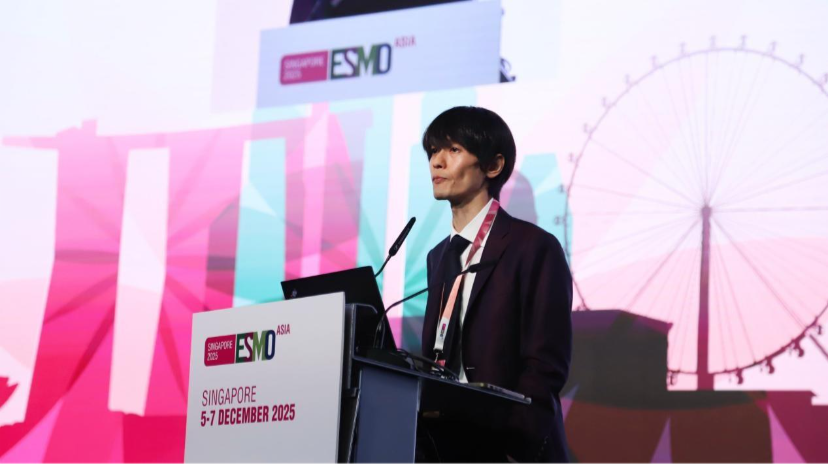
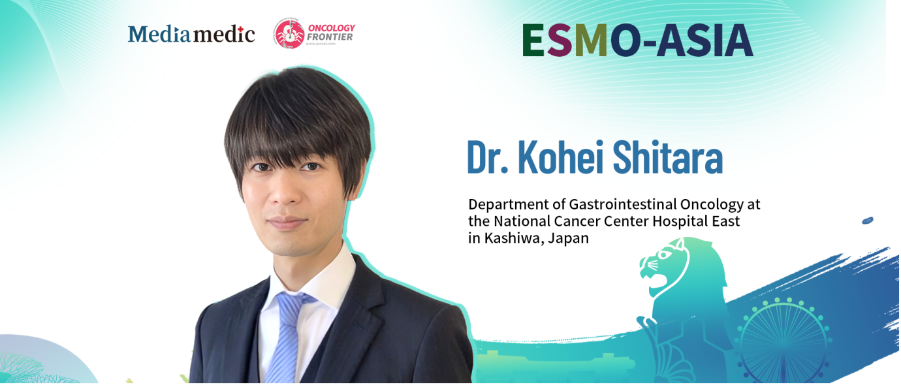
During the recent ESMO Asia Congress, Oncology Frontier invited Professor Kohei Shitara, Director of the Department of Gastrointestinal Oncology at the National Cancer Center Hospital East in Japan, to discuss the latest clinical progress of investigational agents and to share his insights into the future development of next-generation immunotherapy for gastrointestinal malignancies.
Q1. Oncology Frontier: In your educational lecture at ESMO Asia, you pointed out that earlier failures of TIGIT inhibitors may have been related to Fc-domain design, which inadvertently damaged immune cells. Some next-generation TIGIT antibodies now incorporate an “Fc-silent” design. How do you expect this design change to influence clinical outcomes?
Prof. Kohei Shitara: Multiple clinical trials of Fc-competent TIGIT monoclonal antibodies have failed in gastrointestinal cancers. Mechanistically, these antibodies were intended to eliminate regulatory T cells (Tregs) via antibody-dependent cellular cytotoxicity (ADCC), an effect that was considered beneficial based on preclinical studies, including work from Roche. However, a critical downside is that such antibodies may also deplete effector CD8⁺ T cells with high TIGIT expression, thereby diminishing overall antitumor immune activity.
In contrast, Fc-silent TIGIT antibodies, such as domvanalimab, focus on signal blockade rather than cellular depletion. This approach allows for more effective activation of effector CD8⁺ T cells. Encouraging signals were observed in the phase II EDGE-Gastric study. Nevertheless, discrepancies between phase II and phase III trial outcomes are not uncommon. As a result, the field has been closely monitoring the phase III STAR-221 trial to determine whether Fc-silent TIGIT inhibitors can deliver definitive clinical benefit in gastrointestinal cancers and solid tumors more broadly.(Editor’s note: The developer of domvanalimab recently announced that the pre-specified interim analysis of the STAR-221 study did not meet the overall survival endpoint, leading to the discontinuation of further development of domvanalimab.)
Q2. Oncology Frontier: You also discussed innovative immunotherapeutic strategies such as cancer vaccines and T-cell engagers. You noted that while cancer vaccines can activate T cells, they may also upregulate PD-1 expression and induce T-cell exhaustion. Does this mean that cancer vaccines should not be used alone, but instead be routinely combined with PD-1 inhibitors? What challenges do T-cell engagers face in gastrointestinal tumors?
Prof. Kohei Shitara: Most cancer vaccines currently under development—particularly mRNA vaccines—primarily activate CD8⁺ T cells via MHC class I presentation. Compared with peptide vaccines, which activate CD4⁺ T cells through MHC class II pathways, CD8⁺ T cells tend to express higher levels of immune checkpoint molecules and are therefore more susceptible to exhaustion. This provides a strong mechanistic rationale for combining cancer vaccines with PD-1 inhibitors.
Such combination strategies have already demonstrated superiority over pembrolizumab monotherapy in a randomized phase II trial in the adjuvant treatment of melanoma. In gastric and gastroesophageal junction cancers, perioperative FLOT chemotherapy combined with durvalumab (the D-FLOT regimen) has become a standard treatment. Building upon this backbone, the addition of an mRNA vaccine represents a highly promising forward-looking strategy, and feasibility studies have already been completed.
Moreover, for patients at high risk of recurrence who show poor pathological response to perioperative therapy (such as FLOT combined with PD-L1 inhibition), another attractive approach is to use residual tumor tissue obtained at surgery to generate personalized cancer vaccines as adjuvant treatment.
With respect to T-cell engagers, their use in stroma-rich gastrointestinal tumors remains challenging. While CD3-based T-cell engagers have shown efficacy in tumors with limited stromal content—such as certain uveal melanomas or small-cell lung cancer—the dense stroma characteristic of gastric and pancreatic cancers creates a physical barrier that restricts therapeutic effectiveness.
To overcome this limitation and enhance tumor sensitivity to immunotherapy, several combination strategies are being explored. These include early combination with chemotherapy to reduce tumor burden and partially disrupt stromal components; a sequential approach in which T-cell engagers are used as maintenance therapy following chemotherapy-induced tumor regression; and the development of theranostic or radioligand therapies—such as agents targeting fibroblast activation protein (FAP)—to directly intervene in cancer-associated fibroblasts within the tumor microenvironment.
While these strategies offer promising avenues to overcome stromal barriers, their clinical benefit will require validation in further studies.