In recent years, advances in systemic therapy have offered hope for advanced liver cancer patients, but traditional single treatments remain limited, highlighting the need for new approaches. Combining systemic therapy with local treatments has become a key trend, with multidisciplinary team (MDT) collaboration now a global standard. Experts from surgery, interventional radiology, oncology, and more work together to design optimal, personalized treatment plans—from diagnosis and strategy development to timing of therapy and long-term follow-up. The TALENT series (TALENTACE, TALENTOP, TALENTRUE) supports this shift by providing strong clinical evidence for combining systemic therapy with local treatments like TACE or surgery. This paves the way for a “precision combination” approach in liver cancer care.
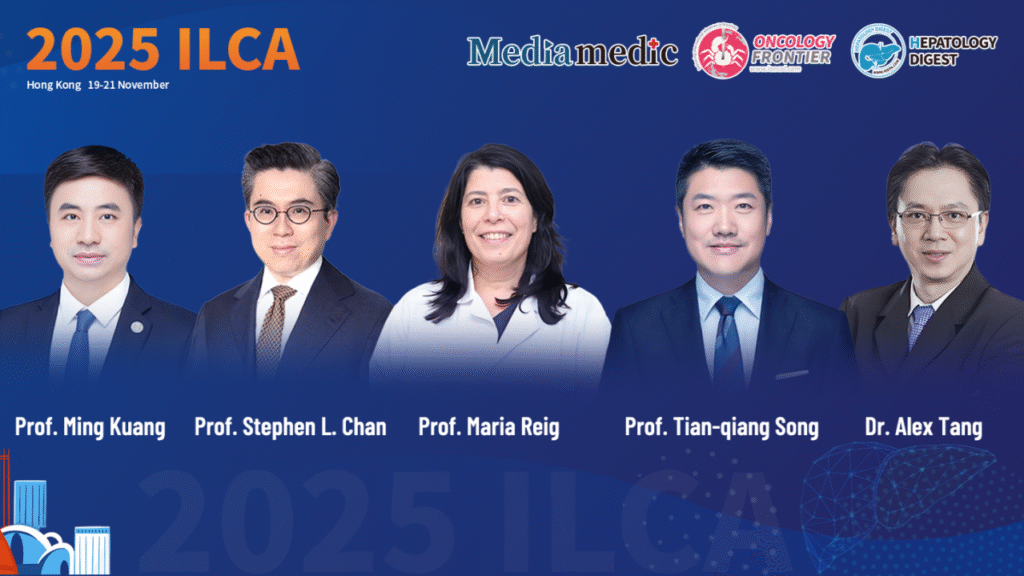
Ahead of the 2025 ILCA conference, The Oncology Frontier invited top international experts to discuss how MDT practices and TALENT study results can be translated into real patient benefits.

MDT Practice: Comprehensive Management from Diagnosis to Treatment
Prof. Stephen L.Chan
At our center, all liver cancer diagnosis and treatment is based around MDT collaboration. Initial diagnosis is typically made by surgeons or hepatologists, and complex cases are brought into MDT discussions. Given the large patient volume, we operate two regular mechanisms: a weekly joint clinic involving surgery, oncology and radiology; and a monthly institution-wide tumor board focused on difficult cases, poor responders or patients requiring downstaging or sequential strategies. These mechanisms help deliver individualized and precise treatment plans.
Prof. Maria Reig
At the Barcelona Clinic Liver Cancer (BCLC) Unit, diagnosis and treatment decisions also rely heavily on an integrated MDT structure. For diagnosis, non-invasive assessment is favored in cirrhotic patients, while biopsy is required for non-cirrhotic cases or those with competing diagnoses. Our department includes a cross-disciplinary team of 43 experts across seven specialties. Over four years, 45% of case discussions focused on major decision-making points such as initiating new therapies or managing sequential treatment. Discussions fall largely into two categories: newly diagnosed or treatment-initiating HCC cases, and complex cases requiring collaborative management across specialties. The entire patient journey is emphasized, integrating evidence-based principles with patient-centered care.
Prof. Tianqiang Song
Our center established its MDT model in 2011, encompassing six core departments including surgery and radiology. According to BCLC/CNLC staging, very early-stage patients undergo direct surgery, while MDT discussions focus primarily on BCLC C-stage or recurrent/metastatic cases, which require careful sequencing of therapeutic modalities. We meet every Thursday afternoon to discuss complex cases—a practice that has been maintained for 14 years, enabling us to form shared standards, avoid conflicting recommendations, and deliver consistent, precise care. Hierarchical case discussion is a key element of our success.
Dr. Alex Tang
At our Malaysian oncology center, the MDT team includes five clinical oncology specialists covering radiotherapy and systemic therapy. We focus on complex intermediate- and advanced-stage cases where combination therapy is required. Recent experience shows that this model effectively balances locoregional control with systemic synergy, even in resource-limited settings, leading to notable improvements in patient outcomes.
Prof. Ming Kuang
Since launching our liver cancer program in 2022, our center has built a multi-layered MDT system. This includes: (1) daily MDT clinics involving multiple specialties to establish preliminary plans; (2) a weekly inpatient MDT meeting refining treatment sequencing with participation from 10 disciplines; (3) morbidity/mortality meetings to review complications and analyze root causes for continuous quality improvement; (4) quarterly online joint case conferences with three Harvard centers to benchmark international experience; and (5) a cross-disciplinary resource-sharing platform integrating clinical practice, education, and scientific research. Over several years, this system has significantly improved precision and quality in patient care.
TALENTACE: Breakthroughs in Combination Therapy and Clinical Value
Prof. Tianqiang Song
Multiple clinical trials have consistently shown that systemic therapy combined with TACE achieves significantly longer progression-free survival (PFS) compared with TACE alone. From a surgical perspective, using RECIST to evaluate response, the ORR of atezolizumab plus bevacizumab combined with TACE is remarkably high. This translates into meaningful opportunities for curative resection—something that was previously unattainable for many patients.
Given this, future clinical trial design may not need to rely exclusively on OS as the primary endpoint, as achieving OS improvement is extremely challenging. If combination therapy can effectively downstage tumors and enable curative surgery, OS benefit will naturally emerge. Thus, identifying patients who may achieve downstaging—and designing robust trials to validate this strategy—is essential.
Dr. Alex Tang
As an interventional radiologist, I see enormous benefit from systemic therapy. TACE alone may not fully treat all lesions, and systemic therapy helps close that gap. For patients with prolonged disease or multifocal tumors, TACE combined with systemic therapy has become routine and highly effective. TALENTACE provides strong evidence supporting this approach. Some oncologists previously undervalued TACE and relied solely on systemic therapy; this study re-establishes TACE as a vital modality, especially for the 70% of patients who do not respond to systemic treatment alone.
Treatment sequencing must be individualized. For very large tumors, four cycles of systemic therapy may shrink lesions and make subsequent TACE more accurate with fewer side effects. For patients with scattered small lesions amenable to precise embolization, TACE can be prioritized. If early systemic therapy response wanes and AFP rises, TACE should be initiated promptly.
Prof. Maria Reig
From a medical oncology perspective, TALENTACE offers MDT teams suggestive—but not definitive—evidence. Among three major phase III trials, one was negative, one has pending survival results, and one is still being analyzed. Updated BCLC guidelines emphasize delaying progression based on PFS benefit, though regulatory interpretations may differ across countries.
Treatment decisions must balance guideline evidence with individual patient factors. For TACE-eligible candidates, TACE followed by observation remains reasonable. For those beyond TACE criteria, systemic therapy is preferred. TALENTACE suggests combination therapy may outperform monotherapy, but identifying which patients benefit is the key MDT challenge. Conversion therapy after downstaging must also be followed by structured postoperative management—an aspect sometimes overlooked but essential to long-term outcomes.
Prof. Stephen L.Chan
Two additional points from the perspective of medical oncology: First, concerns previously existed regarding the safety of giving bevacizumab around TACE due to bleeding risks or liver function deterioration. TALENTACE has updated this understanding, showing that atezolizumab plus bevacizumab is safe around the TACE procedure. Second, without OS proof, patient selection remains critical. Risk–benefit discussions should weigh the absence of OS data against improved ORR and longer PFS.
Prof. Ming Kuang
The significance of TALENTACE lies in providing the first validated evidence of safety and efficacy for this combination strategy. A 49% ORR far surpasses monotherapy, and safety is manageable. Although OS improvement remains unconfirmed, the study provides a viable pathway for downstaging, conversion, and potential cure—an essential dimension of real-world practice.
Furthermore, TALENTACE highlights the indispensable value of MDT collaboration to design dynamic, personalized treatment strategies based on tumor biology, staging, and patient condition.
TALENTOP: Conversion Surgery and Perioperative Management
Prof. Tianqiang Song
TALENTOP clearly shows that patients who achieve disease control after initial systemic therapy and subsequently undergo “active surgery plus maintenance therapy” fare significantly better than those who continue systemic therapy alone. While OS data remain immature, early separation of survival curves suggests meaningful long-term benefit from surgery after successful conversion. Real-world data also show that many patients who received combination therapy and then underwent surgery achieved prolonged survival.
Prof. Ming Kuang
Our center places strong emphasis on managing patients after conversion surgery. We continue the same systemic therapy used preoperatively to maintain tumor control, and conduct structured follow-up involving both MDT experts and clinical trial teams. Early postoperative monitoring is done via telephone, followed by at least twice-yearly clinic visits. We also collect biospecimens at follow-up to support translational research.
Prof. Maria Reig
The BCLC group does not routinely perform conversion therapy except in selected cases, such as patients who cannot continue initial treatment due to toxicity. After conversion surgery, systemic therapy is typically continued until progression or unacceptable toxicity. Many trials now stop therapy after one year of complete response, but whether this duration is optimal remains uncertain; only trial data can resolve this.
Dr. Alex Tang
Given that roughly 40% of patients develop recurrence in the contralateral liver, our follow-up strategy is intensive: enhanced MRI and tumor markers at three months, followed by continued monitoring every three to six months. AFP or PIVKA-II is used depending on which marker was elevated previously.
TALENTRUE: Real-World Validation of the TALENT Paradigm
Prof. Ming Kuang
Three years ago, we observed that some patients with initially unresectable HCC achieved curative surgery after combination therapy. Impressively, 90% of these patients remained recurrence-free at three-year follow-up. To validate this finding, we retrospectively analyzed 111 patients from five centers; 30 underwent surgery and 15 achieved pathological complete response. This confirms that approximately 30% of unresectable patients may be converted to surgery—which, on a population level, meaningfully raises overall survival.
This supports a tiered approach: offer immediate curative treatment for patients with low tumor burden, and conversion therapy for those with high burden. Even if only one-third convert, the overall impact on survival is considerable.
MDT Enables Precision in Liver Cancer Treatment — Core Insights from the TALENT Series
Prof. Maria Reig
From a European perspective, the TALENT series cannot yet be directly applied to our population due to differences in patient profiles. However, the findings still hold reference value, confirming safety and potential responsiveness to combination therapy. Individualized MDT decisions remain essential and must integrate liver function, tumor biology, and performance status. More international multicenter trials are needed before these strategies can become global standards.
Dr. Alex Tang
The TALENT series has revitalized the role of TACE. After systemic therapy surged in 2020, TACE volumes dropped sharply worldwide. Now, TALENTACE and TALENTRUE provide clarity: combination therapy can deliver long-term survival even for advanced cases. Some of our BCLC C-stage patients have survived six to eight years, and in selected patients with large tumor burden, we increasingly recommend curative surgery.
Prof. Tianqiang Song
We divide unresectable patients into “potentially resectable” and “absolutely unresectable.” For those with a single limiting factor—technical or oncological—we attempt combination therapy to achieve downstaging. TALENT research validates this strategy and helps refine criteria for identifying patients most likely to undergo successful conversion.
Prof. Ming Kuang
TALENTOP is the first prospective global exploration of conversion therapy leading to liver cancer surgery—a milestone in the field. Larger international RCTs will be needed to confirm OS benefit. TALENTACE provides preliminary evidence of safety and efficacy, and TALENTRUE confirms real-world feasibility. Together, they advocate a “systemic therapy + locoregional therapy + surgery + maintenance” model that can meaningfully improve long-term survival. At our center, perioperative systemic therapy rates rose from below 10% to 35% in ten years, while the 5-year survival rate after curative resection rose from 45% to 61%. Although single-center, these data support broader adoption and continued investigation.
Prof. Stephen L.Chan
A key MDT responsibility is ensuring that all team members stay current with rapidly evolving evidence. By sharing new data while discussing individual cases, MDTs achieve continuous improvement in clinical practice. Ultimately, the goal is to translate these advances into real survival benefits for patients.
Expert Profiles (Alphabetical Order)
Prof. Stephen L.Chan Professor, Faculty of Medicine, Chinese University of Hong Kong President-Elect, International Liver Cancer Association (ILCA) Associate Editor, ESMO Gastrointestinal Oncology and Liver Cancer
Prof. Ming Kuang Director, Hepatobiliary and Pancreatic Surgery Center, First Affiliated Hospital of Sun Yat-sen University Vice President, IHPBA China Chapter Vice Chair, CACA Liver Cancer Committee
Prof. Maria Reig Head, Liver Tumor Unit, Hospital Clinic of Barcelona Leader, Barcelona Clinic Liver Cancer (BCLC) Group Associate Editor, Journal of Hepatology
Prof. Tianqiang Song Executive Director, Liver Cancer Center, Tianjin Medical University Cancer Hospital Vice Chair, CACA Biliary Tumor Committee Standing Member, Chinese Society of Clinical Oncology
Dr. Alex Tang Director, Vascular and Interventional Radiology, Subang Jaya Medical Centre, Malaysia Former President, APSCVIR (2008–2010) Board Member, APAITO