With the aging population, the demand for hematopoietic stem cell transplantation (HSCT) among elderly patients with hematologic malignancies is growing, yet clinical decision-making faces increasingly complex challenges. In the process of balancing efficacy and safety, comprehensively considering multiple factors—such as disease status, patient age and comorbidities, the intensity of conditioning regimens, and donor selection—has become a core topic in the field of transplantation.
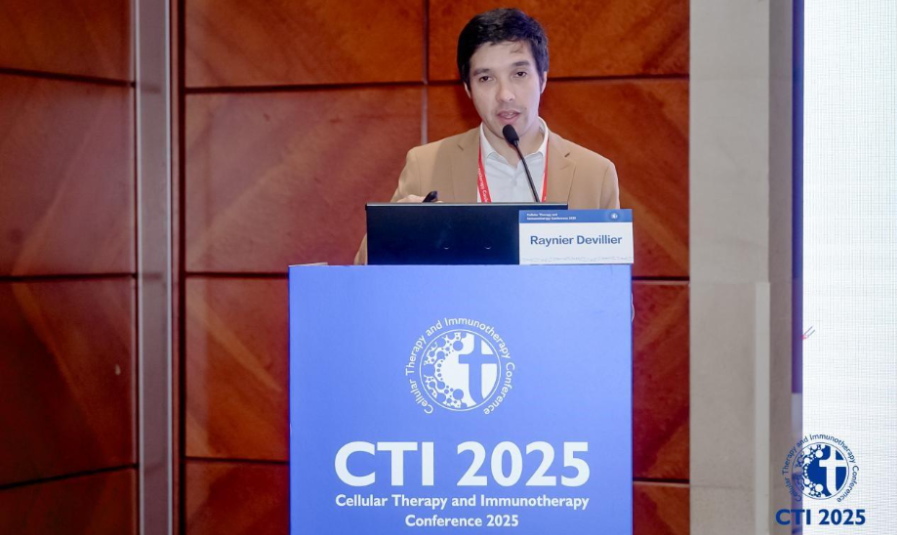
From November 13–16, 2025, the 2025 International Conference on Cell and Immunotherapy (CTI 2025) was held in Hangzhou, Zhejiang. During the conference, Oncology Frontier – Hematology invited Professor Raynier Devillier from the Paoli-Calmettes Institute in France to provide an international perspective on personalized strategies for transplantation in elderly patients, aiming to provide important references for optimizing treatment pathways for this population.
With the aging population, the demand for hematopoietic stem cell transplantation (HSCT) among elderly patients with hematologic malignancies is growing, yet clinical decision-making faces increasingly complex challenges. In the process of balancing efficacy and safety, comprehensively considering multiple factors—such as disease status, patient age and comorbidities, the intensity of conditioning regimens, and donor selection—has become a core topic in the field of transplantation.
From November 13–16, 2025, the 2025 International Conference on Cell and Immunotherapy (CTI 2025) was held in Hangzhou, Zhejiang. During the conference, Oncology Frontier – Hematology invited Professor Raynier Devillier from the Paoli-Calmettes Institute in France to provide an international perspective on personalized strategies for transplantation in elderly patients, aiming to provide important references for optimizing treatment pathways for this population.
Q1: In your practice, how do you integrate disease status (CR vs non‑CR) with age/comorbidities in decision‑making? Do you establish a “minimum response threshold” (e.g., CR status) before offering transplant to older patients?
Prof. Raynier Devillier: As is well known, when considering transplantation therapy for patients, we still need to carefully weigh its benefits and risks—a consideration that is particularly crucial for the elderly patient population. Not only are such patients at a higher risk of developing treatment-related toxicity, but they also face a significant risk of disease recurrence. Therefore, in elderly patients with comorbidities, non-relapse mortality (NRM) is expected to increase accordingly. On this basis, if the patient’s disease is refractory, they may not be ideal candidates for transplantation therapy.
However, it is challenging to develop a unified and clear diagnostic and therapeutic pathway for all patients. In our clinical practice, transplantation therapy is generally not considered for patients over 70 years of age with refractory diseases, due to the expectation of extremely low survival rates. Nevertheless, there is room for improvement in this field—especially with the increasing availability of novel agents, which are expected to better improve patients’ disease status prior to transplantation.
Q2: In your 65–75 yrs or >75 yrs cohort, how do you balance “toxicity reduction” versus “efficacy preservation” in selecting RIC or non‑myeloablative conditioning? In which patient sub‑groups do you favour milder regimens?
Prof. Raynier Devillier: Numerous studies, including our own, have demonstrated that for patients over 60 years of age, attempting to improve outcomes by increasing the intensity of conditioning regimens is generally ineffective. Therefore, in current clinical practice, we are more inclined to adopt reduced-intensity conditioning (RIC) regimens for patients over 60, aiming to minimize early treatment-related toxicity.
Meanwhile, instead of blindly enhancing conditioning intensity, we may strengthen the graft-versus-leukemia (GVL) effect through subsequent strategies such as post-transplant maintenance therapy to derive clinical benefits. Of course, a prerequisite for this strategy is that patients must achieve a favorable disease remission status prior to transplantation. Additionally, for certain specific patient subgroups, the possibility of using more intensive conditioning regimens may still be explored—but this typically requires patients to have an excellent physical status, and their age may need to be under 70 years old.
Q3: As patients age, the risks of full‑intensity hematopoietic cell transplantation (HCT) rise markedly. Recent analysis suggests for patients ≥50 yrs that younger unrelated donors may confer better outcomes than related donors. How do you view donor‑priority strategies in older recipients? In your practice, do you treat “younger donor age” as a decision criterion?
Prof. Raynier Devillier: Today, we are able to select from multiple types of donors for the same patient, which represents a significant advancement in recent years. This transformation is primarily attributed to two technological breakthroughs: first, the maturation of haploidentical transplantation technology, enabling patients’ offspring to serve as viable donor sources; second, the development of mismatched unrelated donor transplantation protocols based on post-transplant cyclophosphamide (PTCy). Consequently, the core issue has now shifted to how to choose among multiple potential donors, and the establishment of relevant selection criteria remains an important open question.
Traditionally, donor selection has been mainly based on the degree of human leukocyte antigen (HLA) matching—this is why HLA-matched sibling donors have long been regarded as the “gold standard.” However, a large body of existing evidence indicates that donor age is also a key influencing factor. Multiple clinical observations consistently show that for elderly transplant recipients, receiving transplantation from older HLA-matched siblings is associated with lower overall survival and a significantly higher risk of recurrence compared to receiving transplantation from younger donors, including unrelated donors or haploidentical donors.
Therefore, it is necessary to re-examine traditional donor selection strategies at this stage, incorporating “younger age” and “faster availability” as important considerations. This is crucial for improving transplantation outcomes in patients with high-risk diseases.


Biography

Prof. Raynier Devillier
Hematologist, Professor, and Hospital Practitioner.
Based at the Department of Hematology, Paoli-Calmettes Institute (IPC), Aix-Marseille University; Head of the Allogeneic Transplantation Unit.
Co-Director of the “Immunity and Cancer” Research Team, INSERM Unit 1068.
Vice-President of the Scientific Council of the Francophone Society of Bone Marrow Transplantation and Cellular Therapy (SFGM-TC).
Dedicated to optimizing allogeneic transplantation protocols, with specific research focus on conditioning regimens, haploidentical transplantation, transplantation in elderly patients, and post-transplant immunotherapy strategies.