Editor’s Note: The updated 2025 Barcelona Clinic Liver Cancer (BCLC) staging and treatment guidelines—an international authority in hepatology—were recently released. While maintaining its traditional staging structure, the new version further refines treatment recommendations for each stage. Notably, it clearly affirms yttrium-90 (Y-90) selective internal radiation therapy (SIRT) as a treatment option for selected liver cancer patients, solidifying its role in multimodal hepatocellular carcinoma (HCC) management. Its value is increasingly evident in early-stage curative treatment as well as bridging/downstaging therapy for intermediate and advanced HCC.
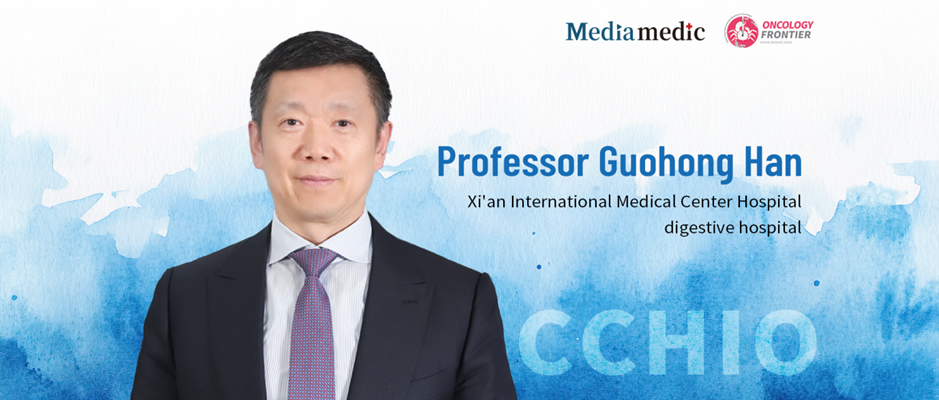
At the 2025 China Conference on Holistic and Integrative Oncology (CCHIO), Professor Han Guohong of Xi’an International Medical Center Hospital delivered a specialized lecture on “Clinical Application Strategies of Y-90 Under the 2025 BCLC Framework.” Oncology Frontier invited Professor Han for an in-depth interpretation of key updates and the evolving clinical positioning of Y-90 therapy.
01
Oncology Frontier: At CCHIO 2025, you presented “Clinical Application Strategies of Y-90 Under the 2025 BCLC Framework.” Under the new guidelines, how has the role of Y-90 changed across different BCLC stages?
Professor Han Guohong:
The 2025 edition of the BCLC staging and treatment strategy was just released. After reviewing it, we paid particular attention to the global consensus on Y-90.
In early-stage HCC, Y-90 has now been elevated to a curative-intent treatment option, listed alongside ablation, resection, and transplantation.
This change is grounded in clinical trial evidence. In the 2022 version, Y-90 was recommended only as a local therapy alternative for patients with a single tumor <8 cm. In the 2025 update, this recommendation has been revised: for early-stage HCC with small tumor burden—such as maximum diameter ≤3 cm or ≤3 lesions—Y-90 may be used as one of the curative modalities.
Whether it is ultimately chosen still depends on hospital capabilities and patient preference, but Y-90 is now firmly recognized as an important option in early HCC.
In intermediate-stage HCC, Y-90 is recommended as an alternative to TACE. TACE remains first-line, but for patients unsuitable for TACE or where TACE is not feasible, Y-90 is an endorsed replacement.
In advanced HCC, Y-90 is not recommended as first-line therapy. Current first-line options focus on targeted + immunotherapy or dual immunotherapy combinations. However, real-world clinical practice in China differs from Western countries or Japan/Korea: Chinese patients often present with much higher tumor burden. In such cases, systemic immunotherapy alone may be insufficient.
Thus, in China, we increasingly adopt combination strategies, such as targeted/immunotherapy plus Y-90. The goal is to achieve rapid tumor shrinkage or necrosis, increase PR or SD rates, and create opportunities for conversion surgery or other curative approaches. Downstaging and conversion therapy are becoming increasingly important in China’s clinical landscape.
02
Oncology Frontier: Compared with traditional methods such as TACE, what advantages does Y-90 SIRT offer?
Professor Han Guohong: Compared with TACE, Y-90 has several key advantages:
First, its antitumor efficacy is strong, with a clear tumor-shrinking effect. Y-90 emits β-radiation that kills tumor cells while minimizing damage to surrounding liver tissue.
Second, Y-90 promotes compensatory hypertrophy of the contralateral liver lobe, helping ensure sufficient future liver remnant volume during potential conversion surgery.
Third, Y-90 has demonstrated therapeutic benefit for portal vein tumor thrombus (PVTT). TACE provides little to no benefit for PVTT, whereas Y-90 can effectively target the thrombus — a major advantage given PVTT’s role as a clinical treatment challenge.
Fourth, patient treatment experience is significantly better. Because Y-90 destroys tumor tissue through radiation rather than ischemic necrosis, it avoids post-embolization syndrome common with TACE, leading to fewer symptoms and less hepatic impairment.
In summary, Y-90’s strengths lie in:
- potent tumor shrinkage,
- facilitating hypertrophy of the contralateral liver,
- meaningful efficacy against PVTT,
- and superior patient tolerance and experience.
These advantages support its growing clinical adoption. In the United States, among patients eligible for local therapy, approximately two-thirds now receive Y-90, with the remainder undergoing TACE only when Y-90 indications are not met.
03
Oncology Frontier: Most Chinese HCC patients are diagnosed at an advanced stage. What progress has been made regarding Y-90 SIRT in downstaging or conversion therapy for advanced HCC?
Professor Han Guohong: Indeed, 70%–80% of Chinese HCC patients are diagnosed at a stage where surgery is no longer an option. These patients typically receive interventional or systemic therapy. Recently, we have increasingly explored intervention plus systemic therapy to enhance outcomes.
With the growing use of Y-90, we are actively studying its combination with systemic treatments in intermediate and advanced disease. Multiple randomized controlled trials abroad have evaluated Y-90 combined with targeted therapies or immunotherapies. In our clinical practice, appropriately selected patients have shown substantial benefit.
We eagerly await more high-quality data to determine whether Y-90–based combination therapy can:
- convert unresectable to resectable disease,
- convert incurable cases to potentially curable ones,
- and ultimately extend survival.
These remain our overarching therapeutic goals.
04
Oncology Frontier: Looking ahead, what research directions for Y-90 SIRT in liver cancer deserve close attention?
Professor Han Guohong:
Although Y-90 has been used internationally for more than 20 years, case numbers remain limited, and data quality needs improvement. Key research areas include:
- deeper understanding of Y-90’s mechanisms,
- mechanisms of synergy with targeted and immunotherapies,
- strategies to further enhance therapeutic efficacy,
- criteria for surgical resection or liver transplantation post-combination therapy,
- and patient selection for optimal downstaging or conversion.
Globally, Western practice emphasizes downstaging followed by liver transplantation. In contrast, Chinese clinicians focus more on achieving conversion to surgical resection through local therapy (Y-90 or targeted-immunotherapy combinations), aiming to extend survival or even achieve cure.
Expert Message
National Cancer Prevention and Treatment Awareness Week: Promote cancer knowledge, strengthen health defenses. Cancer control succeeds through integration — and begins with science education.
Professor Han Guohong

President, Digestive Disease Hospital Xi’an International Medical Center Hospital