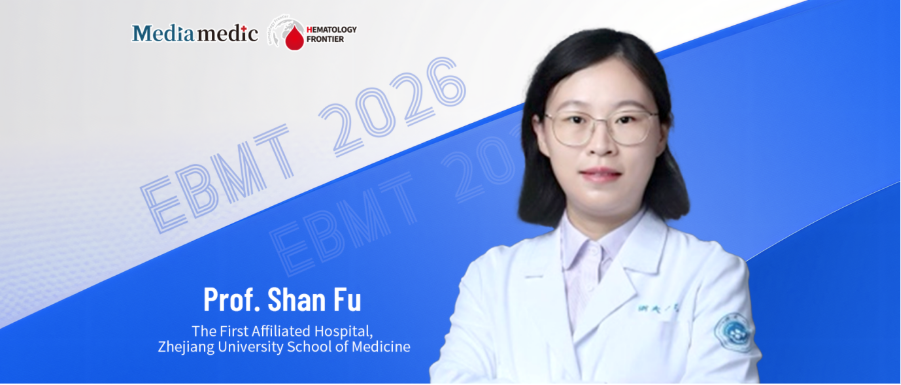
From March 22 to 25, 2026, the 52nd Annual Meeting of the European Society for Blood and Marrow Transplantation (EBMT) was held in Madrid, Spain. As one of the most influential conferences in the field, the meeting brought together thousands of experts worldwide to discuss the latest advances in transplantation and cellular therapy. During the meeting, Professor Shan Fu from the First Affiliated Hospital, Zhejiang University School of Medicine presented an oral report entitled “Ultra-Low-Dose IL-10–Expressing CAR-T Cells Achieve Robust Complete Remission in Relapsed/Refractory Diffuse Large B-Cell Lymphoma: Updated Results from a Phase I Trial.” The study provides important evidence for optimizing CAR-T clinical strategies.
Oncology Frontier – Hematology Frontier invited Professor Fu for an in-depth interview to discuss the core findings and their clinical implications.
Innovative Design: IL-10–Enhanced CAR-T and Ultra-Low-Dose Strategy
Professor Shan Fu: The data presented at this year’s EBMT meeting are derived from our Phase I clinical study evaluating IL-10–enhanced CD19 CAR-T cells in patients with relapsed or refractory diffuse large B-cell lymphoma (R/R DLBCL).
Compared with conventional CD19 CAR-T products, this IL-10–engineered CAR-T cell therapy exhibits several distinctive features. At the manufacturing stage, although the product is still derived from autologous T cells, the collection process has been simplified. Instead of using leukapheresis with specialized cell-separation equipment, peripheral blood can be collected directly for T-cell isolation. This streamlined approach significantly reduces procedural complexity, shortens production time, and lowers treatment costs.
Another key innovation lies in the infusion strategy. We explored an ultra-low-dose regimen, administering as little as one-thousandth of the conventional CAR-T dose in the lowest-dose cohort. Remarkably, even at such minimal doses, robust in vivo expansion of CAR-T cells was observed, accompanied by substantial therapeutic efficacy.
Study Overview and Key Findings
Abstract No.: OS18-O1 Title: Ultra-Low-Dose IL-10–Expressing CAR-T Cells Achieve Robust Complete Remission in R/R DLBCL: Updated Results of a Phase I Trial
CAR-T therapy has transformed the treatment landscape of R/R DLBCL; however, suboptimal complete remission rates and limited persistence of CAR-T cells remain key challenges. Preclinical studies in solid tumors have suggested that IL-10 engineering may enhance CAR-T cell function, but its clinical value in lymphoma has not been fully established.
To address this, we conducted an open-label, single-arm Phase I trial evaluating an IL-10–expressing CD19 CAR-T product (META10-19) in patients with R/R DLBCL. Between December 2023 and April 2025, a total of 13 patients were enrolled. Notably, the administered dose range (2 × 10³ to 2 × 10⁴ CAR-T cells/kg) represents the lowest reported dosing in the clinical CAR-T literature to date.
As of November 15, 2025, the results demonstrated an overall response rate of 100%, with a complete remission rate of 91.7%. From a safety perspective, both cytokine release syndrome and immune effector cell–associated neurotoxicity syndrome were predominantly low grade and manageable.
All patients exhibited significant in vivo expansion of META10-19, with a median peak expansion of 660.7 cells/μL. This was accompanied by a marked increase in plasma IL-10 levels, with a median peak of 1221.59 pg/mL.
Single-cell sequencing analyses further revealed that IL-10⁺ CD8⁺ CAR-T cells displayed enhanced proliferative capacity, higher activation status, and a distinct type 2 immune transcriptional program compared with IL-10⁻ subsets.
These findings provide preliminary evidence that ultra-low-dose META10-19 achieves both favorable safety and potent antitumor activity in R/R DLBCL. As one of the first cytokine-engineered CAR-T products evaluated in this population, META10-19 introduces a promising new therapeutic paradigm for aggressive B-cell malignancies. Larger studies with longer follow-up are needed to confirm the durability of these responses.
Clinical Implications: Toward Scalable and Accessible CAR-T Therapy
This study highlights a potential shift in CAR-T therapy from a paradigm of dose intensification to one of functional optimization. By enhancing CAR-T cell activity through cytokine engineering, it may be possible to achieve superior efficacy with substantially reduced cell doses.
Such an approach carries important implications for clinical practice, including improved safety profiles, reduced manufacturing burden, and greater accessibility of CAR-T therapy on a broader scale. If validated in larger trials, this “enhanced efficacy with reduced dose” strategy could represent a significant step forward in the evolution of cellular immunotherapy.
Expert Profile
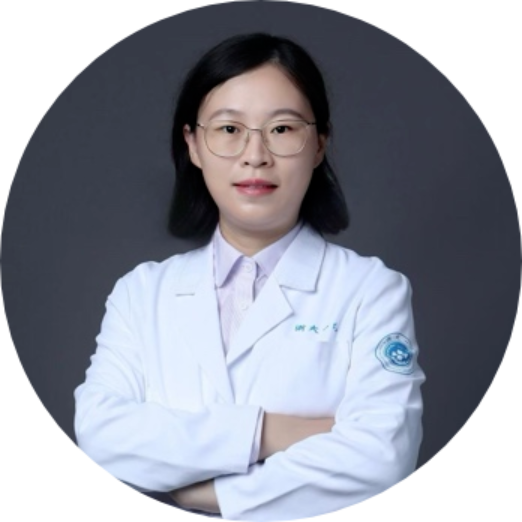
Shan Fu, MD, PhD Associate Chief Physician
Bone Marrow Transplantation Center
The First Affiliated Hospital, Zhejiang University School of Medicine
Professor Fu specializes in cellular immunotherapy for relapsed and refractory hematologic malignancies. She has led projects funded by the National Natural Science Foundation of China and participated in multiple national and provincial research programs. She has also contributed to award-winning scientific research recognized with the First Prize of the Zhejiang Provincial Science and Technology Progress Award.
Her research focuses on advancing innovative cellular therapies to improve outcomes for patients with difficult-to-treat hematologic cancers.