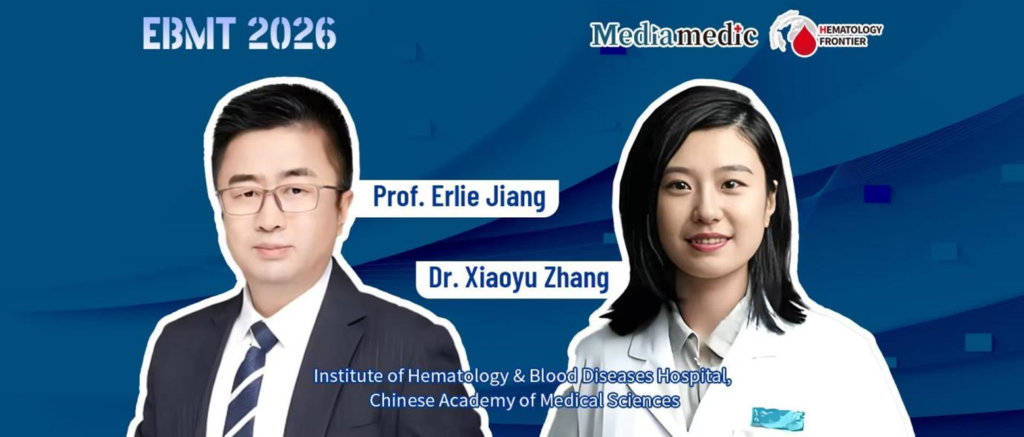
From March 22 to 25, 2026, the 52nd Annual Meeting of the European Society for Blood and Marrow Transplantation (EBMT) was held in Madrid, Spain. As one of the most influential academic events in the field, the meeting brought together thousands of experts worldwide to discuss the latest advances in transplantation and cellular therapy.During the conference, Dr. Xiaoyu Zhang from the team of Professor Erlie Jiang at the Institute of Hematology and Blood Diseases Hospital, Chinese Academy of Medical Sciences, presented an oral report titled “A Real-World Study of Olverembatinib as Bridging Therapy to Transplantation in Patients with Blast-Phase Chronic Myeloid Leukemia (CML-BP).” The study provides important real-world evidence to inform clinical decision-making.
Following the meeting, Hematology Frontier invited Dr. Zhang for an in-depth interview to discuss the key findings and their implications for clinical practice and future research.
Q1: addressing unmet needs in blast-phase CML
Hematology Frontier: Blast-phase CML remains a major clinical challenge. Your study is the first real-world evaluation of the third-generation TKI olverembatinib as a bridging therapy before transplantation. What clinical observations or treatment bottlenecks prompted you to explore this strategy?
Dr. Xiaoyu Zhang: Long-term survival in patients with blast-phase chronic myeloid leukemia (CML-BP) has remained a major challenge. For patients who do not receive bridging therapy prior to transplantation, outcomes are extremely poor, with long-term survival rates of less than 20%.
Even among those undergoing allogeneic hematopoietic stem cell transplantation, registry studies from EBMT and previous reports indicate that long-term survival in the era of first- and second-generation tyrosine kinase inhibitors (TKIs) has remained around 50%. Improving long-term outcomes and quality of life for these patients represents a clear unmet clinical need.
Olverembatinib, a third-generation TKI developed in China, has demonstrated significant efficacy in clinical trials involving patients with resistant chronic-phase and accelerated-phase CML. However, data on its use as a bridging therapy in blast-phase patients prior to transplantation have been limited.
Against this backdrop, our team conducted a single-center real-world analysis. The results were encouraging: all enrolled patients with blast-phase disease achieved hematologic remission following treatment with olverembatinib combined with chemotherapy, enabling a return to chronic phase and making them eligible for transplantation.
Notably, the regimen also induced deep molecular responses. The major molecular response (MMR) rate reached 53.8%, and some patients achieved complete molecular response (CMR, 23.1%). These deep responses are closely associated with improved long-term post-transplant outcomes.
Q2: clinical value compared with earlier-generation TKIs
Hematology Frontier: Your study included transplanted BC-CML patients and compared bridging outcomes between olverembatinib and first-/second-generation TKIs. Could you elaborate on the clinical significance of your findings?
Dr. Xiaoyu Zhang: Compared with first- and second-generation TKIs, the combination of a third-generation TKI—olverembatinib—with chemotherapy significantly improved both the rate and depth of response.
In our study, all patients treated with this regimen achieved hematologic remission, with favorable rates of complete cytogenetic response, complete hematologic response, and major molecular response. These findings confirm the clear advantage of this approach in inducing remission, with potential for even deeper responses.
Second, this strategy enabled patients to successfully bridge to allogeneic hematopoietic stem cell transplantation, thereby improving transplant outcomes. This improvement is reflected not only in survival benefits but also in relatively manageable transplant-related complications, likely due to effective reduction of tumor burden prior to transplantation.
Third, safety remains a key concern for transplant physicians when using TKIs in the bridging setting. Our findings indicate that the combination of a third-generation TKI with chemotherapy allows patients to achieve remission while safely transitioning to transplantation. Moreover, many patients were able to continue TKI maintenance therapy after transplantation. This manageable safety profile is an encouraging finding that may contribute to improved long-term survival.
Q3: future perspectives—optimizing transplant strategies and combination approaches
Hematology Frontier: Your study reflects two key trends: the importance of pre-transplant disease status and the role of novel targeted therapies in overcoming treatment limitations. At this year’s EBMT meeting, what new strategies or studies stood out to you regarding transplant indications and conditioning regimens? How do you envision the future interplay between transplantation and other therapies?
Dr. Xiaoyu Zhang: With a deeper understanding of the biology of chronic myeloid leukemia and insights gained from this year’s EBMT meeting, it is clear that research on transplantation in this disease continues to evolve.
Encouragingly, over the past two decades, overall survival after transplantation for CML patients has improved significantly. In China, the use of newer agents such as third-generation TKIs has further optimized pre-transplant disease status, laying a strong foundation for successful transplantation.
However, transplant physicians must recognize that there is still room for improvement. Treatment-related mortality remains relatively high, primarily due to complications—especially acute graft-versus-host disease (GVHD).
Therefore, future efforts should focus on optimizing low-toxicity conditioning regimens and improving strategies for the prevention of acute GVHD. Notably, a number of studies addressing these issues were presented at this year’s EBMT meeting.
Since last year, our center has also initiated several clinical studies on transplantation in CML. We look forward to sharing these findings with the academic community in the future.
Expert profiles
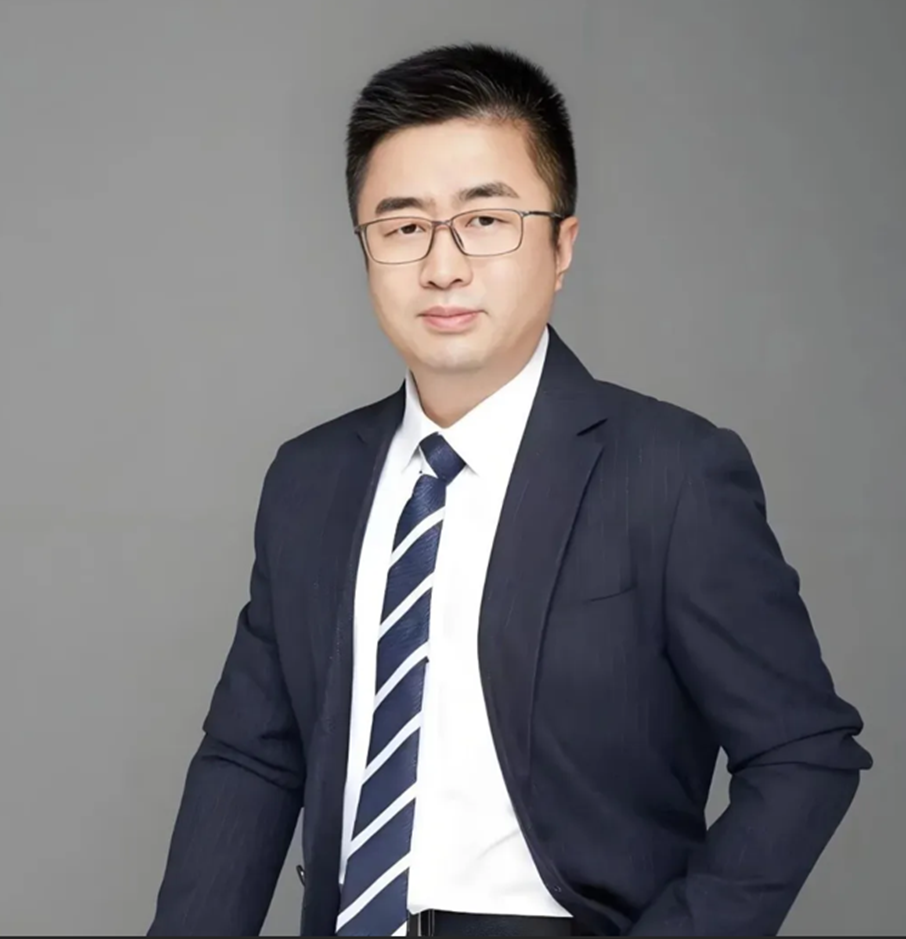
Professor Erlie Jiang Institute of Hematology and Blood Diseases Hospital, Chinese Academy of Medical Sciences
• Vice President; Director, Stem Cell Transplantation Center • MD, Chief Physician, Doctoral and Postdoctoral Supervisor • Chair, Leukemia Expert Committee, Chinese Society of Clinical Oncology (CSCO) • Deputy Head, Hematopoietic Stem Cell Application Group, Hematology Branch, Chinese Medical Association • President, Tianjin Society of Hematology and Regenerative Medicine • Editorial Board Member, Chinese Journal of Hematology, Leukemia & Lymphoma, among others
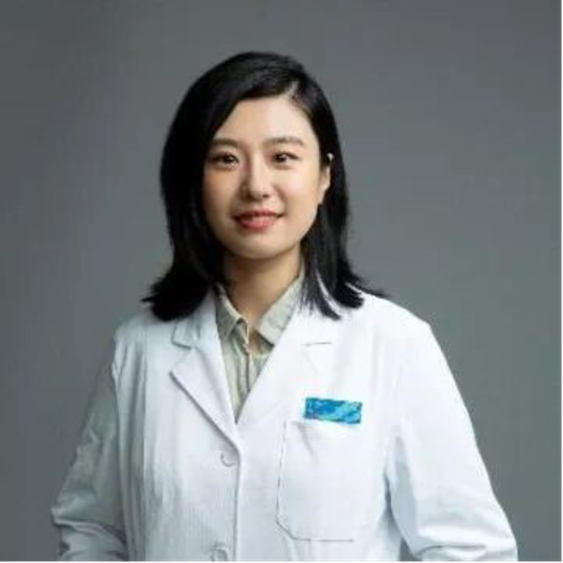
Dr. Xiaoyu Zhang Institute of Hematology and Blood Diseases Hospital, Chinese Academy of Medical Sciences
• MD • Graduate of Peking Union Medical College • Attending Physician, Stem Cell Transplantation Center • Research focus: hematopoietic stem cell transplantation