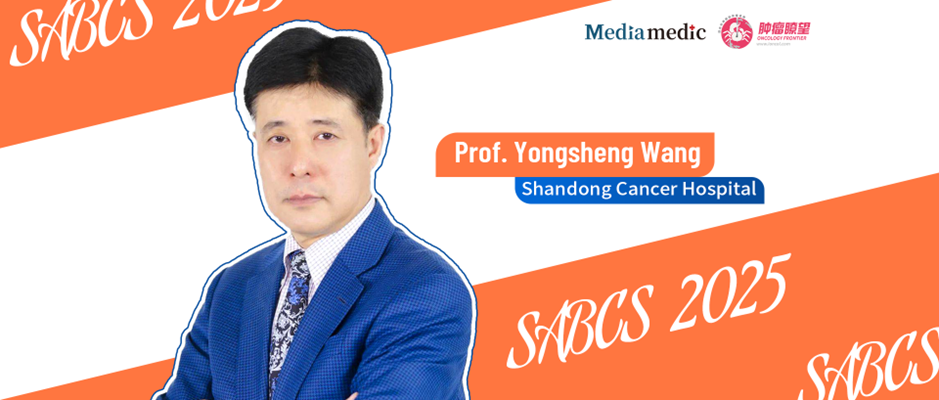
Editor’s Note As CDK4/6 inhibitors (CDK4/6i) secure their role in adjuvant therapy for HR+/HER2− early breast cancer, a central clinical challenge has emerged: how to maximize benefit while minimizing toxicity through precise patient stratification. At the 2025 San Antonio Breast Cancer Symposium (SABCS), Professor Wang Yongsheng and colleagues from Shandong Cancer Hospital presented a prospective study (Abstract PS2-07-20) that innovatively used dynamic Ki-67 changes to guide adaptive neoadjuvant therapy and probed mechanisms of resistance in depth. Oncology Frontier invited Professor Wang for an in-depth interpretation of this biomarker-driven clinical exploration.
Study Overview
Background With intensified adjuvant CDK4/6i therapy, the absolute improvement in invasive disease-free survival (IDFS) ranges from 4.9% to 7.6%. Given treatment-related adverse events and economic burden, identifying patients most likely to benefit is essential to avoid under- or overtreatment. Short-term adaptive neoadjuvant endocrine therapy (NET) may help select patients who would gain from treatment intensification. This study aimed to use adaptive NET to guide selection for CDK4/6i plus endocrine therapy and to explore molecular mechanisms of CDK4/6i resistance.
Methods Postmenopausal patients with stage II–III HR+/HER2− breast cancer and baseline Ki-67 >10% were prospectively enrolled in a multicenter trial (NCT05809024). All patients received 2 weeks of aromatase inhibitor (AI) NET followed by a second biopsy. Based on post-AI Ki-67 (cutoff 10%), patients were stratified into two groups. Those with Ki-67 ≤10% proceeded directly to surgery, while those with Ki-67 >10% received an additional preoperative cycle of AI plus the CDK4/6 inhibitor dalpiciclib. Tumor samples were collected at baseline, after AI, and after AI+CDK4/6i for single-cell RNA sequencing and next-generation sequencing (NGS).
Results Between February 2023 and 2025, 120 patients were enrolled. After 2 weeks of AI therapy, 68.3% achieved Ki-67 ≤10% and were considered AI-responsive, while 31.7% remained Ki-67 >10%. Among AI-nonresponsive patients, 50.0% converted to Ki-67 ≤10% after one cycle of AI plus CDK4/6i, while the remaining 50.0% did not. No new drug-related adverse events were observed.
Single-cell sequencing in 23 patients identified seven cell clusters, including B cells, CD8+ T cells, endothelial cells, epithelial cells, fibroblasts, macrophages, and mast cells. Mast cells were enriched in AI-nonresponsive tumors, whereas malignant epithelial C2 clusters were enriched in CDK4/6i-nonresponsive tumors.
Bulk transcriptomics in 52 samples showed upregulation of FUT6, APOF, and SERPINA6 in CDK4/6i-nonresponsive tumors, with FUT6 being the most prominent. NGS in 61 patients revealed that PIK3CA mutations were present in 54.5% at baseline, increased to 60.6% after AI, and decreased to 42.8% after AI+CDK4/6i, with markedly lower rates in CDK4/6i-responsive patients. TP53 mutation rates increased stepwise during treatment and were highest in CDK4/6i-nonresponsive tumors.
Conclusions For patients initially nonresponsive to AI, adding a CDK4/6 inhibitor significantly reduced Ki-67, suggesting benefit from treatment intensification. The malignant epithelial C2 cluster and FUT6 were identified as potential mediators of CDK4/6i resistance. Persistent or emergent PIK3CA and TP53 mutations during adaptive therapy may serve as molecular markers of resistance to sequential AI and CDK4/6i treatment.
Investigator’s Perspective
Study Rationale: Doing Subtraction Precisely, Addition Wisely Although CDK4/6i-based adjuvant therapy improves IDFS, its adverse effects and economic impact cannot be ignored. The key challenge is to avoid overtreatment in low-risk patients while preventing undertreatment in those at high risk. This study used short-term NET as an in vivo drug-sensitivity test. A rapid drop in Ki-67 below 10% after 2 weeks of AI suggests endocrine sensitivity, allowing treatment de-escalation. Persistently high Ki-67 identifies patients who may benefit from timely CDK4/6i intensification, embodying a strategy of “precise subtraction and judicious addition.”
Clinical Findings: Reversing Endocrine Insensitivity In this cohort, more than two-thirds of patients responded to short-term AI alone. Importantly, half of those initially AI-insensitive achieved Ki-67 suppression after adding a CDK4/6 inhibitor, confirming the feasibility of adaptive escalation and validating Ki-67 as a real-time biomarker to guide therapy.
Mechanistic Insights: FUT6 and the Tumor Microenvironment Single-cell analyses highlighted the role of the tumor microenvironment in resistance. Mast cells were enriched in AI-nonresponsive tumors, while a distinct malignant epithelial C2 cluster characterized CDK4/6i resistance. FUT6 emerged as a key upregulated gene in resistant tumors, suggesting both biomarker potential and a future therapeutic target.
Genomics and the “Safety Net” Concept NGS revealed that PIK3CA mutations often persisted despite therapy, while TP53 mutations accumulated with resistance. These findings suggest that persistent PI3K-pathway activation and TP53 alterations form a molecular “safety net” for resistant clones. Early integration of targeted agents, such as PI3K inhibitors, may be required to overcome this barrier.
Looking Ahead This study supports a shift from static clinicopathologic decision-making to a dynamic, biology-driven approach. By integrating Ki-67 dynamics with multi-omics biomarkers such as FUT6 expression and PIK3CA status, clinicians may identify resistance earlier and tailor therapy more precisely. Ultimately, this strategy aims to deliver individualized treatment—doing less for those who need less, and more for those who need more—to optimize survival and quality of life.
Professor Wang Yongsheng Shandong Cancer Hospital