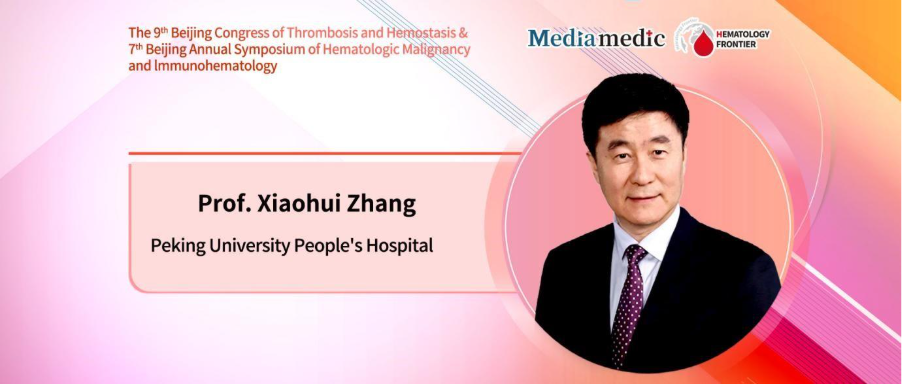
In March, as spring brings renewed vitality to Beijing, the 9th Beijing Conference on Thrombosis and Hemostasis, together with the 7th Beijing Hematologic Oncology and Immunology Summit Forum, was held from March 27 to 28, 2026, coinciding with the 25th anniversary of the Hematology and Immunology Branch of the Chinese Society of Immunology. During the conference, the leadership transition of the branch was successfully completed, with Professor Xiaohui Zhang from Peking University People’s Hospital and the Peking University Institute of Hematology elected as the new Chair. As Executive Chair of the conference, he was also deeply involved in its organization. In an interview with Oncology Frontier – Hematology Frontier, Professor Zhang systematically reviewed the 25-year development of hematologic immunology, highlighting the pivotal role of the integration between hematology and immunology in driving advances in diagnostic and therapeutic technologies. Drawing on the collaborative achievements presented at the meeting, he further analyzed recent progress in gene therapy, cellular therapy, and transplantation, and outlined a future development trajectory grounded in immunological mechanisms and guided by clinical needs.
Twenty-Five Years of Integration: Cross-Disciplinary Synergy Driving Transformative Progress
Professor Xiaohui Zhang: Since its establishment in 2001, the Hematology and Immunology Branch of the Chinese Society of Immunology has undergone 25 years of continuous development. The field has evolved from an early focus on basic research to a comprehensive system encompassing technological innovation, translational application, and industrial development. This progression has resulted in a full-spectrum framework spanning fundamental research, platform construction, clinical translation, and industry integration.
Throughout this process, hematology and immunology have demonstrated a high degree of convergence at the level of disease pathogenesis, with increasing interdisciplinary integration driving the evolution of theoretical frameworks and research paradigms.
At the technological level, advances in immunological detection techniques—exemplified by flow cytometry—have established precision diagnostics as a central platform, significantly enhancing risk stratification and disease management in hematologic disorders. At the therapeutic level, key innovations such as CAR-T cell therapy, antibody-based therapies, and targeted agents have transformed treatment paradigms, shifting from traditional chemotherapy toward more precise and individualized approaches.
Building on these foundations, the deep integration of hematology and immunology is entering a new phase, with promising prospects in novel target discovery, innovative drug development, and the standardization of clinical research.
Multicenter Collaboration and Technological Innovation: Showcasing Cutting-Edge Advances
Professor Xiaohui Zhang: Against the backdrop of rapid advances in life sciences and medical technology, China has gradually established a collaborative, multicenter innovation framework in the fields of hematology and immunology. This conference brought together academicians, leading researchers, and frontline clinicians from across the country to engage in comprehensive discussions on key scientific questions and technological breakthroughs, highlighting significant progress achieved in both basic research and clinical practice.
The program covered a wide range of critical areas, including gene therapy, cellular therapy, hematopoietic stem cell transplantation, and optimization strategies for these modalities. At the same time, important advances were presented in understanding the pathogenesis and clinical management of complex and refractory diseases.
Ongoing exploration of new technologies, treatment strategies, and research platforms reflects a rapid enhancement of the field’s overall innovation capacity, while also providing strong support for the translation of scientific discoveries into clinical applications. Through further strengthening multicenter collaboration and interdisciplinary integration, it is anticipated that resources can be more effectively consolidated to build an innovation system with greater international competitiveness.
A New Starting Point and New Mission: Toward an Immunology-Based, Clinically Driven Innovation System
Professor Xiaohui Zhang: The convening of this conference not only represents a comprehensive review of the past 25 years but also marks the beginning of a new stage in the development of hematologic immunology. Looking ahead, the field will be grounded in immunological mechanisms and guided by clinical needs, with a focus on addressing unmet challenges in disease diagnosis and treatment. This will involve promoting the deep integration of basic research, technological innovation, and clinical application, ultimately establishing a new disciplinary framework characterized by sustained innovation and efficient translation.
In terms of strategic priorities, efforts should be directed toward strengthening the development of original immunotherapeutic technologies, with an emphasis on achieving breakthroughs in core technologies and intellectual property. At the same time, emerging tools such as artificial intelligence should be leveraged to accelerate target discovery and drug development, thereby improving the efficiency of translating scientific advances into clinical practice.
Equally important is the cultivation of talent and the development of a robust academic pipeline, particularly by supporting the growth of early-career researchers. Through enhanced domestic and international academic exchange, as well as strengthened collaboration across research, clinical, and industrial sectors, a more integrated ecosystem can be established. Continuous generation of high-quality innovative outcomes will further enhance China’s global influence in hematology and immunology and provide strong support for the implementation of the “Healthy China 2030” strategy.
Expert Profile
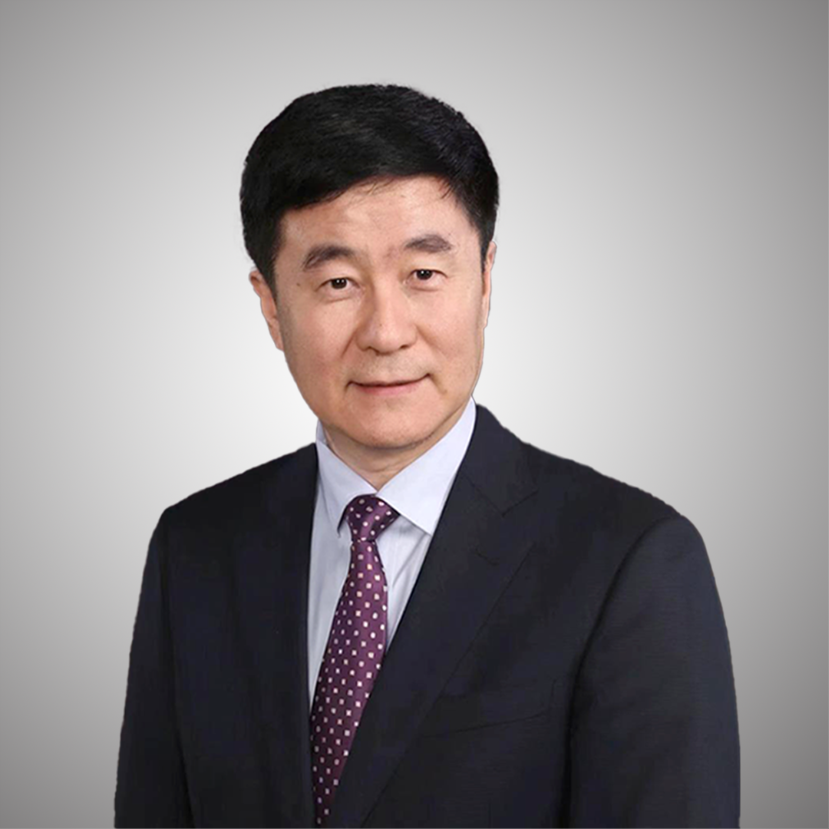
Xiaohui Zhang, MD, PhD Chief Physician, Second-Level Professor, Doctoral and Postdoctoral Supervisor
Professor Zhang serves as Deputy Director of the Department of Hematology at Peking University People’s Hospital and Deputy Director of the Peking University Institute of Hematology. He is also Deputy Director and Director of the Office of the National Clinical Research Center for Hematologic Diseases.
He is currently Chair of the Hematology and Immunology Branch of the Chinese Society of Immunology, President-Elect of the Hematology Branch of the Chinese Medical Association, and Head of the Hematopoietic Stem Cell Application Group.
Professor Zhang has led 45 national research projects, including key national R&D programs and major grants from the National Natural Science Foundation of China. He has published 159 SCI-indexed papers as first or corresponding author, holds 15 national invention patents, and has led the development of 49 Chinese consensus statements and clinical guidelines in transplantation and hemostasis. He has delivered 45 invited presentations at major international hematology conferences, including ASH and EHA.
He has been awarded the title of “National Distinguished Physician for Outstanding Contributions” and has received multiple prestigious honors, including the First Prize of the Huaxia Medical Science and Technology Award, the Second Prize of the Chinese Medical Science and Technology Award, and, as a contributing investigator, two National Science and Technology Progress Awards (Second Prize).