To further advance scientific research and clinical practice in hematologic malignancies in China and establish an authoritative academic exchange platform for the field, the 2026 Boren Hematologic Malignancies Precision Diagnosis and Treatment Conference, jointly organized by the Beijing Association for the Promotion of Integrated Chinese and Western Medicine in Chronic Disease Prevention and the Beijing Society of Bioengineering, was officially held in Beijing on May 16 in a hybrid online-offline format. The conference brought together leading experts and scholars in hematologic malignancies from across the country, focusing on cutting-edge technologies, clinical experience, and future directions in the discipline, creating a professional event with high academic value, strong clinical relevance, and broad industry influence.During the conference, Professor Yuehui Lin from Beijing Gaobo Boren Hospital shared insights into current diagnostic and treatment strategies for acute leukemia and offered forward-looking perspectives on optimizing multidisciplinary care models, providing valuable guidance for advancing precision medicine and improving patient outcomes in clinical practice.
Q1: With the approval of an increasing number of targeted therapies, treatment options for acute leukemia are becoming more diverse. In clinical practice, how do you stratify and sequence individualized targeted therapies based on patients’ molecular and genetic characteristics? How does your team usually address common resistance issues?
Professor Yuehui Lin: In clinical practice, our team routinely performs comprehensive evaluations for most patients, including multidimensional integrated diagnostics covering morphology, immunology, cytogenetics, and molecular genetics (MICM). Based on these findings, we develop more precise diagnostic and therapeutic plans.
The selection of targeted therapies is primarily guided by gene mutation testing results. If patients harbor well-established driver mutations, such as FLT3 or IDH mutations, several targeted agents with robust clinical evidence are already available, allowing us to select therapies according to the specific mutation type.
In terms of treatment strategy, monotherapy is generally avoided, and combination regimens are preferred. These combinations are designed based on molecular profiling results, integrating specific targeted agents such as FLT3 inhibitors combined with BCL-2 inhibitors or hypomethylating agents.
For high-risk or relapsed/refractory patients in whom resistance is anticipated, we may further perform testing for resistance-associated mutations to better understand underlying resistance mechanisms. Such analyses help identify potentially effective targeted agents while also allowing consideration of broader-spectrum inhibitors, such as XPO1 inhibitors, in combination strategies aimed at overcoming resistance.
In addition, we work closely with molecular laboratories to explore alterations in signaling pathways, including bypass activation or suppression mechanisms. Through collaborative analysis of these pathway changes, we can identify additional targeted therapies suitable for combination treatment, thereby expanding therapeutic options for resistant disease.
Q2: As new targeted agents and combination strategies continue to emerge, treatment pathways for acute leukemia are evolving rapidly. Which recent advances in targeted therapy do you believe hold the greatest translational potential? In real-world practice, how does your team determine the “optimal” treatment strategy based on clinical evidence, accessibility, and health economics considerations?
Professor Yuehui Lin: The treatment landscape for leukemia is undergoing profound transformation. For example, in Philadelphia chromosome-positive acute lymphoblastic leukemia (Ph+ ALL), the continuous evolution of targeted therapies has significantly improved outcomes, with some patients now able to avoid chemotherapy or even transplantation altogether.
In acute myeloid leukemia (AML), FLT3-mutated disease was historically associated with poor prognosis. However, with advances in targeted therapies, multiple FLT3 inhibitors are now available, and the use of combination regimens has substantially improved prognosis and reshaped treatment paradigms for these patients.
When selecting among currently accessible targeted therapies, we also consider patients’ financial circumstances and prioritize combination strategies using agents less prone to resistance whenever feasible.
In the field of acute leukemia, targeted therapies for Ph+ ALL, particularly successive generations of tyrosine kinase inhibitors (TKIs), remain highly influential. In AML, FLT3 inhibitors, IDH inhibitors, and other emerging agents have also become important therapeutic options.
Beyond these advances, one of the most promising recent developments is the emergence of Menin inhibitors. These agents have demonstrated activity not only in leukemia subtypes with relatively favorable prognosis, such as NPM1-mutated disease, but also in high-risk subtypes associated with KMT2A rearrangements or NUP98 rearrangements. As a result, Menin inhibitors are receiving considerable attention and are further reshaping the landscape of targeted leukemia therapy.
Q3: Looking ahead, where do you believe the next major breakthroughs in targeted therapy for acute leukemia will occur? Correspondingly, how should the MDT model evolve to better meet the demands of the precision medicine era and maximize patient benefit?
Professor Yuehui Lin: Future advances in leukemia treatment will depend on comprehensive molecular and genetic testing, which provides the foundation for precision-targeted therapeutic decision-making.
In addition, combination strategies involving multiple targeted agents are expected to bring transformative changes to the treatment landscape of acute leukemia. A deeper understanding of both primary and secondary signaling pathways, together with combined pathway-targeting approaches, may generate entirely new therapeutic breakthroughs.
Importantly, the multidisciplinary team (MDT) model must continue to expand and evolve. Participation should extend beyond frontline clinicians to include laboratory specialists in molecular biology, flow cytometry, and cytogenetics much earlier and more systematically in the clinical decision-making process, enabling tighter integration between diagnosis and treatment planning.
Imaging modalities such as PET-CT should also be incorporated into this integrated framework. Ultimately, the goal is to establish a truly unified MDT model that fully integrates clinical medicine, laboratory diagnostics, and imaging, thereby enabling more comprehensive and precise patient management.
Expert Profile

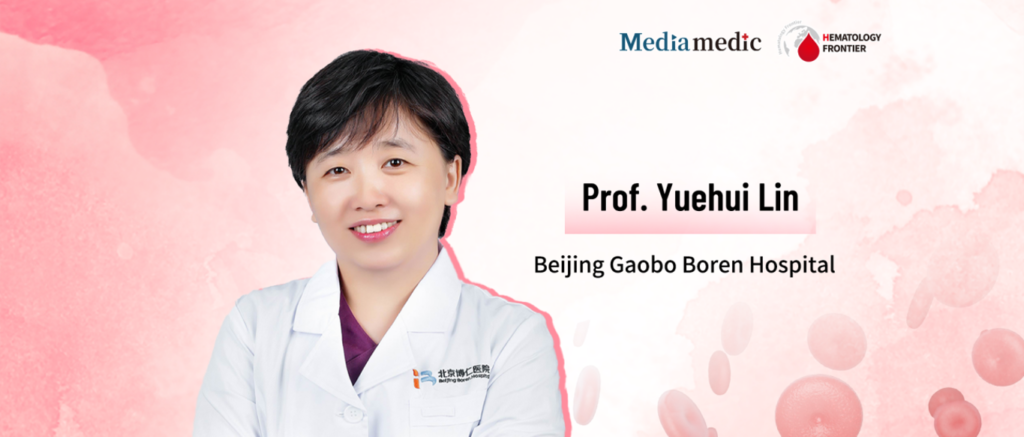
Professor Yuehui Lin Gaobo Medical (Hematology) Beijing Research Center Beijing Gaobo Boren Hospital Associate Chief Physician Master of Medicine, Institute of Hematology, Chinese Academy of Medical Sciences Member, Leukemia Immunotherapy Collaborative Group, China Hematology Specialty Alliance Associate Editor, Integrated Diagnosis of Lymphoma
Professor Lin has nearly 20 years of clinical experience in hematology, primarily focusing on chemotherapy, targeted therapy, and CAR-T-related treatment for hematologic diseases, including lymphoid malignancies and acute myeloid leukemia.
He has also worked extensively in flow cytometry and pathological diagnosis of hematologic malignancies while receiving systematic training in cellular morphology, giving him a strong laboratory diagnostic foundation and deep expertise in the diagnosis of hematologic cancers.
His specialties include integrated diagnosis, immunotherapy, and targeted therapy for hematologic malignancies, as well as extensive experience in chemotherapy and cellular immunotherapy for blood diseases.