On November 2, 2025, Professors Michael R. Bishop, M.D. and Edmund Waller visited the Peking University Institute of Hematology for an academic exchange that included ward rounds, keynote lectures, and in-depth discussions on the latest progress in cellular therapy for hematologic malignancies and the future of international collaboration.
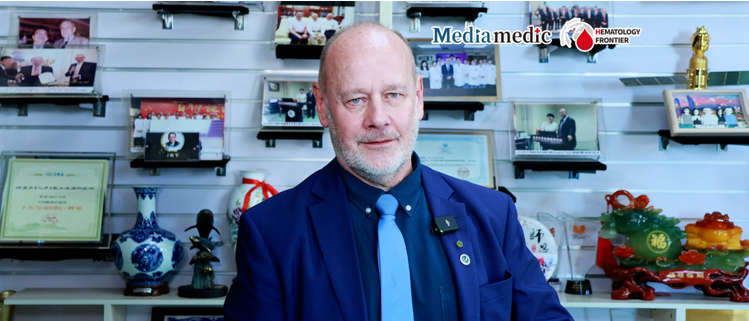
Professor Edmund K. Waller of Emory University School of Medicine delivered a keynote lecture titled “Intercepting VIP Signaling for Cancer Immunotherapy,” outlining his team’s breakthrough research on targeting the VIP signaling pathway and developing next-generation CAR-T strategies. In an interview with Hematology Frontier, he expanded on the scientific rationale and clinical potential of this work.
Professor Waller explained that many tumors secrete VIP, a potent immunosuppressive peptide that inhibits T-cell activation and reduces CAR-T effectiveness. His team has developed modified CAR-T cells capable of secreting a VIP receptor antagonist to counter this suppression. He noted that pancreatic cancer and chronic lymphocytic leukemia both characterized by high VIP expression are promising initial targets for this therapy. By neutralizing VIP, engineered CAR-T cells may enter the tumor microenvironment more effectively and exert stronger anti-tumor activity. His team is actively advancing an FDA New Drug Application to move this approach into clinical testing.
Beyond modified CAR-T cells, Professor Waller discussed future directions including a long-acting VIP-blocking peptide suitable for weekly subcutaneous administration. Phase I trials are being planned to evaluate this new class of immunotherapy, both as a standalone agent and as a component engineered directly into CAR-T cells.
Reflecting on his visit to Peking University People’s Hospital, Professor Waller praised the institution’s leadership in hematopoietic stem cell transplantation, noting its more than 1,200 annual allogeneic transplants and global influence through the widely adopted “Beijing Protocol.” He also highlighted China’s strength in investigator-initiated CAR-T trials, but pointed out the challenges in achieving regulatory approval under the stringent requirements of the National Medical Products Administration, including long-term follow-up and rigorous manufacturing standards. While early-phase results are highly promising, bridging these regulatory gaps remains a key priority for expanding patient access.
Professor Waller emphasized the strong potential for deeper international collaboration, particularly in combining clinical experience, scientific innovation, and regulatory expertise to accelerate the global translation of next-generation cellular therapies.