
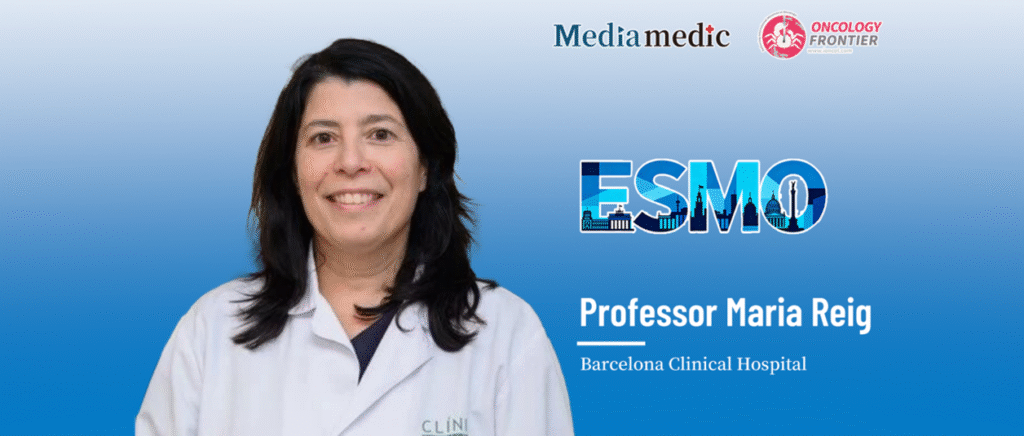
The Barcelona Clinic Liver Cancer (BCLC) staging system is the cornerstone framework guiding treatment decisions for hepatocellular carcinoma (HCC). Its fundamental role lies in stratifying patients according to three key prognostic determinants—tumor burden, liver function, and performance status—thereby aligning prognosis assessment with evidence-based treatment recommendations for each disease stage.For patients with very early (BCLC-0) or early-stage (BCLC-A) HCC, stereotactic body radiotherapy (SBRT) has emerged as an effective curative alternative. At ESMO 2025, Professor Maria Reig and her team reported results from a large-scale study evaluating external beam radiotherapy (EBRT) in HCC. The study demonstrated that overall survival (OS) outcomes following EBRT across different BCLC stages were comparable to those achieved with surgical resection, thermal ablation, and other locoregional therapies, supporting the integration of EBRT into clinical decision-making for HCC [1].
In addition, Professor Reig presented findings from another study showing that, in patients who progressed on first-line sorafenib, second-line treatment with regorafenib plus nivolumab achieved a median OS of 25 months. Oncology Frontier invited Professor Reig from Hospital Clínic of Barcelona to interpret these two studies and analyze their potential impact on clinical practice guidelines.
01
Oncology Frontier:** How is EBRT currently being applied in HCC treatment across Europe, and how does its clinical efficacy compare with traditional modalities such as surgery and ablation? In your view, what are the core advantages of EBRT, and what challenges might limit its broader adoption?
Professor Maria Reig
As is well known, current HCC treatment strategies are based on the BCLC staging system, with different stages corresponding to different therapeutic approaches, all aimed at improving overall survival.
The study we presented represents the largest cohort to date evaluating EBRT in HCC. However, there are currently no direct comparative data between EBRT and other treatment modalities. The key strength of this study lies in the fact that we have now treated more than 4,000 patients with EBRT.
This large dataset allows us to comprehensively describe patient characteristics and associated overall survival outcomes. However, it would be inappropriate to draw conclusions regarding the superiority or inferiority of EBRT compared with other treatments, as the available data do not support such comparative analyses at this time.
02
Oncology Frontier:** At ESMO 2025, you reported two studies. Could you briefly summarize their key findings, and share your insights on the role of EBRT across different BCLC stages?
Professor Maria Reig
We presented two academic studies.
The first was a multicenter cohort study [1], enrolling 4,913 HCC patients treated with EBRT across 96 international centers, making it the largest cohort study in this field to date. Patients were stratified according to BCLC stage, and overall survival was analyzed.
Among patients with BCLC stage 0 (very early-stage disease), the median survival reached 6.4 years. Early-stage patients also achieved very favorable outcomes. Most importantly, this study provides—for the first time—a comprehensive characterization of patients receiving EBRT worldwide.
The second study was an ongoing clinical trial known as the “GOING Trial” [2]. This study enrolled patients previously treated with sorafenib and evaluated regorafenib plus nivolumab as second-line therapy. In this setting, the median OS reached 25 months.
Another cohort within this trial included patients previously treated with immunotherapy. Although the combination demonstrated acceptable safety in this group, the efficacy of regorafenib plus nivolumab did not meet expectations.
Both studies offer valuable insights for clinical practice. Importantly, neither study was primarily designed to demonstrate an improvement in overall survival. Rather, their key contribution lies in describing patient characteristics and providing meaningful information to support clinical decision-making.
03
Oncology Frontier:** Current BCLC guidelines do not recommend EBRT as a first-line treatment for HCC, yet your findings suggest survival outcomes comparable to surgery and ablation. How might these results influence future guideline updates? Should EBRT be considered a recommended option for early-stage HCC?
Professor Maria Reig
Yes, we will soon release the updated BCLC guidelines in Barcelona [3], and I cannot disclose details in advance.
However, I can share that the new guidelines will introduce the concept of “clinical decision-making advice.” This concept focuses on how clinicians should navigate complexity, uncertainty, and subjectivity in treatment selection, and how to make appropriate judgments in key clinical decision points.
Based on current evidence, we distinguish between different types of studies. Although some studies may not demonstrate an overall survival benefit, their contributions in terms of efficacy, safety, and clinical trial indications remain highly relevant.
Therefore, rather than simply pooling non-overlapping treatment strategies, we favor context-specific comparisons and the integration of such data into more refined clinical pathways. After the release of the updated BCLC guidelines, I would be delighted to discuss these changes with you in greater detail.
04
Oncology Frontier:** Based on your findings, what areas of EBRT in HCC treatment remain underexplored? For example, combination strategies with immunotherapy or dose optimization—how should multidisciplinary teams (MDTs) collaborate to maximize therapeutic benefit?
Professor Maria Reig
Multidisciplinary teams (MDTs) are absolutely essential—not only for routine clinical care, but also for the design and execution of clinical trials. Our overarching goal is to provide standardized treatment information for all patients and to establish structured treatment pathways for this population.
At present, while clinical data on EBRT in combination with other therapies remain limited, benchmark survival expectations for EBRT monotherapy have now been established. These benchmarks will serve as a critical foundation for the design of future clinical trials evaluating combination strategies.
Combination approaches involving EBRT are therefore regarded as a highly promising direction for future research.

Professor Maria Reig
Director, Liver Tumor Unit Hospital Clínic of Barcelona