

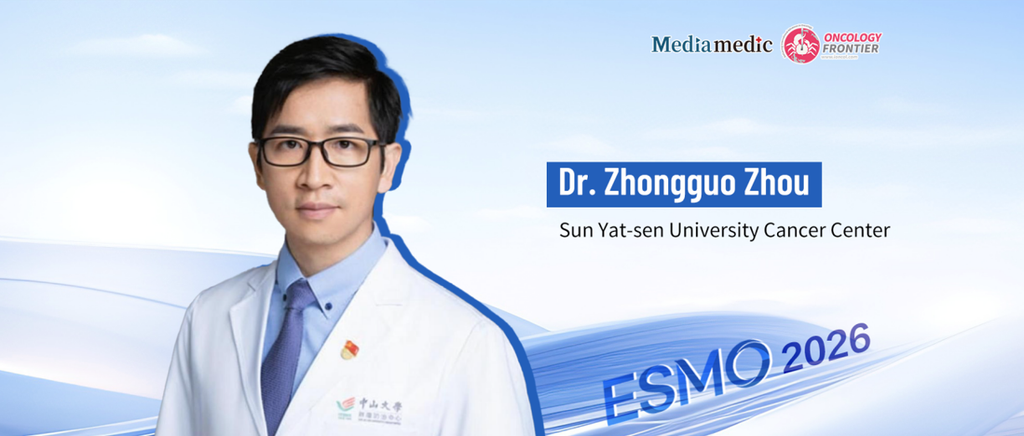
Editor's Note: The 2026 Congress of the European Society for Medical Oncology (ESMO) was held in Madrid, Spain. As one of the most influential academic events in global oncology, the congress brought together cutting-edge cancer research from around the world. Several clinical studies from China were selected for presentation, sharing the country's clinical explorations and insights with the international oncology community. Significant unmet clinical needs remain in the later-line treatment of hepatocellular carcinoma (HCC), and real-world studies can provide valuable evidence to inform clinical practice. At this year's congress, a real-world study conducted by Professor Zhongguo Zhou's team at Sun Yat-sen University Cancer Center was selected for poster presentation. To discuss the rationale behind the study, its clinical implications, and future research directions, Oncology Frontier invited Professor Zhou for an interview to share insights into this investigation of combination therapy for later-line HCC.01
Oncology Frontier: Your team’s study, selected for presentation at this year’s congress, focused on patients with later-line HCC and compared the efficacy and safety of dual immunotherapy with or without interventional therapy. What prompted you to conduct this study? Which unresolved clinical questions in later-line HCC treatment did you hope to address?
Professor Zhongguo Zhou: The rationale for this study came directly from clinical practice. Dual immunotherapy has already established a clear role in first-line treatment for advanced HCC. However, evidence supporting subsequent treatment after progression on first-line therapy remains relatively limited.
In real-world practice, many patients receiving later-line treatment still have intrahepatic lesions that are amenable to local intervention. Whether to combine systemic treatment with local therapy is therefore a decision that clinicians often make based largely on their own experience. We hoped to address two questions for which there are currently no definitive answers.
First, can adding interventional therapy to dual immunotherapy further improve PFS and enhance disease control in patients receiving later-line treatment? Second, could this combination impose intolerable toxicity on patients whose hepatic functional reserve is already limited?
The poster presented at ESMO was based on real-world data from 53 patients treated at our center and represents an attempt to explore these questions.
02
Oncology Frontier: Based on the real-world data from this study, what benefits did the addition of interventional therapy to dual immunotherapy bring to patients with later-line HCC? In light of your findings, which patients may be more suitable candidates for this combination strategy?
Professor Zhongguo Zhou: Let me first introduce the study results. We included 53 patients with HCC whose first-line treatment had failed. Among them, 37 received Nivo/Ipi dual immunotherapy, while 16 received Nivo/Ipi combined with interventional therapy.
According to RECIST 1.1 assessment, median PFS was significantly better in the combination group, with an HR of 0.17 (95% CI, 0.04–0.75; P=0.008). The DCR was 87.5% versus 51.4% (P=0.015).
The differences in clinical benefit were even more pronounced when assessed using mRECIST. The HR for PFS was 0.18 (P=0.012). The ORR was 25.0% versus 2.8% (P=0.025), and the DCR was 87.5% versus 54.1% (P=0.029).
The key message from this study is that, in the later-line setting, the benefit of combining dual immunotherapy with interventional therapy may extend beyond local tumor control. The two approaches appear to have complementary effects on overall treatment outcomes.
Based on the available data, we would prioritize consideration of this strategy for three types of patients.
The first group comprises patients with a manageable intrahepatic tumor burden and lesions suitable for embolization or infusion, whose systemic disease is not progressing explosively.
The second group includes patients with good performance status, predominantly Child-Pugh A liver function, and relatively well-preserved hepatic reserve.
The third group consists of patients whose disease has progressed following first-line immunotherapy-based targeted treatment but who still have the potential to achieve disease control with another treatment strategy.
Of course, these considerations are only clues suggested by a retrospective study. They should not be regarded as definitive criteria for patient selection. Prospective studies are needed to more precisely define the population most likely to benefit.
03
Oncology Frontier: The study found notably higher incidences of thrombocytopenia and hypoalbuminemia in the combination group. Although the difference in severe adverse events was not statistically significant, how should clinicians balance efficacy against toxicity risks when applying this strategy in real-world practice?
Professor Zhongguo Zhou: This is a very important question. We do not overlook these findings. The incidence of adverse events (AEs) of any grade was 81.2% versus 70.3% (P=0.510), while the incidence of grade ≥3 severe AEs was 37.5% versus 16.2% (P=0.150). Although the differences were not statistically significant, the numerical incidence of adverse events was higher in the combination group, particularly thrombocytopenia and hypoalbuminemia.
We believe these abnormalities are not necessarily attributable entirely to immune-related toxicity. They may also reflect the effects of interventional therapy, including secondary bone marrow suppression following embolization, platelet consumption in the context of pre-existing hypersplenism, and fluctuations in nutritional and metabolic status.
In clinical practice, we focus on three aspects of management.
First, careful patient selection before treatment. Before performing interventional therapy, we thoroughly assess platelet counts, albumin levels, bilirubin, ascites, and the risk of portal hypertension.
Second, reducing the extent of intervention without abandoning the treatment strategy. Rather than performing extensive, saturating embolization, we favor precise, carefully planned, and staged embolization whenever possible, with the aim of preserving hepatic functional reserve.
Third, continuous monitoring throughout treatment. During dual immunotherapy, we reassess complete blood counts, liver and kidney function, and albumin levels during every treatment cycle. If grade 2 or higher warning signs emerge, treatment is suspended promptly rather than forcing continued administration.
Therefore, achieving better efficacy does not depend on simply increasing treatment intensity. It relies on selecting the appropriate treatment timing and implementing risk-stratified management to balance benefits and risks.
04
Oncology Frontier: Treatment options for later-line HCC remain quite limited. What insights can the poster findings from this real-world study offer for clinical practice and future research? What further investigations does your team plan to pursue in this area?
Professor Zhongguo Zhou: The significance of this poster is not that it changes clinical guidelines, but that it highlights a combination strategy in later-line HCC that can easily be overlooked: subsequent treatment does not necessarily have to involve switching to another systemic regimen alone. There may still be opportunities for synergy between local and systemic therapies.
There are two main implications for clinical practice.
First, treatment decisions for patients receiving later-line therapy should be made through a multidisciplinary team (MDT) approach. Dual immunotherapy and interventional therapy should not be considered in isolation from one another.
Second, response assessment should not rely exclusively on RECIST. For patients receiving local treatment, mRECIST may offer greater sensitivity. The more pronounced difference in ORR observed with mRECIST in our study is a good example of this.
Our team has planned three main areas of further research.
First, we aim to develop the current cohort into a prospective study using a standardized interventional protocol to validate the present findings.
Second, we plan to conduct biomarker investigations, examining baseline inflammatory status, the tumor immune microenvironment, and response characteristics in patients with hepatitis B virus (HBV)-related HCC.
Third, we will compare the benefits associated with different treatment sequences. We plan to investigate approaches such as initiating dual immunotherapy followed by sequential interventional therapy, as well as concurrent combination treatment, to determine which sequence may be more appropriate for different patient populations.
In short, the challenge in later-line HCC is not necessarily a lack of treatment options, but rather the need to integrate systemic immunotherapy and local treatment more strategically.
Dual immunotherapy can be viewed as “awakening” the body’s systemic antitumor immune response, while interventional therapy helps achieve local tumor clearance. The central goal of later-line treatment is to ensure that these two therapeutic attacks are delivered at the right time to the right patients.

Professor Zhongguo Zhou