
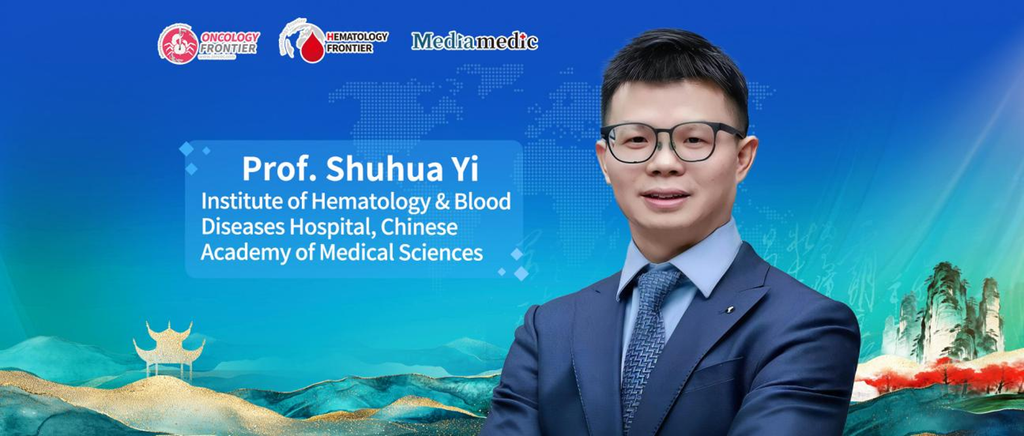
Editor's Note: On November 14, the 2026 Chinese Congress on Holistic Integrative Oncology (CCHIO) opened at the Changsha International Conference Center. Under the theme "Cancer Prevention and Treatment: Winning Through Integration," the congress brought together leading oncology experts and scholars from China and abroad, focusing on key areas such as integrated cancer care and precision medicine. In hematologic malignancies, the standardized diagnosis, treatment, and full-course management of rare diseases and indolent lymphomas have long been important clinical priorities. During the congress, Oncology Frontier – Hematology Frontier invited Professor Shuhua Yi of the Institute of Hematology & Blood Diseases Hospital, Chinese Academy of Medical Sciences, for an in-depth discussion on the molecular pathogenesis of Waldenström macroglobulinemia (WM), the evolution of targeted treatment strategies, and the broader planning of multicenter real-world studies.Exploring Molecular Targets: How MYD88 and CXCR4 Mutations Are Reshaping the Diagnosis and Treatment of WM
Oncology Frontier – Hematology Frontier: Your presentation focused on Waldenström macroglobulinemia (WM). As a rare, indolent B-cell lymphoma, WM is closely associated with mutations in the MYD88 and CXCR4 genes. From a molecular perspective, how do these key mutations affect disease progression and clinical phenotypes?
Professor Shuhua Yi: Waldenström macroglobulinemia has been included in China’s second national list of rare diseases. For rare diseases, identifying key molecular targets and developing targeted treatment strategies accordingly is a central pathway to improving therapeutic efficacy.
In the past, diagnosing WM and distinguishing it from other conditions could be quite challenging in clinical practice. However, with advances in molecular biology, we have found that 90%–95% of patients with WM carry the MYD88 L265P mutation, while 30%–40% harbor CXCR4 gene mutations.
This discovery has brought about a qualitative improvement in diagnostic precision. Although the presence of either of these mutations cannot serve as an absolute diagnostic gold standard, they provide clinicians with highly precise molecular markers that significantly improve the probability and accuracy of diagnosis.
More importantly, the identification of these molecular targets has directly driven the evolution of treatment strategies. Basic experimental studies have confirmed that patients with MYD88 mutations are more sensitive to Bruton tyrosine kinase (BTK) inhibitors, greatly facilitating the clinical application of BTK inhibitors in WM. Subsequent evidence has shown that second-generation BTK inhibitors, such as zanubrutinib, are more effective than first-generation agents, such as ibrutinib. Therefore, for patients with MYD88 mutations, BTK inhibitor-based regimens are currently the preferred option.
As for CXCR4 mutations, existing studies suggest that they further increase disease burden in the presence of MYD88 mutations. This means that patients with CXCR4 mutations tend to have a higher tumor burden and more challenging disease, and the efficacy of BTK inhibitor monotherapy is often suboptimal. These patients therefore require combination treatment strategies. Data from our team’s research have also shown that zanubrutinib combined with bendamustine and rituximab can effectively overcome the adverse prognostic impact of CXCR4 mutations, enabling patients with and without these mutations to achieve comparable outcomes.
Optimizing Treatment Strategies: Addressing the Clinical Challenges Posed by CXCR4 Mutations
Oncology Frontier – Hematology Frontier: In clinical practice, BTK inhibitors such as zanubrutinib have significantly transformed the treatment landscape of WM. For patients with CXCR4 mutations, which are often associated with suboptimal responses to BTK inhibitors, how should treatment strategies be adjusted? What is the potential for combining BCL-2 inhibitors or other novel targeted agents?
Professor Shuhua Yi: For patients with CXCR4 mutations and a high tumor burden, the efficacy of BTK inhibitor monotherapy is limited. Combination treatment should therefore be the preferred strategy. For example, combining a BTK inhibitor with an anti-CD20 monoclonal antibody or using a BR regimen (bendamustine plus rituximab) can more effectively improve response depth.
In addition, the introduction of novel targeted agents such as BCL-2 inhibitors offers another effective treatment option for these patients. Current data indicate that BCL-2 inhibitors can achieve an overall response rate (ORR) of approximately 80% in this population, with complete response (CR) and very good partial response (VGPR) rates of approximately 20%, demonstrating promising potential for clinical application.
However, considerable caution is required when exploring combinations of BTK inhibitors and BCL-2 inhibitors. Preliminary data suggest that this combination may cause severe ventricular arrhythmias, which can even be life-threatening. Cardiotoxicity must therefore be closely monitored. At present, BCL-2 inhibitors are mainly used in second-line and later-line treatment. In the future, as safety management becomes more mature, combination regimens may move into earlier lines of therapy and benefit more patients.
Building a Real-World Research Network: From Multicenter Collaboration to Long-Term Patient Benefits
Oncology Frontier – Hematology Frontier: For a rare disease such as WM, delayed diagnosis and long-term management remain major clinical challenges. What are your broader plans and recommendations for promoting standardized diagnosis and treatment, conducting multicenter real-world studies, and improving patients’ long-term survival and quality of life?
Professor Shuhua Yi: Long-term management of rare diseases requires extensive collaborative networks and high-quality real-world data. In China, we have established a Waldenström Macroglobulinemia Working Group and are deeply involved in exchanges with the International Workshop on Waldenström’s Macroglobulinemia (IWWM). At the recent 13th International Workshop on Waldenström’s Macroglobulinemia, our Chinese team presented findings based on domestic real-world data and received recognition from international colleagues. This achievement was made possible by the data accumulated through our previous multicenter collaborations.
First: Innovating Mechanisms for Real-World Data Collection
Looking ahead, we will further improve our database by relying on the 86 institutions participating in the national working group. Because clinicians have heavy workloads, data collection presents practical challenges. To address this, we have adopted an innovative model in which the working group funds the employment of assistants to help with data entry. Physicians only need to provide information on patients who have received new treatment regimens and whose data are properly documented; dedicated assistants are responsible for organizing and analyzing the information.
By accumulating 100–200 cases each year, we can build a substantial retrospective data pool over three to five years. This will allow us to analyze more precisely which treatment regimens are most suitable for different patient populations. At the same time, we are actively promoting the implementation of practical standardized regimens, such as the ZBR regimen. By collecting data on differences in outcomes with these standard regimens, we aim to establish a solid evidence base for subsequent treatment optimization.
Second: Addressing the Challenges of Quality-of-Life Assessment
For all indolent B-cell lymphomas, improving quality of life is the ultimate goal. However, collecting quality-of-life questionnaire data in real-world practice is difficult. Some Chinese patients have limited ability or time to complete these forms, resulting in low willingness to participate and concerns about the accuracy of the responses.
At present, we primarily demonstrate patient benefits through improvements in long-term survival data. In the future, developing patient-reported outcome (PRO) collection methods that are better suited to China’s national context will be another challenge we need to address.
Third: Taking a Comprehensive View of Health Economics
Improving patients’ long-term survival and quality of life ultimately depends on optimizing the allocation of medical resources and reducing patients’ financial burden. How can we treat serious diseases at the lowest possible cost?
The first priority is “rapid, one-stop precision diagnosis,” which can prevent patients from having to visit multiple hospitals, delaying treatment and undergoing repeated examinations. The second is “selecting effective treatments with durable benefits.” If a regimen can control the disease for five or six years, or even longer, its overall cost may be far lower than that of a regimen that becomes ineffective after only one or two years and requires repeated treatment changes.
An effective regimen not only reduces patients’ financial burden but also spares them the suffering associated with repeated treatment, allowing them to return to normal life. This is the most fundamental and practical way to improve quality of life.
Expert Profile

Institute of Hematology & Blood Diseases Hospital, Chinese Academy of Medical Sciences
- Chief Physician; Doctoral Supervisor; Doctor of Medicine
- Director of the Second Ward, Lymphoma Diagnosis and Treatment Center, Institute of Hematology & Blood Diseases Hospital, Chinese Academy of Medical Sciences
- National Clinical Research Center for Blood Diseases
- Indolent Lymphoma Research Center
- Deputy Head of the Youth Group, 12th Committee of the Hematology Branch of the Chinese Medical Association
- Member of the Lymphoid Diseases Group, 11th Committee of the Hematology Branch of the Chinese Medical Association
- Member and Academic Secretary of the 6th Committee of the Hematologic Oncology Committee of the China Anti-Cancer Association
- First Executive Committee Member and Secretary-General of the Hematologic Oncology Integrated Rehabilitation Committee of the China Anti-Cancer Association
- Head of the Chinese Indolent Lymphoma Collaborative Group
- Head of the Chinese Waldenström Macroglobulinemia Working Group
- Head of the Chinese Mantle Cell Lymphoma Working Group
- Chairman-Elect of the Hematologic Oncology Committee of the Tianjin Anti-Cancer Association
- Council Member of the Tianjin Society of Hematology and Regenerative Medicine
- Deputy Head of the Hematology Group of the Expert Volunteer Committee for Integrated Traditional Chinese and Western Medicine
- Lead author of multiple guidelines and expert consensuses on lymphoma diagnosis and treatment
- Expert involved in drafting international expert consensus recommendations on Waldenström macroglobulinemia
- Editorial board member of Chinese Journal of Clinical Oncology, Journal of Leukemia & Lymphoma, Blood and Genomics, and other journals