
From November 6–9, 2025, the 2025 China Conference on Holistic Integrative Oncology (CCHIO) was grandly held in Kunming. As one of China’s largest and most influential oncology academic events, the conference convened top experts from across the world to discuss cutting-edge advances and future directions in integrative oncology, building a high-level platform to foster the improvement of cancer care systems nationwide.
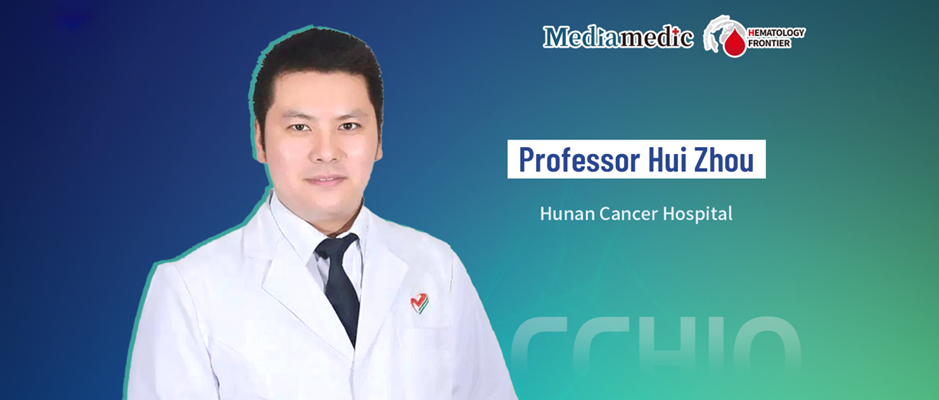
During the conference, Oncology Frontier – Hematology Frontier conducted an in-depth interview with Professor Hui Zhou, Deputy Chair of the Chinese Anti-Cancer Association (CACA) Lymphoma Committee and Professor at Hunan Cancer Hospital. The discussion focused on the guiding concepts behind recent guideline updates, the Lymphoma Committee’s system-building strategy, existing gaps in current guidelines, and future directions for optimization—all with the goal of supporting clinical practice and improving patient outcomes.
Q1
Professor Zhou, as the director of the Hunan Lymphoma Diagnosis and Treatment Center, you have been deeply involved in lymphoma clinical care and guideline implementation for many years. How do you interpret the core concepts reflected in the latest updates of domestic and international lymphoma guidelines? What key trends do these updates highlight, and what is their impact on clinical practice in China?
Professor Hui Zhou: In recent years, all major lymphoma guidelines—whether NCCN and ESMO internationally, or CACA and other domestic guidelines—have continued to refine and evolve. Overall, three major conceptual shifts have emerged:
1. Precision stratification is becoming increasingly sophisticated.
Historically, treatment decisions relied mainly on clinical features and pathology. Today’s guidelines incorporate molecular subtyping, immune microenvironment assessment, and measurable residual disease (MRD), enabling biologically driven precision stratification. These tools now play a central role in therapy selection, prognosis, and response evaluation.
2. Evidence-based medicine and innovative therapies advance hand-in-hand.
The growing volume of high-quality clinical data has clarified the roles of BTK inhibitors, ADCs, bispecific antibodies, and other emerging agents. Treatment paradigms are shifting from chemotherapy-dominated models to combination approaches integrating targeted and immune-based therapies—a clear sign of synergy between evidence-based medicine and therapeutic innovation.
3. Whole-course management is emphasized more than ever.
Modern guidelines extend beyond initial therapy to address relapse risk, long-term toxicity, survivorship, and quality of life. Multidisciplinary collaboration (MDT) and the incorporation of real-world evidence are also highlighted to improve patient-centered clinical decision-making.
For China, these advancements provide more practical, structured decision pathways. By integrating international evidence with China-specific clinical characteristics and drug accessibility, we are moving toward a diagnosis-and-treatment framework that is both globally aligned and locally optimized, ultimately benefiting more lymphoma patients.
Q2
As the newly appointed Deputy Chair of the CACA Lymphoma Committee, what strategic priorities will the committee focus on in advancing lymphoma care and system development nationwide? Will the committee set specific goals related to guideline implementation and improving diagnostic and treatment capacity at the grassroots level?
Professor Hui Zhou: Under the leadership and strategic planning of Committee Chair Professor Zhang Huilai, the CACA Lymphoma Committee is adopting a model of division of labor + coordinated advancement, where all six Deputy Chairs lead specific workstreams to drive comprehensive system development. The Committee will soon convene an executive meeting to deploy key initiatives.
My work primarily focuses on public education, CCHIO organization, and multicenter clinical research.
Public & professional education
We aim to implement guideline concepts at the societal and grassroots levels by:
- launching branded, standardized educational initiatives,
- organizing 20+ high-quality public and physician-education programs annually,
- integrating lymphoma education into national health campaigns such as World Lymphoma Day and the National Anti-Cancer Week,
- strengthening public understanding of the “prevention–screening–diagnosis–treatment–rehabilitation” continuum.
CCHIO academic development
We will continue to upgrade the structure and academic quality of the lymphoma sessions, actively attracting young physicians and grassroots medical teams.
Clinical research capacity building
Key tasks include:
- organizing multicenter clinical studies under the Committee’s umbrella,
- establishing a national lymphoma clinical research database,
- strengthening real-world evidence generation and translation,
- supporting research on domestic innovative therapies to accelerate their evidence-based integration into guidelines.
Our mission is clear:
“Ensure guidelines are truly implemented, ensure research is truly translated, and ensure patients truly benefit.”
With joint efforts under Professor Zhang Huilai’s leadership, we are confident that China’s lymphoma care will advance toward greater precision, quality, and sustainability.
Q3
From your clinical perspective, what gaps remain in current lymphoma guidelines? Based on latest research and unmet patient needs, what areas should the next edition prioritize for improvement?
Professor Hui Zhou: Current guidelines have greatly advanced lymphoma management, but several gaps remain:
1. Clinical application of molecular subtyping is still limited.
Although systems like LymphGen (e.g., MCD, BN2 subtypes) have meaningful biological implications, we still lack standardized, actionable frameworks to integrate molecular subtyping into routine treatment decisions.
2. MRD monitoring lacks unified standards.
Different centers vary in:
- MRD testing platforms,
- testing frequency,
- and MRD-guided decision pathways.
Guidelines need clearer, standardized MRD-based management algorithms.
3. Integration of emerging immunotherapies needs refinement.
Breakthroughs with CAR-T, bispecific antibodies, and ADCs have improved outcomes, but guidelines still lack clear recommendations for:
- sequencing strategies,
- bridging therapy,
- and post-CAR-T management after relapse or resistance.
Looking forward, future guideline updates will likely focus on:
① Standardizing the clinical use of molecular biology
Translating research-level molecular insights into routine, evidence-based treatment pathways.
② Establishing dynamic MRD + real-world–driven evaluation systems
Integrating efficacy, toxicity, and individualized disease dynamics to guide therapy with greater precision.
③ Strengthening whole-course, long-term patient management
Including late toxicities, relapse-risk stratification, survivorship, and quality-of-life management.
Overall, the next guideline edition will emphasize the transition from “theory to practice,” ensuring that precision medicine benefits a broader population of lymphoma patients in China.
Expert Profile

Professor Hui Zhou Hunan Cancer Hospital
- PhD in Oncology, Professor, Chief Physician, Master’s Advisor
- Deputy Director, Hunan Cancer Hospital
- Member, National Cancer Center Lymphoma Quality Control Committee
- Deputy Chair, CACA Lymphoma Integrative Rehabilitation Committee
- Chair-Elect, Tumor Immunotherapy Committee, China Association of Gerontology and Geriatrics
- Board Member, Chinese Society of Clinical Oncology (CSCO)
- Director, Hunan Provincial Lymphoma Diagnosis & Treatment Center
- Director, Hunan Provincial Center for Precision Lymphoma Medicine
- Member, Chinese Medical Association Lymphoma Group
- Member, CMA Tumor Translational Medicine Committee
- Standing Member, CSCO Lymphoma Expert Committee
- Standing Member, CACA Lymphoma Committee
- Chair-Elect, Hunan Medical Association Oncology Committee

