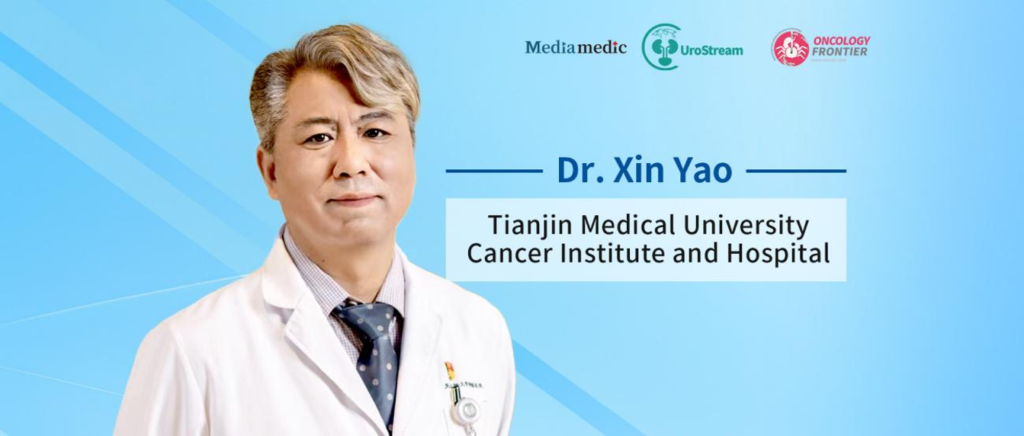
Editor’s Note: The diagnosis and treatment of urological cancers are currently undergoing a period of rapid evolution, driven by simultaneous advances in drug innovation and surgical techniques. Treatment strategies for urothelial carcinoma in the first-line and perioperative settings are evolving rapidly, while surgery for complex renal tumors is shifting from a focus on short-term safety toward greater emphasis on long-term renal function preservation. Against this backdrop, Oncology Frontier · UroStream invited Professor Xin Yao of Tianjin Medical University Cancer Institute and Hospital for an interview. He discussed the evolving treatment landscape of urothelial carcinoma, the priorities of the CACA Urological Oncology Committee, the “five-win” quality-control concept for partial nephrectomy, and future directions for the field.Treatment Paradigm Shift: ADC Plus Immunotherapy Reshaping Urothelial Carcinoma Management
In recent years, urothelial carcinoma has arguably been one of the fastest-changing areas in urological oncology, with immunotherapy, antibody-drug conjugates (ADCs), and various combination strategies continually reshaping clinical practice. Against this backdrop, what new treatment concepts does the current CACA guideline aim to convey most strongly to clinicians?
Professor Xin Yao: In recent years, results from several large phase III clinical trials have been reported, leading to substantial changes in the diagnosis and treatment landscape of urothelial carcinoma. One of the most closely watched developments has been the rapid emergence of combination strategies involving antibody-drug conjugates (ADCs) and immunotherapy. The EV-302 study established enfortumab vedotin (EV) plus pembrolizumab as a first-line treatment option for advanced urothelial carcinoma. Meanwhile, studies evaluating disitamab vedotin combined with toripalimab have provided important evidence supporting the application of innovative therapies independently developed in China in the first-line setting.
The role of immunotherapy in the perioperative setting, particularly as postoperative adjuvant treatment for high-risk patients, is also becoming increasingly well defined. Studies such as CheckMate 274 have provided robust evidence supporting this treatment strategy, and relevant clinical guidelines have subsequently been updated. In real-world clinical practice, an increasing number of Chinese patients undergoing radical cystectomy are now receiving adjuvant immunotherapy after surgery.
At the same time, the use of ADC–immunotherapy combinations in advanced urothelial carcinoma continues to increase, reflecting the rapid transition of clinical practice toward new treatment paradigms. However, the expansion of treatment options does not mean that conventional therapies have lost their value. For selected patients, platinum-based chemotherapy, chemotherapy combined with immunotherapy, and immunotherapy maintenance following chemotherapy continue to have clear clinical roles.
Therefore, the most important principle at present is to make individualized treatment decisions based on evidence. We need to recognize the changes brought about by innovative drugs and combination strategies while also considering the patient’s disease characteristics, treatment indications, and accessibility when selecting an appropriate treatment pathway. Clinical decision-making should not rely solely on a single piece of evidence or a fixed treatment model. Instead, clinicians should fully assess each patient and carefully balance the potential benefits and risks of different approaches. As treatment options continue to expand, there are more opportunities to improve patient outcomes, but clinicians must also continuously update their knowledge and remain attentive to patients’ individual needs. Ultimately, we need to move from a mindset of “using whatever is available” to one of “using what is most appropriate for each patient.”
Specialty Development: Bringing New Technologies to the Clinic Faster and Promoting Standardized, Equitable Care
As the newly appointed chair of the committee and the conference chair of this annual meeting, how would you characterize the central theme of this year’s meeting? In light of the evolving landscape of urological cancer prevention and treatment, what priorities will the committee focus on?
Professor Xin Yao: The central theme of this year’s meeting is “precision, refinement, and continuous excellence.” We hope to promote precise treatment decision-making and meticulous management of the treatment process, while continuously improving the quality of medical care through a commitment to excellence. Ultimately, our goal is to further extend the long-term survival of patients with urological cancers and contribute to the goals of the Healthy China 2030 initiative.
Over the past decade, the field of urological oncology has developed rapidly. Significant advances have been made in diagnostic technologies, surgical techniques, and innovative drug development. One important responsibility of the committee is to facilitate the faster and more effective translation of these new methods, technologies, and drugs into clinical practice in China, enabling more patients to receive standardized treatment.
China is a vast country, and disparities remain in the distribution of medical resources and levels of technological development across different regions. Therefore, another important priority for the next stage is to promote the standardized diagnosis and treatment recommended by clinical guidelines on a broader scale and to reduce regional disparities in the quality of care.
Renal Function Preservation: From “Three Wins” to “Five Wins” with Greater Emphasis on Long-Term Kidney Function
The concept of functional preservation is driving urological cancer surgery beyond simply removing the tumor toward a balanced emphasis on tumor control and preservation of organ function. At the 2026 CUDA Annual Meeting, you also discussed the “five-win” concept for complex renal cancer surgery with renal preservation. Could you explain what the five wins specifically encompass? In your view, what does the expansion from three wins to five wins tell us about the evolution of surgical treatment philosophy?
Professor Xin Yao: The “three-win” concept is a commonly used quality-control standard for partial nephrectomy. It generally includes three criteria: negative surgical margins, a warm ischemia time of no more than 25 minutes, and the absence of significant perioperative complications. These criteria are primarily used to evaluate tumor control, renal function preservation, and surgical safety.
This concept emerged during the era of laparoscopic surgery, when the evaluation of surgical quality focused primarily on the perioperative period and the short-term postoperative outcome. Building on the three-win concept, the “five-win” framework adds two indicators for long-term renal function: first, preservation of more than 90% of the estimated glomerular filtration rate (eGFR) at 9–12 months after surgery; and second, no worsening progression in chronic kidney disease (CKD) stage.
Therefore, the five-win evaluation system is not only concerned with whether surgery can be completed safely but places greater emphasis on whether patients can obtain stable and durable renal function benefits. With the gradual adoption of robotic surgical systems such as the da Vinci platform, the precision of nephron-sparing surgery has continued to improve, allowing surgical procedures to be performed with greater stability and accuracy.
Against this background, the five-win framework, as a comprehensive indicator of long-term surgical outcomes, is gradually becoming an important standard for evaluating surgical quality. The five wins encompass key dimensions including tumor control, renal function preservation, absence of major complications, avoidance of conversion to open surgery, and negative surgical margins, providing a more comprehensive assessment of long-term surgical outcomes.
However, real-world clinical data indicate that even as surgical techniques continue to improve, only around 50% of patients currently achieve the five-win standard. This suggests that there remains considerable room for improvement in surgical quality, particularly across the preoperative decision-making, intraoperative management, and postoperative follow-up stages. Optimal full-course management has not yet been achieved.
The significance of promoting the five-win concept does not simply lie in adding another evaluation criterion. Rather, it is intended to drive an overall improvement in the clinical care pathway.
Preoperatively, more appropriate nephron-sparing decisions should be developed based on each patient’s specific circumstances, carefully balancing oncological control against preservation of renal function.
Intraoperatively, the advantages of robotic systems should be utilized to perform more precise procedures and minimize damage to healthy renal parenchyma.
Postoperatively, greater emphasis should be placed on systematic long-term monitoring of renal function so that potential declines in kidney function can be identified and addressed at an early stage.
Only through comprehensive quality control spanning the preoperative, intraoperative, and postoperative stages can we continuously improve the long-term outcomes of nephron-sparing surgery and ultimately provide greater benefit to patients.
Conference Message: Advancing Long-Term Survival Through Full-Course Management
As the conference takes place, what message would you like to share regarding the future development of urological oncology?
Professor Xin Yao: Starting with precise diagnosis and evidence-based decision-making, and supported by refined treatment and standardized procedures, we will uphold a commitment to continuous excellence and develop individualized full-course management plans for every patient with urological cancer. We will continue working to improve the five-year survival of patients with urological cancers and contribute to the strategic goals of Healthy China 2030.
Conclusion
Professor Xin Yao’s presentation outlined the future development of urological oncology from four perspectives: drug therapy, specialty development, surgical quality control, and full-course management.
Innovative strategies such as ADC–immunotherapy combinations are expanding treatment options for urothelial carcinoma, while conventional approaches retain their appropriate role within an evidence-based framework. At the same time, efforts are needed to accelerate the dissemination of new technologies, innovative drugs, and guideline-based standardized care across different regions.
For partial nephrectomy, surgical quality assessment is evolving from the perioperative “three-win” framework toward the “five-win” model, which places greater emphasis on long-term renal function preservation.
Ultimately, the goal is to integrate precise decision-making, meticulous surgical practice, and continuous quality improvement throughout the entire course of patient management, thereby improving both oncological outcomes and long-term quality of life.
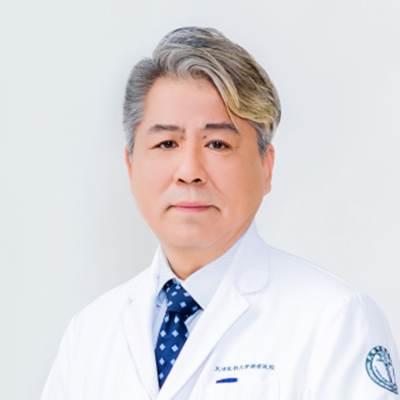
Professor Xin Yao