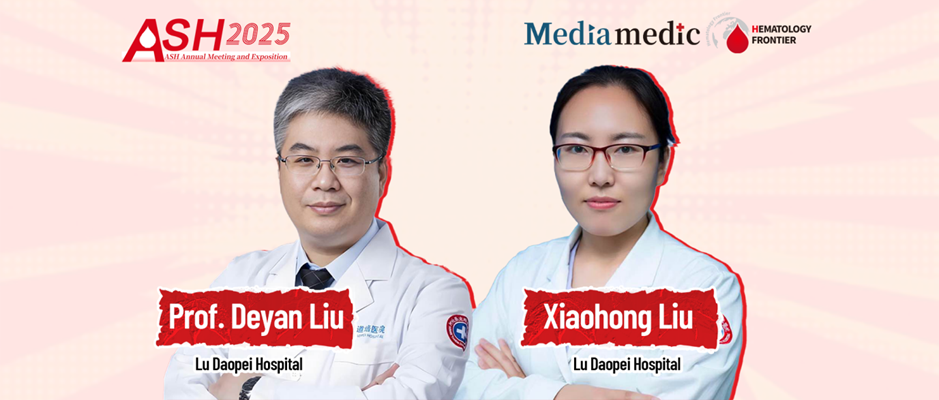
From December 6 to 9, 2025, the 67th Annual Meeting of the American Society of Hematology (ASH) was held in Orlando, USA. As the largest and most influential international congress in hematology, ASH brings together tens of thousands of experts worldwide each year to share the latest advances and breakthroughs. At this year’s meeting, a study from Professor Deyan Liu’s team at Lu Daopei Hospital was selected for poster presentation, focusing on the efficacy of allogeneic hematopoietic stem cell transplantation (allo-HSCT) in patients with SIL::TAL1-positive T-cell acute lymphoblastic leukemia/lymphoblastic lymphoma (T-ALL/LBL). Dr. Xiaohong Liu, the first author, was invited to introduce and discuss the study.
中文标题: 异基因造血干细胞移植治疗SIL::TAL1阳性T细胞急性淋巴细胞白血病:移植前缓解和分子状态的预后影响
English Title: Allogeneic Hematopoietic Stem Cell Transplantation in sil::TAL1-Positive T-ALL: Prognostic Impact of Pre-Transplant Remission and Molecular Status
Study Background
The SIL-TAL1 fusion gene results from a deletion at chromosome 1p32, leading to aberrant fusion of the SIL and TAL1 genes. It is one of the most common molecular markers in T-cell acute lymphoblastic leukemia, with an overall positivity rate of approximately 16%–29%. This fusion drives malignant transformation through abnormal activation of the TAL1 transcription factor. Multiple studies have reported that most patients can achieve complete remission after initial induction chemotherapy; however, the median overall survival remains short, ranging from 11 to 17 months. Long-term outcomes are poor, characterized by high relapse rates and short relapse-free survival. Previous reports suggest that allo-HSCT can significantly improve outcomes in SIL::TAL1-positive patients, but evidence has been limited by small sample sizes. Based on 12 years of accumulated experience, this study analyzed long-term outcomes in 82 SIL::TAL1-positive patients treated with allo-HSCT at a single center.
Study Methods
Eligibility criteria included PCR-confirmed SIL-TAL1 positivity with quantitative confirmation by RT-gPCR. All patients received systematic therapy followed by their first allo-HSCT. Long-term follow-up was conducted for all patients after transplantation. The primary endpoints were overall survival (OS), leukemia-free survival (LFS), cumulative incidence of relapse (CIR), and non-relapse mortality (NRM). The follow-up cutoff date was April 1, 2025.
Study Results
Baseline Characteristics
Among the 82 patients, 57 were children aged 14 years or younger (69.5%) and 25 were adults older than 14 years (30.5%). There were 74 males (90.2%) and 8 females (9.8%), with a median age of 11 years (range 1–39). The median white blood cell count at diagnosis was 152.0 × 10⁹/L (range 3.6–761.94). Gene mutations at diagnosis were detected in 57 patients (69.5%), with the most common being NOTCH1 (24.3%), PTEN (23.1%), and FBXW7 (15.8%). Before transplantation, 49 patients (59.8%) were in first complete remission (CR1), 32 patients (39.0%) were in second or later complete remission (≥CR2), and 1 patient (1.2%) was non-responsive. Minimal residual disease (MRD) was positive in 7 patients (8.5%) and negative in 75 patients (91%). Central nervous system leukemia (CNSL) was present in 18 patients (21.9%). Transplantation was predominantly ATG/G-CSF-based haploidentical HSCT in 68 patients (83.0%), with matched sibling donor (MSD) and matched unrelated donor (MUD) HSCT each performed in 7 patients (8.5%). Conditioning regimens were mainly total body irradiation (TBI)-based in 91.5% of cases, with the remainder receiving busulfan-based regimens. GVHD prophylaxis consisted of a calcineurin inhibitor combined with MMF and short-course methotrexate. Median infused cell doses were 9.69 × 10⁸/kg for MNCs, 4.93 × 10⁶/kg for CD34⁺ cells, and 1.75 × 10⁹/kg for CD3⁺ cells. Median neutrophil and platelet engraftment times were 14 days and 13 days, respectively.
Prognostic Analysis
With a median follow-up of 15.9 months (range 0.7–139.1), patients transplanted in CR1 showed significantly superior outcomes compared with those transplanted in ≥CR2. Two-year OS and LFS were both 71% in the CR1 group versus approximately 45% in the ≥CR2 group, with statistically significant differences. The two-year cumulative incidence of relapse was similar between groups, but two-year non-relapse mortality was significantly lower in the CR1 group. These findings indicate that allo-HSCT should be performed as early as possible once CR1 is achieved.
When stratified by pre-transplant SIL::TAL1 molecular status, patients who remained SIL::TAL1-positive before transplantation had markedly inferior outcomes. One-year OS and LFS were 0% in the SIL::TAL1-positive group compared with approximately 70% in the SIL::TAL1-negative group. The one-year relapse rate was dramatically higher in patients with persistent SIL::TAL1 positivity, while non-relapse mortality was comparable between groups. This underscores the critical importance of achieving molecular negativity before transplantation.
Analysis by donor type showed comparable outcomes between haploidentical HSCT and MUD/MSD HSCT. Two-year OS, LFS, CIR, and NRM did not differ significantly, indicating that haplo-HSCT can achieve outcomes similar to matched donor transplantation in this patient population and provides an important option for donor selection.
Study Conclusions
Allo-HSCT is highly effective for patients with SIL::TAL1-positive T-ALL/LBL who undergo transplantation in CR1 and achieve complete molecular clearance of SIL::TAL1. Outcomes are poor in patients transplanted with persistent SIL::TAL1 positivity or after multiple relapses. Haploidentical transplantation yields efficacy comparable to matched sibling or unrelated donor transplantation. Achieving CR1 and complete molecular remission, followed by early allo-HSCT, is key to improving survival.
Corresponding Author Profile

Professor Deyan Liu Lu Daopei Hospital Director, Department of Hematopoietic Stem Cell Transplantation Committee member, Transplantation and Plasma Exchange Group, Chinese Society of Biomedical Engineering Member, Chinese Anti-Cancer Association, Translational Hematology Committee
Professor Liu has over 17 years of experience in hematology and stem cell transplantation and has completed more than 800 allo-HSCT procedures. His expertise includes transplantation for malignant hematologic diseases such as AML, ALL, MDS, and refractory or relapsed lymphoma, as well as non-malignant disorders including aplastic anemia, PNH, and congenital immunodeficiencies. His research focuses on intensified conditioning for refractory leukemia and lymphoma and the prevention and management of severe GVHD.
First Author Profile

Xiaohong Liu Lu Daopei Hospital Attending Physician, Department of Hematopoietic Stem Cell Transplantation
Dr. Liu obtained her master’s degree from the Second Hospital of Hebei Medical University in 2018 and has since worked with Professor Deyan Liu’s transplant team. She has extensive experience in the management of leukemia, MDS, aplastic anemia, and transplant-related complications such as GVHD, TMA, and PGF. Her work was successfully presented at the 2025 ASH Annual Meeting.