
Chronic lymphocytic leukemia (CLL) / small lymphocytic lymphoma (SLL) is a clonal proliferative disorder of mature B cells that predominantly affects older adults and is characterized by a distinctive immunophenotype. At the Late-Breaking Abstract (LBA) session of the 2025 American Society of Hematology (ASH) Annual Meeting, Professor Wojciech Jurczak from the Maria Skłodowska-Curie National Research Institute of Oncology presented the first results of the BRUIN CLL-313 study. This randomized phase III trial compared the efficacy and safety of the non-covalent BTK inhibitor pirtobrutinib with bendamustine plus rituximab (BR) in treatment-naïve patients with CLL/SLL. On-site, Oncology Frontier – Hematology Frontier invited Professor Jurczak to provide insights into the study background, design, and clinical implications, offering forward-looking guidance for clinical practice.Oncology Frontier – Hematology Frontier:
At this ASH meeting, you reported on the study comparing pirtobrutinib with bendamustine plus rituximab (BR) in treatment-naïve CLL/SLL patients. Could you please elaborate on the background and design of this study, and why you chose to compare pirtobrutinib with BR?
Professor Wojciech Jurczak:
Welcome to the 2025 ASH Annual Meeting in Orlando. It is my honor to present the BRUIN CLL-313 study. This is a randomized controlled trial evaluating the oral BTK inhibitor pirtobrutinib versus bendamustine plus rituximab (BR regimen) in treatment-naïve patients with chronic lymphocytic leukemia (CLL) who meet treatment criteria according to the iwCLL 2018 guidelines.
At the time of study design, chemoimmunotherapy was still considered a reasonable option for all patients, including those with high-risk features. Targeted therapy was then primarily based on BTK inhibitors, with the majority of treated patients receiving indefinite BTK inhibitor therapy. Although chemoimmunotherapy remained an alternative at that time, clinical practice has since evolved substantially.
Notably, while patients with 17p deletion were excluded from the study, central laboratory analysis revealed that approximately 10% of enrolled patients harbored TP53 mutations. These patients were included in the trial and were evenly distributed between the two treatment arms.
Oncology Frontier – Hematology Frontier:
The results show that pirtobrutinib significantly improved IRC-assessed progression-free survival (PFS) and overall response rate (ORR). Additionally, pirtobrutinib showed consistent PFS benefit in both IGHV-mutated and unmutated patients. What do you think is the clinical significance of this finding?
Professor Wojciech Jurczak:
The primary endpoint of this study was progression-free survival (PFS) assessed by an independent review committee. The median PFS was 34 months in the bendamustine plus rituximab (BR) arm, while it was not reached in the pirtobrutinib arm. At the two-year follow-up analysis, the PFS rate was 94% in the pirtobrutinib arm compared with 70% in the BR arm, with the difference being statistically and clinically significant. The hazard ratio between the two arms was 0.20, representing the best level among similar comparisons; in contrast, other BTK inhibitors had hazard ratios close to 0.3–0.4. This indicates that pirtobrutinib reduced the risk of disease progression or death from any cause by 80%, demonstrating substantial clinical benefit.
The interim analysis of overall survival (OS) is still immature but shows a favorable trend. The two-year OS rate was 98% in the pirtobrutinib arm and 94% in the BR arm. During this period, there were 3 deaths reported in the pirtobrutinib arm and 12 deaths in the BR arm.
Oncology Frontier – Hematology Frontier:
The study also shows that pirtobrutinib has a lower incidence of treatment-emergent adverse events (TEAEs), especially compared to BR. Could you further discuss the safety and tolerability of pirtobrutinib, particularly for elderly patients or those with comorbidities?
Professor Wojciech Jurczak:
Pirtobrutinib demonstrates a favorable tolerability profile. In the safety analysis, patients received pirtobrutinib for an average of 33 months, compared with only 6 months for the fixed-duration bendamustine plus rituximab (BR) regimen. Even in the raw data, the incidence of adverse events with pirtobrutinib was lower, particularly for CTCAE grade 3 or higher events. Time-adjusted analyses indicated that the incidence of all adverse events was lower with pirtobrutinib than with BR, although bleeding tendency was slightly higher; most events were mild, with only a single grade 3 hemorrhage observed. Among adverse events of special interest for BTK inhibitors, the incidence of atrial fibrillation and flutter remained low, with only one case occurring among 20 patients over 75 years of age. Therefore, pirtobrutinib can be considered a treatment with a favorable safety profile.
It should be noted that patients receiving long-term therapy may experience impaired immune function. Based on clinical experience, if a patient develops an infection, it is advisable to temporarily suspend pirtobrutinib and all BTK inhibitors to avoid drug interactions and allow general practitioners to manage the infection according to local standards. Concomitant use of certain antibiotics (excluding antifungals) with BTK inhibitors may increase BTK inhibitor blood concentrations, potentially impairing immune function and affecting treatment outcomes. The above statements are supplementary to data obtained from randomized trial protocols; the final section reflects personal clinical experience and should not be considered as broadly generalizable guidance.
Expert Profile

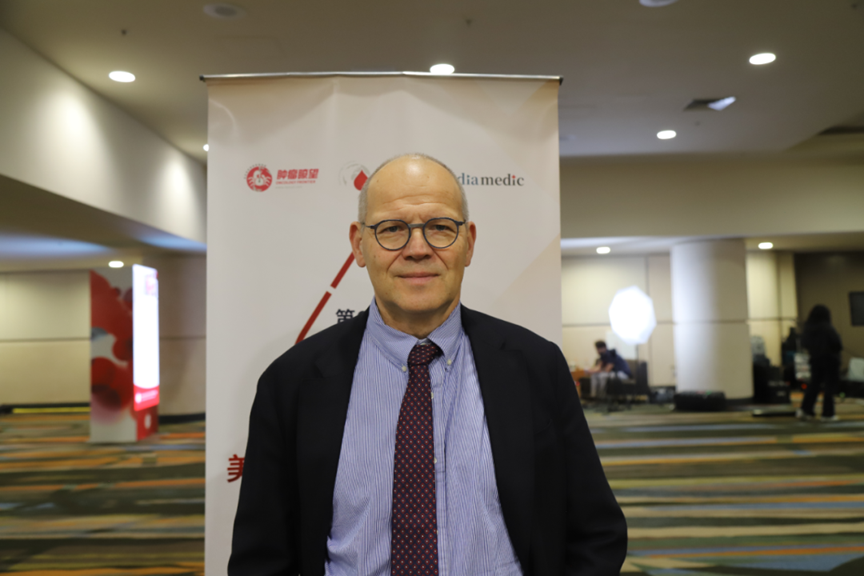
Wojciech Jurczak, MD, PhD Consultant Hematologist and Professor Head of Department Maria Skłodowska-Curie National Research Institute of Oncology