
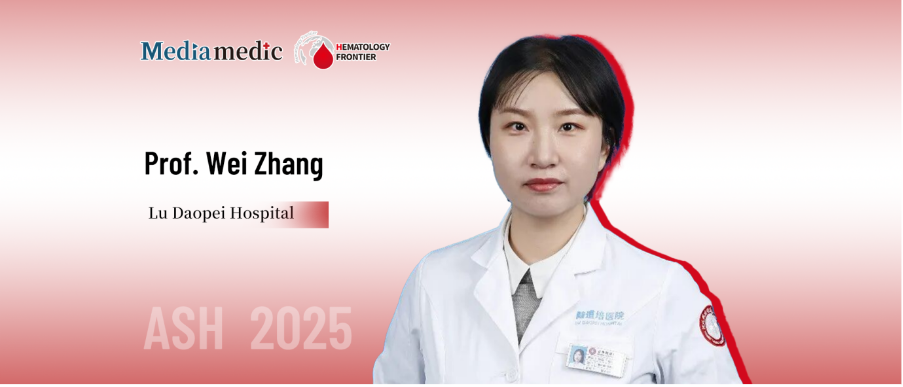
From December 6–9, 2025, the 67th American Society of Hematology (ASH) Annual Meeting convened in Orlando, attracting tens of thousands of hematology experts worldwide. As the most influential international conference in the field, ASH showcases cutting-edge advances and breakthrough clinical findings each year. At this year’s meeting, an innovative study led by Dr. Wei Zhang of Lu Daopei Hospital was selected for poster presentation. The study introduced a novel loop-structured CD19/CD22 dual-target CAR-T therapy designed to overcome antigen escape and relapse—two major obstacles in B-cell malignancies. This approach offers renewed therapeutic hope for patients with refractory or relapsed B-cell non-Hodgkin lymphoma (B-NHL). We invited Dr. Zhang to elaborate on this research. Title: A novel loop-structured CD19/CD22 dual-targeting CAR-T therapy for patients with refractory/relapsed B-cell non-Hodgkin lymphoma
Chinese Title:
一种新型环状结构 CD19/CD22 双靶向 CAR-T 细胞疗法用于复发/难治性 B 细胞非霍奇金淋巴瘤患者
Study Background
CAR-T cell therapy has shown remarkable efficacy in B-cell malignancies, yet relapse driven by antigen loss remains a major challenge. To address antigen escape and heterogenous antigen expression, the research team engineered four dual-target constructs—TanCAR-T1, TanCAR-T2, LoopCAR-T1, and LoopCAR-T2. After comprehensive functional screening, LoopCAR-T1 demonstrated superior cytotoxicity, cytokine secretion, and proliferative capacity. Based on this performance, LoopCAR-T1 was selected for clinical evaluation in patients with relapsed or refractory B-NHL.
Study Methods
This investigator-initiated, open-label, multicenter clinical trial evaluated the safety and preliminary efficacy of dual-target CD19/22 CAR-T cells following lymphodepleting chemotherapy. Cytokine release syndrome (CRS) and immune effector cell-associated neurotoxicity syndrome (ICANS) were graded per ASTCT 2019 criteria. Clinical responses were assessed using Lugano 2014 criteria. Secondary objectives included pharmacodynamic and pharmacokinetic analyses.
Study Results
Between December 11, 2024, and June 30, 2025, a total of 18 patients received the loop-structured CD19/CD22 dual-target CAR-T therapy. The median age was 56 years, with balanced gender distribution. Most patients had diffuse large B-cell lymphoma, and all presented with stage III/IV disease. The median number of prior treatment lines was three.
CRS occurred in 67% of patients, with only one grade 3 case that resolved after treatment. Importantly, no ICANS events were observed, even among six patients with CNS involvement. There were no CAR-T–related deaths.
The best overall response rate was 83%, including 67% complete responses and 17% partial responses. Among the six patients with CNS disease, the response rate was also 83%, and all responders achieved complete remission.
CAR-T expansion kinetics showed a median Tmax of 14 days, median Cmax of 91,850 copies/μg DNA, and median AUC0-28 of 738,571. Notably, three non-responders exhibited robust CAR-T expansion, with median Cmax of 210,000 and median AUC0-28 of 1,841,080, suggesting that strong CAR-T proliferation does not necessarily correlate with clinical response and that resistance mechanisms beyond pharmacokinetics may be involved.
Study Conclusions
The loop-structured CD19/CD22 dual-target CAR-T therapy demonstrated promising safety and efficacy in relapsed/refractory B-NHL. These findings highlight a potentially valuable treatment option, warranting larger cohort validation and longer follow-up to assess durability of response.
Expert Profile

Wei Zhang, MD
Lymphoma & Myeloma Center, Lu Daopei Hospital Associate Chief Physician
Dr. Wei Zhang completed her master’s degree in Hematology at Xiangya School of Medicine, Central South University in 2006. After years of clinical hematology work in a top tertiary hospital, she joined the Lu Daopei Medical Group. She has extensive experience in diagnosing and treating a wide spectrum of hematologic diseases, including lymphoma, leukemia, aplastic anemia, and myelodysplastic syndromes.