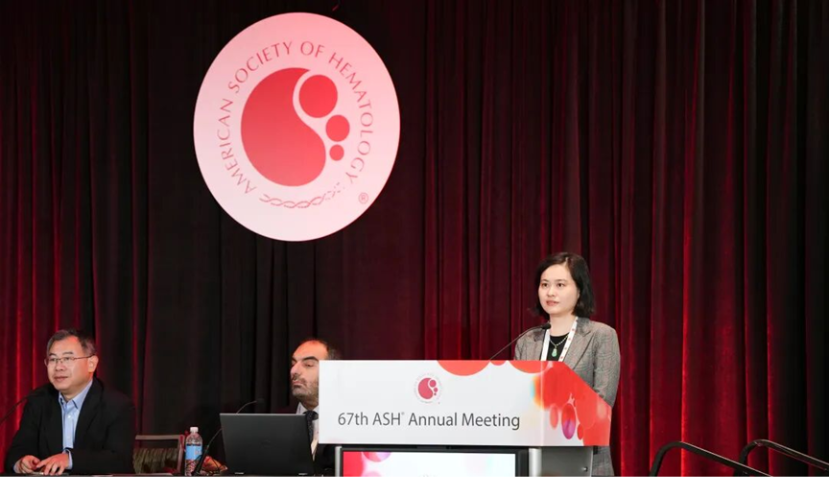
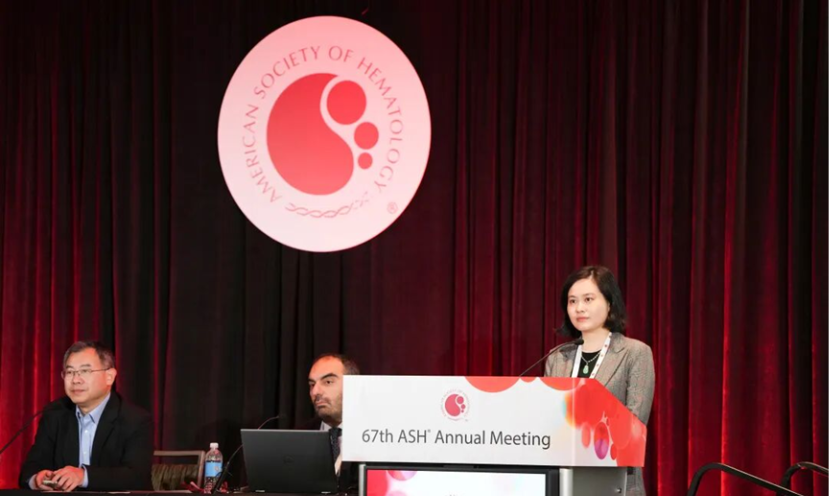
At the recent Annual Meeting of the American Society of Hematology (ASH), the team led by Professor Huang He from the First Affiliated Hospital of Zhejiang University School of Medicine presented multiple innovative studies in the field of hematopoietic stem cell transplantation. These studies covered in-depth analyses of HLA evolutionary divergence (HED), post-transplant maintenance with epigenetic regulatory agents, and other cutting-edge topics, highlighting an integrated translational medicine strategy aimed at addressing key clinical challenges, comprehensively improving transplant outcomes, and enhancing long-term patient survival and quality of life. During the meeting, Hematology Frontier invited Professor Zhao Yanmin from the First Affiliated Hospital of Zhejiang University School of Medicine to systematically interpret the team’s core research achievements, elucidate their clinical value, and discuss future development directions, providing valuable insights for both academic research and clinical practice. Contributing the Wisdom of ZJU First Hospital, Leading Precision Transplantation
At this year’s ASH meeting, a total of eight studies from our center were presented as oral reports, five of which focused on hematopoietic stem cell transplantation. Together, they established a comprehensive research framework spanning pre-transplant strategy formulation, salvage treatment for relapsed or refractory disease, and long-term post-transplant management.
In the context of relapsed or refractory leukemia, the team explored an integrated strategy combining CAR-T therapy with haploidentical transplantation. For MRD-positive high-risk AML patients, decision-making analyses were conducted to optimize haploidentical donor selection. At the donor selection level, in-depth investigations were performed on scientifically grounded criteria based on HLA evolutionary divergence. In post-transplant management, practical studies were carried out on epigenetic agents or targeted therapies for maintenance and preemptive treatment. Methodologically, these studies integrated cellular therapy, targeted drugs, big data analysis, and the exploration of novel biomarkers, collectively driving the field of transplantation in hematologic malignancies toward greater precision, efficiency, and safety, while demonstrating the center’s strength in translational medicine and clinical innovation.
Exploring Quantitative HED Assessment to Optimize Haploidentical Transplantation Strategies
Traditional HLA matching focuses primarily on locus compatibility, whereas our research centers on HLA evolutionary divergence (HED), aiming to quantify the degree of molecular disparity between mismatched loci and thereby provide a new scientific basis for donor selection in haploidentical transplantation. When two HLA molecules are mismatched, HED can be evaluated based on differences in amino acid sequences and physicochemical properties, and quantitatively measured using metrics such as the Grantham distance.
Large-cohort analyses have demonstrated that greater HED is associated with an increased likelihood that donor-derived T cells will recognize recipient normal tissues as foreign, triggering stronger immune attacks and leading to more severe acute graft-versus-host disease (GVHD). In particular, evolutionary divergence at HLA class II loci and the HLA-B locus was found to be closely associated with the risk of severe acute GVHD and non-relapse mortality. Based on these findings, clinical practice can prioritize donors with lower HED values at HLA class II or HLA-B loci to reduce the risk of severe GVHD at its source. When only donors with higher HED values are available, more intensive immunosuppressive regimens should be considered to prevent GVHD.
Uncovering the Potential of Chidamide and Innovating Maintenance Therapy for T-Cell Malignancies
Currently, there is a lack of safe and effective maintenance therapy strategies for T-cell malignancies after transplantation, in sharp contrast to other hematologic malignancies. In myeloid malignancies, hypomethylating agents or FLT3 inhibitors are often used post-transplant, while B-cell malignancies may benefit from CD19 bispecific antibodies, and Philadelphia chromosome–positive B-ALL can be managed with TKIs. However, no standard maintenance strategy has yet been established for T-cell malignancies after transplantation.
Previous studies by our team have shown that chidamide can modulate abnormal epigenetic functions in tumors by inhibiting specific histone deacetylase (HDAC) subtypes, thereby altering gene expression across multiple tumor-related signaling pathways. Chidamide has been approved in China for the treatment of peripheral T-cell lymphoma and diffuse large B-cell lymphoma, and in Japan for adult T-cell acute lymphoblastic leukemia.
Against this background, its potential application in the transplant setting has attracted significant attention. HDAC inhibitors can enhance immune-mediated cytotoxicity by modulating the immune microenvironment, thereby improving the ability of donor immune cells to recognize and eliminate residual tumor cells after transplantation and strengthening the graft-versus-leukemia effect. Our team previously conducted a small exploratory study of preemptive chidamide therapy in MRD-positive T-cell malignancy patients, observing favorable efficacy, with results published in Bone Marrow Transplantation. Building on these positive signals, the research was further extended to the maintenance phase in this patient population, and its significant clinical value was reported at this year’s ASH meeting.

Expert Profile

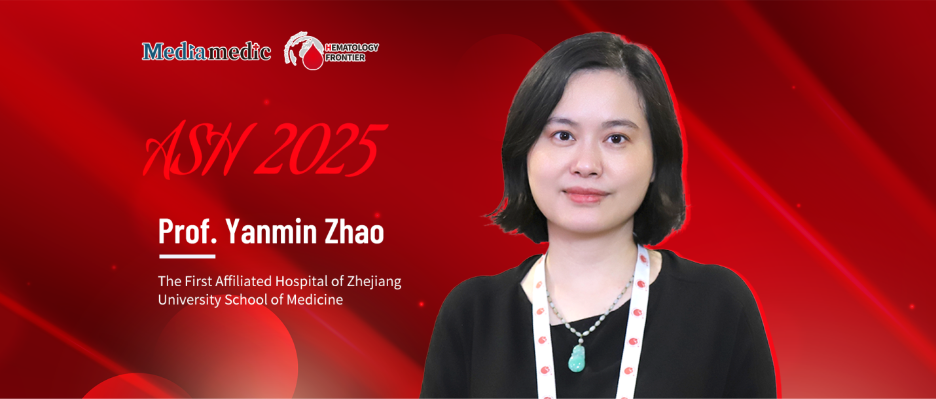
Professor Zhao Yanmin The First Affiliated Hospital of Zhejiang University School of Medicine
MD, Chief Physician, PhD Supervisor, Distinguished Researcher Deputy Director, Hematology and Bone Marrow Transplantation Center, The First Affiliated Hospital of Zhejiang University School of Medicine
Member, Youth Group of the Hematology Branch of the Chinese Medical Association Member, Hematopoietic Stem Cell Transplantation and Cellular Therapy Committee of the Chinese Medical Education Association Deputy Director, Youth Committee of the Hematology Branch of the Zhejiang Medical Association Outstanding Young Scholar of the Zhejiang Immunology Society Secretary, Clinical Trial Hematology Group, The First Affiliated Hospital of Zhejiang University School of Medicine Zhejiang Provincial High-Level Health Talent (551 Program)
Principal investigator of one National Natural Science Foundation of China (NSFC) Youth Project and three NSFC General Projects; core member of a National Key R&D Program project. Editorial board member of Cell Transplantation. As first or corresponding author, published more than 40 SCI-indexed papers in Blood, Journal of Hematology & Oncology, JAMA Network Open, Leukemia, among others. Delivered multiple oral presentations at international conferences including ASH, EHA, EBMT, and APBMT. As a key team member, received one First Prize of the Zhejiang Provincial Science and Technology Progress Award and one Second Prize of the National Science and Technology Progress Award.