Neoadjuvant immunotherapy combined with chemotherapy has become the standard of care for operable triple-negative breast cancer (TNBC), yet patients with high-risk features—particularly node-positive disease—continue to face a substantial risk of recurrence. To further improve outcomes, investigators are exploring whether adding radiotherapy during the neoadjuvant phase can enhance antitumor immunity.At ASCO 2026, investigators presented results from the TBCRC-053 (P-RAD) trial (Abstract #1011), demonstrating that low-dose preoperative radiotherapy combined with pembrolizumab significantly increased tumor T-cell infiltration (TCI) and achieved nodal pathological complete response (ypN0) rates of up to 88.2%, introducing a potentially practical new treatment strategy.
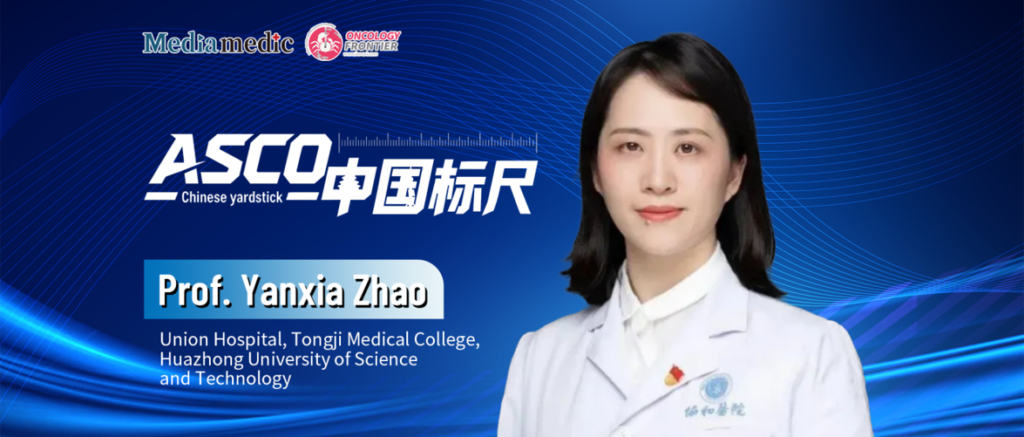
To discuss the relevance of these findings for Chinese clinical practice, Oncology Frontier invited Yanxia Zhao from Union Hospital, Tongji Medical College, Huazhong University of Science and Technology, for the “ASCO China Perspective” series.
Oncology Frontier: TBCRC-053 reported a ypN0 rate of 88.2% in node-positive TNBC treated with 9 Gy radiotherapy before pembrolizumab and chemotherapy. How do you view the feasibility and clinical value of this approach in China?
Yanxia Zhao:
The TBCRC-053 results attracted considerable attention at ASCO because they explored an innovative concept: whether low-dose radiotherapy delivered before neoadjuvant immunochemotherapy could enhance antitumor immunity rather than simply destroy tumor cells.
The study enrolled mainly node-positive, HER2-negative TNBC, together with a small proportion of high-risk hormone receptor-positive/HER2-negative breast cancers. The impressive 88.2% ypN0 rate observed in the 9 Gy cohort represents a potentially important advance for patients with node-positive disease.
I believe this strategy is both feasible and clinically meaningful in China. It highlights the synergistic interaction between radiotherapy and immunotherapy, particularly through the abscopal effect, where low-dose radiation stimulates systemic immune responses instead of relying solely on direct tumor cytotoxicity.
That said, TBCRC-053 remains a Phase II study, with only 18–19 node-positive patients per treatment arm, so larger studies are still needed.
The study also provides several important lessons. First, postoperative radiotherapy is already routinely incorporated into breast cancer management across China, and Chinese investigators have already initiated similar neoadjuvant trials combining low-dose irradiation of the primary tumor with systemic immunotherapy and chemotherapy. Our institution is participating in one such study, although larger datasets from Chinese patients will be necessary.
Second, China now has multiple approved PD-1 inhibitors beyond pembrolizumab. Whether similar benefits can be achieved with domestic agents also deserves further investigation.
Oncology Frontier: Patients who achieved high T-cell infiltration two weeks after treatment had a ypN0 rate of 94%. Could TCI become a predictive biomarker in Chinese patients? What challenges exist for its implementation?
Yanxia Zhao:
TCI is a composite biomarker measured using multiplex immunofluorescence, which offers advantages over conventional immunohistochemistry but also requires greater technical expertise.
Successful implementation depends on standardized testing procedures, reproducibility across laboratories, and highly specialized platforms. Although multiplex immunofluorescence has already been introduced in several major hospitals in China, significant technical barriers remain before widespread clinical adoption becomes feasible.
Given China’s healthcare landscape, variability among institutions and testing platforms currently limits the routine clinical application of TCI. Nevertheless, I believe it is an important direction for the future.
The immediate priority should be conducting large prospective multicenter studies to validate the predictive value and reproducibility of TCI in Chinese patients before considering broader clinical implementation.
Oncology Frontier: Neoadjuvant treatment for node-positive TNBC in China currently relies mainly on immunotherapy plus chemotherapy, while radiotherapy is generally reserved for postoperative or palliative settings. How feasible would similar neoadjuvant “radiotherapy plus immunotherapy” trials be in China?
Yanxia Zhao:
I believe such trials are highly feasible in China for several reasons.
First, several domestically developed PD-1 inhibitors—including camrelizumab, toripalimab, and tislelizumab—have already demonstrated encouraging results in Phase III neoadjuvant TNBC trials, with pCR rates ranging from approximately 40% to 60%. Around 70% of enrolled patients had node-positive disease, and more than one-third had stage III disease, making these patient populations comparable to those included in TBCRC-053.
Second, TNBC accounts for approximately 10%–20% of breast cancers in China, providing a sufficiently large pool of high-risk patients eligible for neoadjuvant studies.
In addition, radiotherapy technology has advanced rapidly across China. Techniques such as stereotactic body radiotherapy (SBRT) and proton therapy are now available in many tertiary hospitals, while multidisciplinary team (MDT) management has become increasingly well established.
These strengths provide an excellent foundation for conducting similar clinical trials.
Looking ahead, Chinese investigators can further optimize treatment strategies by exploring different radiation dose schedules, timing of radiotherapy, and combinations with various domestic immunotherapies. For example, one ongoing study involving our institution uses SBRT at 8 Gy × 3 fractions to irradiate the primary tumor before immunotherapy in order to activate antitumor immune responses. The availability of multiple innovative agents in China also creates additional opportunities to refine and personalize this treatment approach.
Professor

Yanxia Zhao
Union Hospital, Tongji Medical College, Huazhong University of Science and Technology