
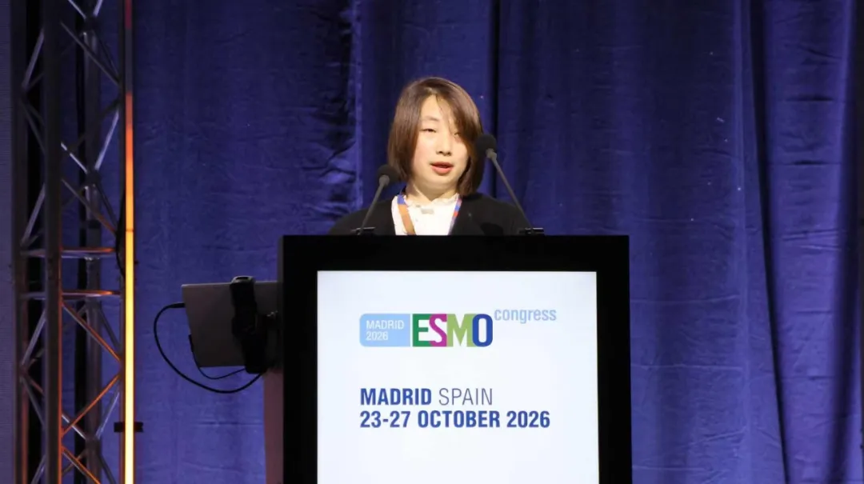
Editor's Note: The 2026 European Society for Medical Oncology (ESMO) Congress was held in Madrid, Spain, from October 23 to 27. At the congress, Professor Jian Zhang of Fudan University Shanghai Cancer Center led a study of the Nectin-4-targeted antibody-drug conjugate (ADC) 9MW2821 (Bulumtatug Fuvedotin, BFv), with Professor Yanchun Meng presenting the Phase II results in patients with locally advanced or metastatic triple-negative breast cancer (TNBC) in an oral presentation. Against this background, Oncology Frontier invited Professor Jian Zhang to discuss the rationale for BFv's "target switching plus payload switching" strategy, the study's efficacy and safety findings, and its potential role in future treatment sequencing.01
Oncology Frontier: BFv is a Nectin-4-targeted ADC with an MMAE payload. At this year’s ESMO Congress, Phase II data were presented in patients with locally advanced or metastatic TNBC who had previously received TOP1 inhibitor-based ADCs. Could you explain the rationale for adopting a “target switching plus payload switching” strategy in this population? What are the distinctive therapeutic advantages of Nectin-4 as a target in TNBC?
Professor Jian Zhang: In fact, the development of BFv has been a collaborative effort by our team, and Professor Yanchun Meng represented our team in delivering the oral presentation at this year’s ESMO Congress. As we know, BFv is a Nectin-4-targeted ADC carrying MMAE, a microtubule inhibitor payload. We chose the strategy of switching both the target and the payload for patients with recurrent or metastatic TNBC who had all previously received TOP1 inhibitor-based ADCs because our central objective was to address the longstanding problem of payload cross-resistance during sequential ADC treatment.
At this year’s ESMO Congress, Professor Lei Fan of Fudan University Shanghai Cancer Center presented results from the SWITCH study (Abstract No. 4RO). Among patients with HER2-negative metastatic breast cancer whose disease had become resistant to TOP1 inhibitor-based ADCs (94% of patients in that study had previously received a TOP1 inhibitor-based ADC), switching only the target while retaining the same payload resulted in a confirmed ORR of just 0%–8.3%. This study suggests that changing the target alone may not be sufficient to overcome resistance.
Of course, this is only a single piece of evidence, and we hope that further prospective studies will explore this question. Several bispecific ADCs have achieved some degree of efficacy by changing the target without changing the payload, so this issue still requires further investigation. Nevertheless, changing the payload is primarily intended to restore sensitivity in the face of payload-related resistance, making payload switching a key variable.
In this study, for patients whose disease had progressed after TOP1 inhibitor-based ADC treatment, we changed not only the therapeutic target but also the payload, switching to BFv, which targets Nectin-4 and carries the microtubule inhibitor MMAE. Mechanistically, this represents a comprehensive dual-switch strategy. Nectin-4 is highly expressed in TNBC and represents an actionable target in the later-line treatment of this disease. Meanwhile, MMAE and TOP1 inhibitor payloads have different mechanisms of action, so MMAE may theoretically bypass some resistance mechanisms associated with TOP1 inhibitor payloads.
It is important to emphasize, however, that this dual-switch approach is quite specific. We still need to establish whether the payload change or the target change is the primary contributor to the observed effect. Nevertheless, the change in treatment strategy appears to be responsible for the activity. If different approaches are compared in future studies, we will be able to clarify the underlying reasons more definitively.
Regarding the characteristics of enrolled patients, 65% of patients in this study were Nectin-4-positive (TPS ≥1%), 22% were Nectin-4-negative, and the status was unknown in 13%. We have not yet presented efficacy rates and PFS stratified by expression level, but these data may be included in our future publication. If efficacy is mainly concentrated in the Nectin-4-positive population, a companion diagnostic may be needed in the future. If patients with negative expression also benefit, this could be related to the bystander effect of MMAE or heterogeneity in the testing process. We look forward to seeing what these results reveal.
02
Oncology Frontier: According to the study results, despite all patients having previously received TOP1 inhibitor-based ADCs and 42% having received at least three lines of therapy, BFv achieved an ORR of 30.0% and a DCR of 80.0%. Median DOR was 8.7 months, and median PFS was 3.7 months. How do you evaluate these efficacy results? Given that median DOR was longer than median PFS, what implications might this have for subsequent treatment strategies?
Professor Jian Zhang: All patients enrolled in this study had previously received TOP1 inhibitor-based ADCs. In addition, 42% had received at least two prior lines of therapy, 65% had visceral metastases, and 33% had liver metastases. This was therefore a heavily pretreated TNBC population, and achieving these results is clinically meaningful.
The study showed an ORR of 30% and a DCR of 80%, indicating that most patients achieved some degree of disease control following treatment. The median DOR of 8.7 months suggests that, once a response is achieved, some patients can maintain that benefit. The 12-month OS rate was 63.5%, indicating that BFv demonstrated encouraging efficacy in this heavily pretreated population.
The number of deaths remains insufficient, and the OS data are not yet mature, so we should avoid overinterpreting these findings. However, we also observed a PFS of 3.7 months and a 6-month PFS rate of 30.2%, indicating that overall efficacy still needs to be improved in patients previously treated with TOP1 inhibitor-based ADCs. In fact, previous studies have shown that PFS in this population is generally around 1.5–2 months. Against this background, a PFS of 3.7 months is a respectable result, although it also indicates that many patients will still experience disease progression.
The DOR was notably longer than PFS. We believe that the benefit may be maintained in patients who achieve a partial response (PR). One of our most important priorities going forward is to identify patients who are likely to achieve a PR, which may help improve overall treatment outcomes.
Of course, another question for subsequent treatment strategies is how to position Nectin-4-targeted ADCs. I believe they should be positioned for patients whose disease has become resistant to TOP1 inhibitor-based ADCs but who still have relatively well-controlled disease. This could be an important direction for future investigation.
We can also conduct biomarker analyses, landmark analyses, analyses of depth of response, and analyses of the impact of subsequent treatments to determine whether the benefit is sustained in a small subset of patients or reflects broader disease control. This will require further investigation. Naturally, efficacy will also be influenced by differences in tumor types, drugs, and patient populations. We hope that future Phase III clinical trials will further establish whether these results can be reproduced.
03
Oncology Frontier: Regarding safety, the most common treatment-related adverse events (TRAEs) with BFv were elevated AST/ALT, hematologic toxicities, and metabolic abnormalities. Grade 3 or higher TRAEs mainly included neutropenia, leukopenia, and elevated AST, and were generally manageable. Considering its efficacy in this difficult-to-treat population, where do you think BFv may fit into the TNBC treatment sequence? A global pivotal trial targeting this indication is currently underway. Could you introduce the plans for further clinical development?
Professor Jian Zhang: In fact, this single-arm Phase II study enrolled heavily pretreated patients whose disease had already become resistant to ADCs. The results provide a very promising therapeutic signal. However, changing clinical practice will ultimately depend on positive results from the Phase III trial.
Regarding safety, Grade 3 or higher TRAEs occurred in 40.3% of patients, and 45.2% experienced treatment interruptions due to TRAEs. However, treatment interruption does not necessarily mean permanent discontinuation. In fact, no patient in this study permanently discontinued treatment because of a TRAE, and there were no treatment-related deaths. These are also important strengths of the study.
Other adverse reactions observed included elevated liver enzymes, hematologic toxicities, and metabolic abnormalities, all of which require careful management. Although elevated ALT and AST were the main and most prominent non-hematologic toxicities, they were generally manageable with appropriate interventions. In addition, the study used a dosing schedule of administration on Days 1 and 8 every three weeks, which is a regimen that clinicians are familiar with. In real-world practice, blood count monitoring, liver function monitoring, and supportive care may also affect dose intensity.
Future research plans: A global pivotal trial of BFv in TNBC previously treated with TOP1 inhibitor-based ADCs is currently underway. The definitive answer will come from the Phase III results. We look forward to determining whether the response rate and DCR observed in this study can be reproduced in a larger patient population, and whether these outcomes can translate into improvements in PFS and OS. We also hope to supplement the evidence with important translational research, including analyses stratified by Nectin-4 expression, investigations into the mechanisms of resistance to TOP1 inhibitor-based ADCs (primary versus acquired resistance), and subgroup analyses involving liver metastases and other treatment-related factors.
Finally, I believe BFv has considerable potential to fill an unmet treatment need after resistance to TOP1 inhibitor-based ADCs. If future results demonstrate an even more favorable trend, exploring its use in earlier lines of treatment could also present an opportunity. We know that TROP2 ADCs have become a first-line treatment option in TNBC, and the value of BFv in the second-line setting deserves more in-depth investigation. Overall, this is a highly promising study in sequential ADC treatment, and we hope that its efficacy and safety will be confirmed in the Phase III trial.
Professor Jian Zhang