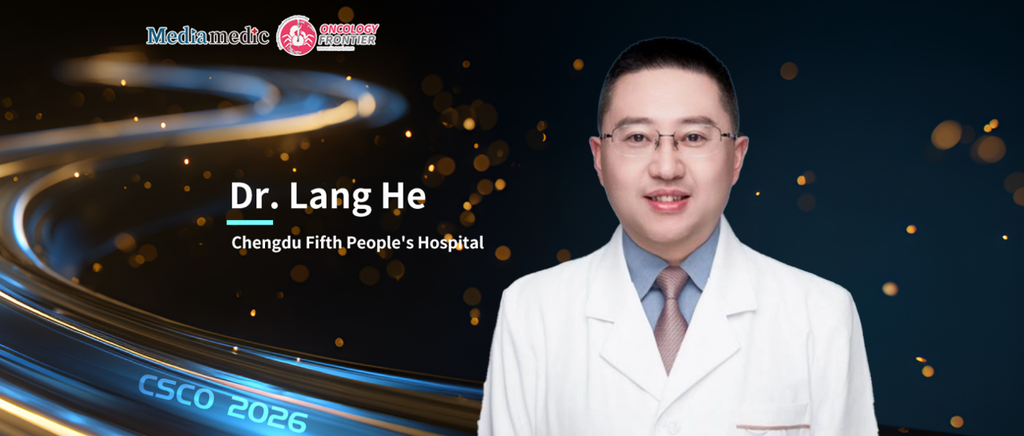
During the 2026 Annual Meeting of the Chinese Society of Clinical Oncology (CSCO), the first-ever CSCO cancer pain guidelines, the CSCO Guidelines for the Diagnosis and Treatment of Cancer Pain, were officially released, providing clinicians with standardized guidance that integrates the latest advances with the characteristics of clinical practice in China. Cancer pain remains highly prevalent in China, while the quality of its management varies considerably across different levels of healthcare institutions. The release of these new guidelines therefore comes at a particularly important time.At the meeting, Oncology Frontier invited Professor Lang He of the Fifth People’s Hospital Affiliated with Chengdu University of Traditional Chinese Medicine, who has extensive experience in regional cancer pain management and the development of pain medicine as a discipline, for an interview. Professor He emphasized that the guidelines not only incorporate the latest evidence-based advances and take local accessibility into account, but also move beyond the limitations of single-drug treatment by advocating a comprehensive, full-course management strategy based on multimodal analgesia. In regional cancer pain management, the integration of innovative medications with primary care promotion systems—from standardized diagnosis and treatment in hospitals to continued management at the primary care level and pain care at home—is building an uninterrupted chain of support for patients.
Oncology Frontier:
At this annual meeting, CSCO released its first-ever cancer pain guidelines, the CSCO Guidelines for the Diagnosis and Treatment of Cancer Pain. What impact do you think their publication will have on cancer pain management in China? How should clinicians make the best use of these new guidelines in clinical practice?
Professor Lang He: This is an excellent question. I would like to briefly address it from several perspectives.
First, the situation regarding cancer pain management in China remains quite serious. The overall incidence of cancer pain is 44%, and approximately one-third of patients with cancer pain experience moderate-to-severe pain. However, the standards of cancer pain management and diagnosis vary considerably among healthcare institutions at different levels. We therefore need guidelines that are more targeted and practical to guide clinical practice.
Second, CSCO guidelines are known for combining cutting-edge evidence with practical applicability. During their development, the process considers not only the latest evidence-based medical findings but also the domestic treatment environment and the accessibility of therapeutic drugs in China. The CSCO Guidelines for the Diagnosis and Treatment of Cancer Pain were first initiated in September last year and underwent repeated revisions by experts. Now that they have been officially implemented in clinical practice, I believe they will make a substantial contribution to standardizing and harmonizing treatment, from leading tertiary hospitals to primary care institutions.
Third, the CSCO Guidelines for the Diagnosis and Treatment of Cancer Pain cover a wide range of topics, including the principles of cancer pain management; screening and assessment; pharmacological treatment; minimally invasive and non-pharmacological interventions; management of special types of cancer pain; and post-discharge management. They emphasize a comprehensive management strategy that is patient-centered, multidisciplinary, individualized, and dynamically adjusted. The greatest highlight of these guidelines is that they move beyond the limitations of single-drug treatment and strongly advocate “multimodal analgesia,” encouraging the combined use of different management strategies according to individual patient needs. Their implementation will help improve the standards of cancer pain management and diagnosis at the primary care level.
Fourth, as we implement the new guidelines, we need not only to study them but also to break them down into practical components. Based on my experience, when studying the guidelines, we should compare their framework with the existing cancer pain management pathways in our respective hospitals and departments, and integrate standardized cancer pain diagnosis and treatment practices into routine management workflows. In future CSCO guideline outreach and educational programs, we should also extend these standards to surrounding regions to improve the overall level of cancer pain management.
Oncology Frontier:
Under your leadership, the Fifth People’s Hospital Affiliated with Chengdu University of Traditional Chinese Medicine has achieved a series of accomplishments in pain management, making it one of the hospital’s distinctive areas of strength. Based on your experience, how can comprehensive, full-course cancer pain management be effectively implemented in clinical practice?
Professor Lang He: Before answering this question, we should first clarify the concept and importance of comprehensive, full-course cancer pain management. This refers to an integrated management model that spans the entire continuum of care, including prevention, screening, assessment, diagnosis, treatment, rehabilitation, and palliative care. Cancer pain affects a large patient population and can persist for a long time. Once breakthrough pain occurs, it can become unbearable, severely reducing patients’ quality of life and potentially even affecting their antitumor treatment.
We have made some modest progress in implementing comprehensive cancer pain management. For example, our institution has been designated as a National Standardized Demonstration Base for Refractory Cancer Pain Management. We have also established, under the China National Health Association, a primary care promotion group for the standardized diagnosis and treatment of refractory cancer pain through integrated primary care teams of physicians and nurses.
The promotion group has focused extensively on southwestern China while also extending its reach to central and eastern regions. The technologies used to promote standardized management of refractory cancer pain through integrated primary care teams have also been included in the National Health Commission’s catalog of appropriate technologies for promotion. I believe that wider adoption of these technologies at the primary care level will greatly help improve the standards of cancer pain diagnosis and treatment in these settings.
In terms of disciplinary development, we have established a National Key Clinical Specialty Construction Project, a Grade A Clinical Key Specialty in Sichuan Province, and a High-Level Clinical Key Specialty in Chengdu. Standardized management of cancer pain and refractory cancer pain is one of the key priorities in our discipline’s development. We have also established the first demonstration site for standardized cancer pain diagnosis and treatment in the plateau Tibetan areas of Sichuan Province. In addition, the sub-center initiative that we are leading continues to promote standardized cancer pain diagnosis and treatment at the primary care level. I believe that this series of initiatives will help improve the consistency of cancer pain diagnosis and treatment across primary care hospitals, particularly community health service centers.
The development of analgesic medications in China is advancing rapidly, with a diverse range of new options emerging. These developments provide strong support for comprehensive, full-course cancer pain management. For example, in the field of pain relief, hydromorphone extended-release tablets, tapentadol tablets, oxycodone extended-release tablets, and fentanyl buccal tablets have not only expanded treatment options but, more importantly, have entered the National Reimbursement Drug List or the National Essential Medicines List, providing practical and substantial support for the implementation of cancer pain management.
Oncology Frontier:
As the first 24-hour long-acting oral opioid extended-release tablet in China, OROS hydromorphone extended-release tablets have benefited a large number of Chinese patients through robust evidence-based support and broad accessibility. Could you discuss the clinical scenarios in which hydromorphone extended-release tablets are used in your department and the treatment needs they address?
Professor Lang He: Hydromorphone extended-release tablets are currently one of the preferred medications for moderate-to-severe cancer pain, as recommended by multiple guidelines and expert consensus statements in China. They play an important role in cancer pain titration, maintenance treatment, and opioid rotation, making them one of the cornerstone medications for cancer pain management.
Hydromorphone extended-release tablets are closely aligned with the “5A” management goals repeatedly emphasized in the NCCN Guidelines for Adult Cancer Pain. Their analgesic potency is 5–10 times that of morphine, and patients experience fewer breakthrough pain episodes. They are associated with fewer adverse reactions and can help optimize patients’ daily activities. Once-daily administration improves patient adherence. They also offer advantages in preventing medication diversion and can improve sleep and quality of life, as well as help alleviate emotional symptoms such as anxiety.
Our department has been deeply and continuously involved in a series of clinical studies on refractory cancer pain led by Professor Cheng Huang and Professor Rongbo Lin of Fujian Cancer Hospital. This experience has given us a deeper understanding of hydromorphone extended-release tablets. During our participation in these clinical trials, we found that when patients transitioned from injectable formulations to oral formulations, hydromorphone extended-release tablets demonstrated clear advantages in terms of high efficacy, low toxicity, and good treatment adherence.
Oncology Frontier:
Today, most patients with cancer are in the hospital only on the days when they receive antitumor treatment, while spending the rest of their time outside the hospital. Cancer pain also frequently occurs outside the hospital. How can we ensure effective home-based cancer pain management?
Professor Lang He: This has been a major topic of concern for national cancer pain experts and relevant experts from the National Health Commission in recent years. At the end of August this year, the National Health Commission announced that the Standards for Primary Care Cancer Pain Management had been completed and had officially entered the implementation phase.
During an interview with Xinhua News Agency, Academician Jinming Yu, head of the expert group responsible for developing these standards, emphasized that for patients with advanced cancer pain who receive long-term care at home, it is essential to establish an uninterrupted continuum encompassing “standardized diagnosis and treatment in hospitals, continued management at the primary care level, and pain care at home.” This ensures that patients receive continuous management throughout the entire course of their illness, allowing those in primary care settings to access ongoing, standardized pain management support at home.
Within hospitals, the most important priority is to implement standardized cancer pain management. Before patients are discharged, we must establish an analgesic regimen, prepare an emergency plan for breakthrough pain, and arrange follow-up management.
For primary care community hospitals, we should package and extend screening, titration, follow-up, nursing, and patient education services to the primary care level, ensuring continuity of cancer pain management. As part of the sub-center development initiative led by our department at Sanjiang Community Health Service Center in Chongzhou, we arrange for physicians from our department to visit the center every week to provide a range of educational guidance and public health information. Through these efforts, standardized cancer pain diagnosis and treatment technologies, practical experience, and management strategies are being brought directly to primary care settings, enabling patients to receive cancer pain management of a standard comparable to that provided by tertiary Grade A hospitals.
For pain relief outside the hospital, long-acting hydromorphone extended-release tablets, as mentioned earlier, offer distinctive advantages: high efficacy, low toxicity, convenience, and good patient adherence. The fentanyl buccal tablet, which is expected to be launched soon, can be administered sublingually, with an onset of action within 5–10 minutes and peak effect at 20 minutes, enabling rapid onset and prompt pain relief. Innovative cancer pain medications developed in China can provide reliable support for patients’ self-management at home.
For patients, we must provide proper education on home medication use, raise awareness of pain management, and emphasize that medications should neither be taken arbitrarily nor discontinued without guidance. Patients should also be encouraged to monitor and record their symptoms and maintain communication with primary care institutions to achieve better home-based management.