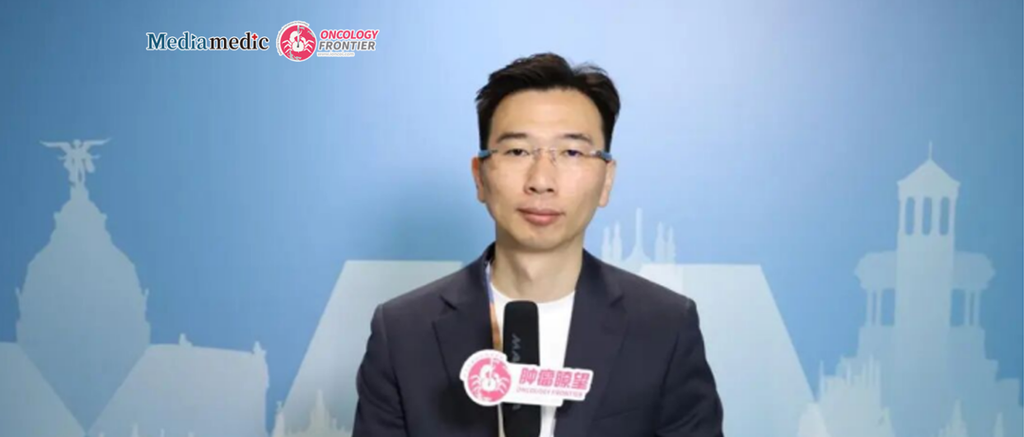
In recent years, immunotherapy for advanced non-small cell lung cancer (NSCLC) has evolved from the era of programmed cell death protein 1 (PD-1) monoclonal antibodies into the era of Immunotherapy 2.0, represented by bispecific antibodies. However, improving the objective response rate (ORR) while maintaining a favorable safety profile remains a major unmet clinical challenge.At the 2026 European Society for Medical Oncology (ESMO) Congress, data were presented from an Ib/II study (NCT06741644) conducted by the team of Professor Caicun Zhou and Professor Anwen Xiong at Shanghai East Hospital, Tongji University, evaluating CS2009 as monotherapy or in combination with chemotherapy for advanced NSCLC. The study systematically assessed the clinical benefits of CS2009 in both treatment-naïve and previously treated patients. Oncology Frontier invited Professor Anwen Xiong for an exclusive interview to discuss the clinical data and translational potential of CS2009 in depth, as well as to review emerging trends in cancer treatment and diagnosis highlighted at the ESMO Congress.
In-Depth Analysis of the CS2009 Study: Mechanistic Innovation and Clinical Breakthroughs with a First-in-Class Trispecific Antibody
At this year’s ESMO Congress, the team reported results from five distinct cohorts evaluating CS2009 in advanced NSCLC. The study comprehensively covered different lines of treatment and histological subtypes, including monotherapy in patients receiving second-line or later treatment (≥2L); combination therapy with docetaxel in the second- and third-line settings (2/3L); first-line (1L) monotherapy in patients with a PD-L1 tumor proportion score (TPS) ≥1%; first-line combination therapy with paclitaxel plus carboplatin in patients with squamous NSCLC; and first-line combination therapy with pemetrexed plus carboplatin in patients with non-squamous NSCLC.
Efficacy Across Multiple Cohorts and Breakthroughs in the “Cold Tumor” Subgroup
The data demonstrated that CS2009 had robust and promising antitumor activity. Among heavily pretreated patients whose disease had progressed after standard therapies, the vast majority of whom (84.2%) had previously received immunotherapy, CS2009 monotherapy still achieved an ORR of 16.7%, rising to 28.0% in the 30 mg/kg dose group.
In the first-line PD-L1-positive population, the ORR with monotherapy reached 66.7%. Among patients with PD-L1 TPS ≥50%, the ORR was even higher, at 87.5%. Furthermore, in the 2/3L cohort receiving CS2009 in combination with docetaxel, the ORR was 55.6% and the disease control rate (DCR) was 100%.
Subgroup analyses further revealed its considerable potential in difficult-to-treat populations. In the first-line squamous NSCLC cohort receiving combination chemotherapy, the overall ORR reached 80.8%, substantially exceeding historical data for chemotherapy combined with single-agent immunotherapy (50%–60%) or bispecific antibodies combined with chemotherapy. Of particular note, the ORR in the PD-L1-negative (TPS <1%) squamous NSCLC subgroup reached 100% (8/8).
Professor Anwen Xiong noted that, for these tumors traditionally regarded as “immune-cold,” although the sample size remains small and further validation through follow-up is needed, this early signal suggests that introducing CTLA-4 targeting through a trispecific antibody combined with chemotherapy may transform poorly responsive, refractory tumors into highly responsive ones, pointing toward a new direction for precision treatment.
Structural Optimization and the Mechanistic Balance Between “High Efficacy and Low Toxicity”
The high response rates and favorable safety profile achieved with CS2009 are underpinned by its sophisticated molecular engineering design. The drug targets three molecules: PD-1, VEGF, and CTLA-4. Theoretically, adding CTLA-4 targeting to an existing PD-1/VEGF bispecific antibody could further enhance T-cell activation and expansion. However, immune-related adverse events (irAEs) associated with high-dose CTLA-4 targeting have long presented a clinical challenge.
To address this issue, CS2009 incorporates a specially optimized structure: its head contains two antibody regions that block VEGF, while one end of its tail binds to PD-1 and the other to CTLA-4. This design deliberately reduces binding to peripheral CTLA-4-positive T cells, concentrating its multi-target synergistic effects more within the tumor microenvironment (TME) and thereby effectively widening the therapeutic window.
The safety data support this design rationale. The incidence of grade ≥3 irAEs was only 11.6% in the monotherapy group and 12.7% in the chemotherapy combination group, comparable to the levels observed with PD-1 monoclonal antibodies. No excessive overlapping toxicity associated with CTLA-4 or VEGF inhibition was observed.
Differentiated Advantages and Future Clinical Development Plans
In the Immunotherapy 2.0 era, CS2009’s differentiated positioning lies in its potential to overcome the efficacy ceiling of existing bispecific antibody–chemotherapy combinations by introducing CTLA-4 targeting, while offering a new strategy for patients who are insensitive to immunotherapy.
Professor Anwen Xiong noted that future clinical development plans will focus closely on these advantages. First, the team will actively advance registration-enabling clinical studies of CS2009 as first-line monotherapy or in combination with immunotherapy, with plans to conduct a global multicenter Phase III trial (MRCT). Second, the team will explore its potential in perioperative neoadjuvant and adjuvant treatment. Finally, further investigations will focus on subgroups with particularly high unmet needs, such as patients with squamous NSCLC and those with PD-L1-negative disease, to maximize the clinical value of this trispecific antibody.
ESMO Perspectives: How ADC–Immunotherapy Combinations Are Reshaping Lung Cancer Treatment Paradigms
Discussing the studies of greatest interest at this year’s ESMO Congress, Professor Anwen Xiong pointed out that, for patients with PD-L1-negative and driver gene-negative disease, the median progression-free survival (PFS) achieved with the conventional chemotherapy plus single-agent immunotherapy approach has historically remained at approximately 6–8 months. New drugs with novel mechanisms of action are urgently needed to overcome this limitation.
The OptiTROP-Lung06 study presented at this year’s congress was the world’s first Phase III study of a trophoblast cell-surface antigen 2 (TROP2) antibody-drug conjugate (ADC) combined with immunotherapy specifically in this difficult-to-treat population. The study evaluated sacituzumab tirumotecan plus pembrolizumab and demonstrated superiority over the standard regimen of pemetrexed, carboplatin, and pembrolizumab in a head-to-head comparison.
The study achieved a PFS of 15.0 months, nearly three times the 5.7 months observed in the control arm (HR 0.49). The duration of response (DoR) was also doubled. Particularly noteworthy, the incidence of grade ≥3 treatment-emergent adverse events (TEAEs) was significantly lower with the combination regimen than with the control regimen (47.6% vs. 60.6%), as was the treatment discontinuation rate.
Professor Anwen Xiong believes that these breakthrough findings mark an accelerating transition in first-line treatment for driver gene-negative NSCLC from conventional chemotherapy toward precision-targeted drug delivery through ADCs.
With the advent of the ADC–immunotherapy era, Professor Xiong further discussed the potential clinical positioning of novel immunotherapies in the lung cancer treatment landscape. Novel trispecific antibodies such as CS2009, which combine multi-target synergy with a wide therapeutic window, may not only offer distinctive value after ADC treatment or in cases of ADC resistance, but could also reshape the immune microenvironment more effectively. This may create opportunities for deeper combination strategies, including trispecific antibodies combined with ADCs or chemotherapy, ultimately helping patients with advanced lung cancer achieve longer survival with better quality of life.