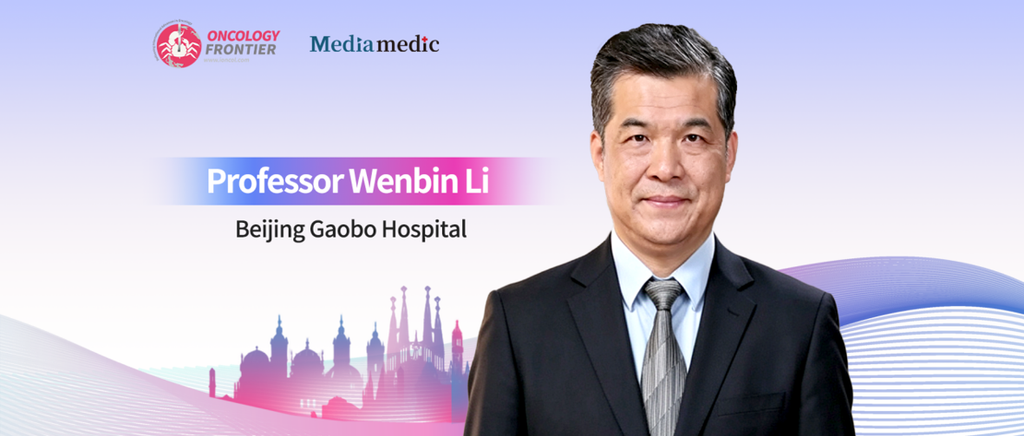
Editor's Note: Recurrent high-grade glioma (HGG) has an extremely poor prognosis, particularly in IDH-wildtype patients, with a median overall survival (OS) of only 6–10 months. Despite progress in targeted therapy, the treatment of central nervous system (CNS) tumors remains a significant challenge due to the physiological barrier of the blood-brain barrier (BBB). At the 2026 European Society for Medical Oncology (ESMO) Congress, Professor Li Wenbin's team from the Neuro-Oncology Comprehensive Diagnosis and Treatment Center of Beijing Gaobo Hospital presented two research findings: a Phase I oral presentation on the novel BRAF inhibitor HSK42360 in recurrent glioma, and multicenter, large-sample prospective data on teniposide combined with platinum for recurrent HGG. On October 31, the 6th iHope Innovative Medicine Forum was held. With the construction of the ARO (Academic Research Organization) clinical research system as its core, the forum demonstrated Gaobo Hospital's strength in building a multinational, multicenter clinical research system and translating cutting-edge technologies. Oncology Frontier invited Professor Li Wenbin to interpret the breakthroughs in clinical translation of innovative drugs and the evolving landscape of neuro-oncology treatment from the perspectives of translational medicine and clinical research.Interview
Oncology Frontier: At this ESMO Congress, you delivered an oral presentation on the Phase I data of the novel BRAF inhibitor HSK42360 in recurrent glioma, and your team also published large-sample data on teniposide combined with platinum for recurrent high-grade glioma. Could you discuss the significant progress made by these innovative drugs and regimens, and what they mean for patients?
Professor Li Wenbin: The treatment of brain gliomas has long been constrained by the physiological barrier of the blood-brain barrier (BBB). Many targeted or macromolecular immunotherapeutics that are effective in systemic tumors cannot penetrate the BBB to achieve effective pharmacokinetic concentrations in the central nervous system (CNS) due to their large molecular weight. This is the core bottleneck for the relatively slow progress in CNS tumor treatment.
At this ESMO Congress, our team delivered an oral presentation on the Phase I clinical data of HSK42360 in recurrent glioma. As a novel BRAF inhibitor, the core advantage of its pharmacological design lies in its favorable BBB penetration capacity and high target selectivity. The results showed that in patients with recurrent low-grade and high-grade glioma, the objective response rates (ORR) reached 43% and 40%, respectively. In solid tumor drug development, an ORR exceeding 30% typically indicates that the drug has further development and marketing potential. This data drew attention at the conference, with discussants suggesting advancing it to frontline therapy to benefit patients at an earlier treatment window.
Furthermore, given that several recent Phase III trials of targeted therapies failed to substantially improve the overall survival (OS) of recurrent HGG, our team re-evaluated traditional cytotoxic drugs with high BBB penetration. We conducted a multicenter, open-label, single-arm trial (ChiCTR2300073961) to evaluate the efficacy and safety of teniposide combined with cisplatin/carboplatin in recurrent HGG. Among 97 evaluable patients (46.4% of whom had received ≥3 prior lines of therapy), the median OS reached 19.3 months, with a 6-month OS rate of 78.6% and a median progression-free survival (PFS) of 5.4 months. The ORR was 17.8% (including 5 cases of complete response, CR), and the disease control rate (DCR) reached 72.6%. In 23 patients previously treated with etoposide, the regimen still retained clear clinical activity (DCR 66.7%). This provides a potential treatment strategy for recurrent HGG patients who have failed multiple lines of therapy.
Oncology Frontier: The blood-brain barrier is the primary obstacle in CNS drug development. Looking ahead, what do you consider to be the core strategy for achieving breakthrough progress in CNS tumors?
Professor Li Wenbin: The median survival of glioblastoma (GBM) (14.6 months) has remained stagnant for nearly fifteen years, and traditional chemoradiotherapy modalities have reached an efficacy plateau. Future breakthroughs are mainly concentrated in the fields of targeted therapy, immunotherapy, and metabolic therapy, with the core of the breakthrough lying in solving the pharmacokinetic challenge of drug “brain penetration.”
Addressing the pain point that macromolecular immunotherapeutics (such as conventional PD-1 antibodies) struggle to penetrate the BBB, our team is advancing the development of small-molecule PD-1 inhibitors capable of penetrating the barrier, and we have initially observed antitumor activity. For key driver genes such as BRAF, our team is also continuously optimizing drug penetration rates and target selectivity. Additionally, traditional chemotherapeutics with high BBB penetration (such as teniposide) can also exert clinical effects under rational combination regimens.
Currently, China holds a certain position internationally in terms of the number of clinical trials in areas such as brain gliomas and CNS lymphomas. Relying on the clinical research platform of Beijing Gaobo Hospital, our team will continue to conduct rigorous clinical trials to advance drug development with the goal of bringing survival improvements to patients.
Oncology Frontier: At the recently held 6th iHope Innovative Medicine Forum, various innovative technologies were introduced. Looking ahead, what other technologies or directions do you believe hold the potential to substantially change clinical practice?
Professor Li Wenbin: The 6th iHope Innovative Medicine Forum was a meeting of academic exchange and practical exploration. For CNS tumors and even solid tumors, future development relies on the integration of multiple technology platforms and the support of the ARO (Academic Research Organization) system.
From the perspective of specific technological directions, the forum explored innovative therapies such as oncolytic viruses, cellular therapy, proton therapy, photodynamic therapy, and nuclear medicine theranostics. Taking CNS tumors as an example, oncolytic viruses can be locally delivered to directly lyse tumor cells and remodel the local antitumor immune microenvironment; proton therapy can leverage the physical properties of the “Bragg peak” to achieve precise irradiation of intracranial tumors while protecting normal brain tissue. The cross-integration of these technologies helps overcome the limitations of traditional treatments.
It must be emphasized that both basic research and technological innovation require validation of their efficacy and safety through high-quality clinical research. Just as the “Global ARO Alliance” launched at this forum, Beijing Gaobo Hospital is connecting innovative technologies, pharmaceutical R&D pipelines, and clinical needs from around the world. Our team will also take this opportunity to validate these therapies through standardized, international, multicenter clinical trials, transforming them into treatment strategies that change clinical practice and extend patient survival.
Expert Profile
Professor Li Wenbin
Chief Physician, Professor, MD, PhD Supervisor
Academic Leader of the Neuro-Oncology Comprehensive Diagnosis and Treatment Center, Beijing Gaobo Hospital
Founding Director of the Comprehensive Cancer Treatment Center, Beijing Tiantan Hospital, Capital Medical University
Professor Li Wenbin is an expert in comprehensive neuro-oncology treatment and clinical research of innovative drugs, with nearly 40 years of clinical and scientific research experience. He specializes in the comprehensive treatment of CNS tumors such as gliomas, meningiomas, germ cell tumors, medulloblastomas, and brain metastases, with a particular focus on the systematic reassessment of patients with relapsed/refractory disease or progression after multiple lines of therapy, exploring appropriate precision medicine regimens and clinical research opportunities. He emphasizes the integration of imaging, pathology, molecular testing, and prior treatment information, combined with the patient’s overall condition, to formulate individualized treatment plans through multidisciplinary collaboration.
Standing Council Member of the International Precision Medicine Alliance
Standing Council Member and Scientific Committee Member of the Asian Clinical Oncology Society
Chairman of the China Chapter of the Asian Society of Longevity Medicine
Fellow of the Royal Society of Medicine (UK)
Head of the IFPMA ICH M11 Working Group
Head of the Department of Oncology, Capital Medical University
Chairman of the Brain Nerve Drug Clinical Research Professional Committee of the China Pharmaceutical Innovation and Research Development Association (PhIRDA)
Vice Chairman of the China Anti-Aging Promotion Association
Standing Committee Member of the Science Popularization Branch of the Chinese Medical Association and Head of the Innovative Drug Therapy Group
Chairman of the Brain Tumor Expert Committee of the China Cancer Foundation