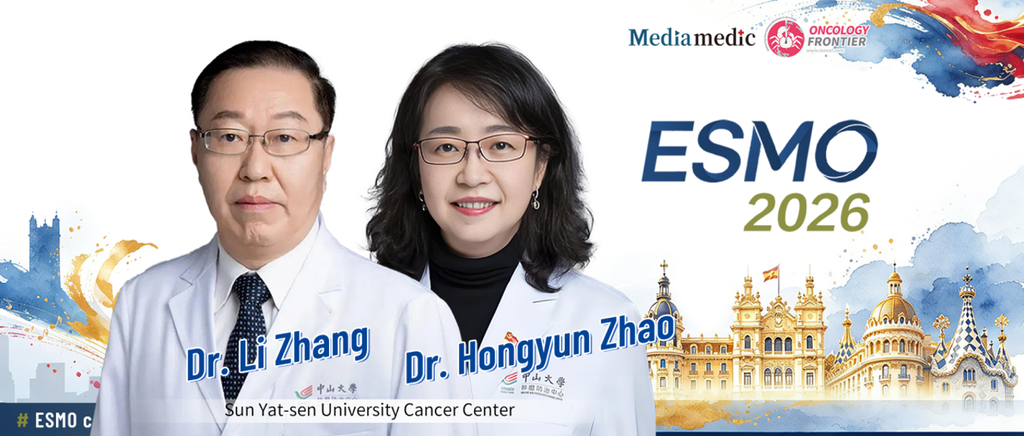
For patients with EGFR-mutated non-small cell lung cancer (NSCLC), resistance following EGFR tyrosine kinase inhibitor (TKI) treatment is almost inevitable. The challenge becomes particularly pronounced when resistance develops to third-generation EGFR-TKIs, leaving patients with limited subsequent treatment options and a persistent need for improved efficacy. It is against this backdrop of unmet clinical need that a novel dual-targeted agent has entered the clinical spotlight: HS-20122, a bispecific antibody-drug conjugate (ADC) targeting both EGFR and c-Met.Recently, at the 2026 European Society for Medical Oncology (ESMO) Congress, held in Madrid, Spain, the team of Professor Li Zhang and Professor Hongyun Zhao from Sun Yat-sen University Cancer Center presented the results of the first-in-human Phase I study of HS-20122, a novel EGFR/c-Met bispecific ADC, in a Proffered Paper Presentation (Abstract No. 1000O). As of July 6, 2026, a total of 215 patients had received treatment. The results demonstrated antitumor activity across multiple advanced solid tumors, with particularly encouraging findings in patients with EGFR-mutated NSCLC.
Professor Hongyun Zhao delivering an oral presentation at ESMO 2026
01
What Are the Distinctive Features of HS-20122?
Studies of resistance mechanisms have shown that MET amplification and overexpression are among the key mechanisms of bypass activation leading to resistance to EGFR-TKIs. This has driven a shift from conventional chemotherapy toward precision treatment strategies targeting multiple pathways. HS-20122 addresses this unmet need through a synergistic dual-targeting design against EGFR and c-Met. Given the crosstalk between the EGFR and c-Met signaling pathways, simultaneously targeting both may help prevent compensatory pathway activation.
HS-20122 consists of a 1:1 EGFR/c-Met bispecific antibody, a cleavable linker, and a topoisomerase I inhibitor payload (HS-9265), with a drug-to-antibody ratio (DAR) of 4.
Professor Hongyun Zhao: In real-world clinical practice, patients who develop resistance to third-generation EGFR-TKIs exhibit substantial heterogeneity. In addition to c-Met amplification, they may develop multiple other resistance mechanisms, including new EGFR mutations, small-cell transformation, and activation of alternative bypass pathways. When abnormal activation of the c-Met pathway is confirmed, conventional MET inhibitor monotherapy offers limited response rates and frequently encounters compensatory signaling between the EGFR and c-Met pathways. This is precisely why dual-targeted ADCs are generating such high expectations. Conventional chemotherapy alone, as well as chemotherapy combined with antiangiogenic agents, generally achieves low objective response rates in these later-line patients. There is an urgent clinical need for novel agents capable of simultaneously targeting both pathways.
HS-20122 combines dual-target recognition with the delivery of a cytotoxic payload. Preclinical studies have demonstrated antitumor activity in multiple models, including lung cancer, gastrointestinal tumors, and head and neck cancer, providing a rationale for its clinical exploration across different tumor types.
02
What Is the Key Significance of HS-20122-101 in the EGFR/c-Met Bispecific ADC Field?
HS-20122-101 is a first-in-human, multicenter Phase I study consisting of two stages: dose escalation and dose expansion. It enrolled patients with advanced solid tumors whose disease had progressed following standard treatment, and explored six dose levels. The dose-escalation stage primarily evaluated safety, while the dose-expansion stage focused on assessing efficacy.
As of July 6, 2026, none of the 28 patients in the dose-escalation stage had experienced dose-limiting toxicity (DLT), and the maximum tolerated dose (MTD) had not been reached. These findings provide an important basis for subsequent dose selection and expansion into additional indications.
The updated analysis included 215 patients: 186 with NSCLC, 14 with head and neck cancer, 10 with colorectal cancer, and 5 with esophageal squamous cell carcinoma. The dose-expansion stage enrolled patients with EGFR-mutated NSCLC, NSCLC without EGFR driver mutations, head and neck squamous cell carcinoma, and gastrointestinal tumors, with EGFR-mutated NSCLC representing the largest cohort. All patients had previously received standard treatment; 46% had received at least two prior lines of therapy, and 16.3% had brain metastases. The inclusion of multiple tumor types provides a basis for exploring the broad antitumor potential of HS-20122.
Professor Hongyun Zhao: In recent years, bispecific ADCs have become one of the hottest areas in drug development. Our team previously developed an EGFR/HER3 ADC that has successfully reached the market. Although EGFR and c-Met are both common therapeutic targets in clinical oncology, relatively few EGFR/c-Met ADCs have been developed worldwide. HS-20122 is not the first molecule in this class to enter clinical development; other similar agents have previously been reported in clinical studies, but their sample sizes were relatively small. Moreover, most first-in-human studies of bispecific ADCs typically begin with small cohorts for dose escalation before gradually expanding into additional cohorts.
HS-20122-101 established large cohorts across multiple tumor types as early as the Phase I stage. This makes it possible to observe efficacy and safety signals across different tumor types and baseline patient characteristics at an earlier stage, while also facilitating the early identification of potential clinical characteristics associated with treatment response. Therefore, the large dataset involving 215 patients is particularly valuable, providing a clinical basis for determining cohort composition and eligibility criteria in subsequent Phase II/III studies.
03
What Promising Results Has HS-20122 Demonstrated?
Among the 177 patients who had undergone at least one post-baseline tumor assessment, HS-20122 achieved an overall objective response rate (ORR) of 44.1% and a disease control rate (DCR) of 91.0%. The waterfall plot showed tumor shrinkage in target lesions relative to baseline in most patients. As of July 6, 2026, 146 of the 215 patients who had received treatment (67.9%) remained on treatment. Notably, the median follow-up in the overall population was 4.1 months, and longer-term follow-up results are eagerly awaited.
The efficacy was particularly encouraging in patients with EGFR-mutated lung cancer. Among the 106 evaluable patients with EGFR-mutated NSCLC, all had previously received EGFR-TKI treatment, including 90% who had received third-generation EGFR-TKIs and 26% who had previously received chemotherapy. The full-dose analysis showed that HS-20122 achieved an ORR of 56% and a DCR of 93%, with a 6-month progression-free survival (PFS) rate of 77% (95% CI: 61.7%–86.4%). The 6 mg/kg Q3W cohort (n = 31) demonstrated particularly encouraging efficacy, with an ORR of 61.3% and a 6-month PFS rate of 75.3% (95% CI: 45.8%–90.2%). These findings suggest that HS-20122 may offer a new treatment option for patients with EGFR-mutated NSCLC.
Professor Hongyun Zhao: Among patients with EGFR-mutated NSCLC whose disease has progressed following third-generation EGFR-TKI treatment, historical ORRs with standard chemotherapy regimens have been low in the overall population, regardless of c-Met status. Even when patients with c-Met amplification are selected, the benefits of single-agent MET inhibitors remain limited. The ORR signal observed with HS-20122 in heavily pretreated patients in this study offers a new perspective for treating patients with resistance associated with abnormal c-Met pathway activation. However, these findings still need to be validated in larger confirmatory studies.
04
Expansion Across Multiple Tumor Types: Potential Efficacy in Lung Squamous Cell Carcinoma and Head and Neck Cancer
Beyond EGFR-mutated NSCLC, HS-20122 also demonstrated antitumor activity in other heavily pretreated tumor types. Patients enrolled in the lung squamous cell carcinoma and head and neck cancer cohorts had all previously received platinum-based chemotherapy and anti-PD-(L)1 treatment. In the lung squamous cell carcinoma cohort (n = 28), the ORR was 32.1% and the DCR was 92.9%. In the head and neck cancer cohort (n = 12), the ORR was 50.0% and the DCR was 91.7%.
Professor Hongyun Zhao: Previously reported ADCs in lung squamous cell carcinoma have generally demonstrated unsatisfactory efficacy. Although the number of patients in our study was relatively small, an ORR of 32.1% warrants further investigation. In later-line treatment of head and neck squamous cell carcinoma, an ORR of 50.0% was achieved, which is comparable to the efficacy signal observed in corresponding later-line patient populations with the EGFR/HER3 ADC previously developed by our team and now approved for marketing. These findings support further investigation of HS-20122 in solid tumors associated with EGFR/c-Met.
05
What Is the Safety Profile?
Among the 215 patients included in the safety analysis, the incidence of grade ≥3 treatment-related adverse events (TRAEs) was 44.2%. Dose reduction and treatment discontinuation due to TRAEs occurred in 10.2% and 3.7% of patients, respectively.
The most common grade ≥3 TRAEs were hematologic toxicities, including neutropenia (25.6%), leukopenia (15.8%), and anemia (6.0%). Overall, toxicities associated with the EGFR/c-Met targets were relatively low. Most infusion-related reactions were low-grade and could be alleviated through premedication and adjustment of the infusion rate. The incidence of treatment-related interstitial lung disease (ILD) was 2.8% (6 cases).
Professor Hongyun Zhao: Hematologic suppression is a common risk associated with topoisomerase I inhibitor-based ADCs. In this study, the major grade ≥3 adverse events were primarily neutropenia and leukopenia, consistent with the known toxicity profile of this payload class. Meanwhile, common target-related toxicities associated with EGFR-targeting agents, such as rash and diarrhea, were generally manageable. This suggests that the molecular design of the bispecific antibody may help retain antitumor activity while limiting off-target effects on normal epithelial tissues. ILD is a risk that requires close attention with EGFR-targeted therapies, and the 2.8% incidence observed in this study warrants continued monitoring in larger studies.
06
What Are the Next Steps for HS-20122?
Professor Hongyun Zhao: Due to the lack of head-to-head comparative studies, it is currently not possible to directly assess the relative merits of different EGFR/c-Met ADC designs. Nevertheless, these large-scale first-in-human data have provided a solid foundation for characterizing the safety and efficacy profiles of this molecule. During the discussion session, Professor Funda Meric-Bernstam from MD Anderson Cancer Center commented that bispecific ADCs targeting EGFR, including EGFR/c-MET and EGFR/B7H3 agents, are emerging as promising directions worthy of attention.
A Phase Ib study evaluating HS-20122 in combination with targeted therapy or immunotherapy (NCT07645222) is currently ongoing, while a Phase III study in EGFR-mutated NSCLC is also in preparation.
Regarding tumor-type selection, EGFR-mutated NSCLC is currently the most clearly established direction for further development. Although the numbers of patients with lung squamous cell carcinoma and head and neck squamous cell carcinoma remain small, these cohorts warrant further expansion. Other tumor types will continue to be explored.
It is hoped that HS-20122 will bring an innovative treatment option from China to patients with cancer.

Professor Li Zhang

Professor Hongyun Zhao