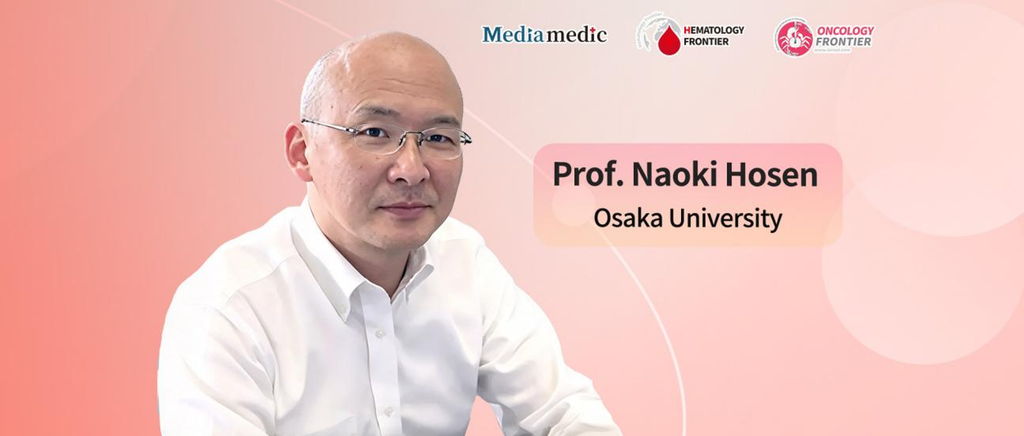
Editor's Note: Basic stem cell research, regenerative medicine, cell therapy, and the application of clinical research guidelines are currently among the most closely watched frontiers in global hematology and translational medicine. With these topics at its core, the 10th International Forum on Stem Cells (IFSC) was successfully held, bringing together leading experts and scholars from around the world to explore scientific discoveries and technological innovation. The forum showcased the latest advances in basic, clinical, and translational research on hematopoietic stem cells, with the aim of promoting collaborative innovation in the global stem cell field. During the conference, Oncology Frontier – Hematology Frontier invited Professor Naoki Hosen of Osaka University, Japan, to share his latest research findings and academic perspectives on "Beyond CD19/BCMA: An Overview of Novel Targets for CAR-T and NK Cell Therapy in Hematologic Malignancies." The key insights are presented below.Oncology Frontier-Hematology Frontier:Currently, CAR-T therapy has achieved great success in B-cell lymphomas and multiple myeloma, mainly due to CD19 and BCMA targets. However, for acute myeloid leukemia (AML) and T-cell tumors, ideal targets are still lacking. Your team has long been committed to discovering safe novel targets for leukemia stem cells. In the AML field, which targets have good potential for balancing “efficacy and safety”?
Professor Naoki Hosen: I see so the several types of targets is used as the targets for AML. For example CD33 CD123 or CLL-1. These are all good targets, but it’s also expressed in the mature myeloid cells. So it should be effective but it’s also very toxic. So we can never avoid that using such target. So today we will we invented a new CAR-T cell targeting the HLA-DRB1 molecule. Which discriminate from recipient AML recipient and transplant donor. So that one is very specific for AML. So it should work. We will test in a clinical trial very soon. But the problem is this type of CAR-T cells can be used for a very specific condition about the HLA selection between patients and donors. So we really need a more universal target for the patients who cannot use HLA-DR targeting CAR-T cells. So currently we try to use the CLL-1. This target will deplete mature granulocyte. But after we deplete all the leukemia cells using CAR-T cells we attempt to reconstitute the hematopoietic system using the allo-transplant. So that’s another strategy. So I don’t think very ideal target on that for the AML cells but not on normal stem cell.
Oncology Frontier-Hematology Frontier:Compared to autologous CAR-T, NK cell therapy (especially universal NK) has a natural advantage in the risk of graft-versus-host disease (GVHD). In the development of new targets for hematological malignancies, how do you think the target selection strategies differ between CAR-NK and CAR-T?
Professor Naoki Hosen: Yeah that’s a good question. So basically CAR-T cell is an autologous cell so it persists in the patients body for long sometimes forever. In contrast CAR-NK cell it’s allogeneic cells it’s basically a good thing and bad thing it’s basically eliminated in a few weeks or months by the allogeneic immune reaction. So in this case even if you use for example CLL-1 as a target so the granulocytes decrease but it’s transient because CAR-NK cell is depleted by immune reaction so the patients granulocytes is coming back because the hematopoietic stem cell normal hematopoietic stem cell does not express the CLL-1. So there is some chance to use CAR-NK cells for such patients.
Oncology Frontier-Hematology Frontier:Exchanges between China and Japan in the field of cell therapy are becoming increasingly frequent. In terms of early discovery of novel cell therapy targets, patent licensing, and subsequent clinical development, what ideal collaboration models do you think exist between research institutions and enterprises in China and Japan?
Professor Naoki Hosen:Yeah actually China is in this field in this cell therapy field China is much more advanced compare with Japan especially for clinical development. So I’m really thinking about a good collaboration between China and Japan. So my attempt is in Japan we perform the first in human trial in an academia setting and then we can expand in China collaborating with China academic or company. And it may be very easy to expand and test in a huge numbers of people. So I really think about it recently.
Expert Profile
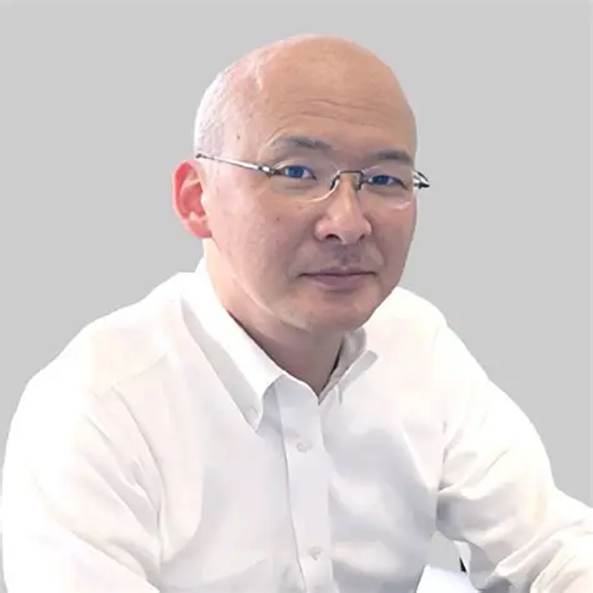
Professor Naoki Hosen
Osaka University, Japan
Professor, Department of Hematology and Oncology, Graduate School of Medicine, Osaka University
Professor Naoki Hosen is currently a Professor in the Department of Hematology and Oncology at Osaka University. He graduated from the Faculty of Medicine at Osaka University in 1994 and received his Doctor of Medical Science degree from Osaka University in 2002. From 2004 to 2007, he conducted postdoctoral research at Stanford University in the United States. He assumed his current position in 2020.
His research focuses on immunotherapy and cell therapy for hematologic malignancies, particularly the identification of antigens specifically expressed on hematologic cancer stem cells and the development of targeted therapies against them. His representative achievements include identifying integrin β7 as a novel target for CAR-T therapy in multiple myeloma (Nature Medicine, 2017) and developing CAR-T/NK cell therapies targeting HLA-DR (Nature Cancer, 2025).