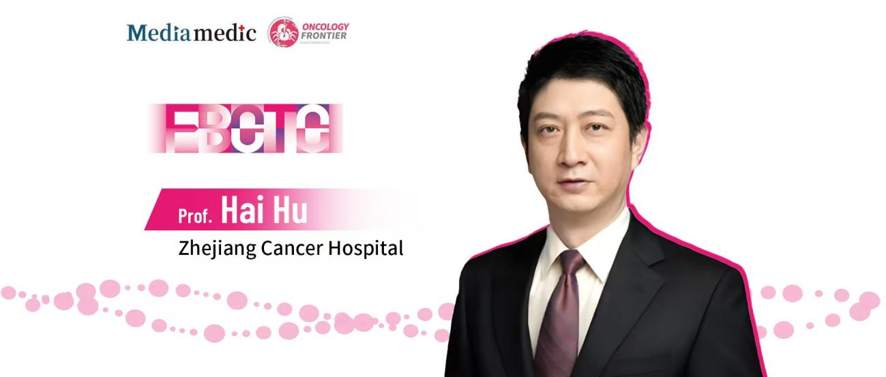
Editor's Note: The 2026 Xianghu Breast Cancer Treatment Frontiers Academic Conference recently concluded successfully in Hangzhou. Organized by the Breast Cancer Center of Zhejiang Cancer Hospital, the meeting featured multiple sessions covering basic and translational research, brain metastases from breast cancer, and cardio-oncology, among other topics. The Hangzhou session of the 2026 CSCO Breast Cancer (CSCO BC) Diagnosis and Treatment Guidelines Tour was also held concurrently. During the meeting, Oncology Frontier interviewed Professor Hai Hu of Zhejiang Cancer Hospital, Chair of the Conference, who shared his insights into the program structure and organizing philosophy, emerging directions in basic and translational research, the current state and future prospects of breast cancer brain metastasis management, and the development and operational model of the Precision Clinic at Zhejiang Cancer Hospital.01
Oncology Frontier: This year’s conference included sessions on basic and translational research, brain metastases from breast cancer, cardio-oncology, HR-positive disease, HER2-positive disease, triple-negative breast cancer (TNBC), ADCs in advanced disease, and the Hangzhou session of the 2026 CSCO BC Diagnosis and Treatment Guidelines Tour. As conference chair, could you explain the thinking behind this program structure? Which emerging treatment concepts and clinical topics would you most like participants to focus on?
Professor Hai Hu: The Xianghu Forum was organized by the Breast Cancer Center of Zhejiang Cancer Hospital. We structured the program around breast cancer subtypes and the different stages of treatment, including surgery, radiotherapy, chemotherapy, and systemic therapy. We also designed sessions to address current clinical hot topics. In addition, to help physicians at primary-level institutions better understand updates to clinical guidelines, we incorporated the Hangzhou session of the 2026 CSCO BC Diagnosis and Treatment Guidelines Tour into the main conference agenda.
Overall, this program design reflects several considerations.
First, we hope to promote increasingly standardized breast cancer care through learning, exchange, and the sharing of ideas among experts and colleagues from across China. Building on standardized practice, we also aim to distill current clinical challenges and emerging questions into areas of consensus. Through further discussion and exchange, we hope to identify solutions and provide useful ideas for future clinical trials, the exploration of clinical care models, and the transition from basic research to translational research.
Second, we hope to broaden knowledge across relevant fields and communicate the latest diagnostic and treatment concepts, therapeutic strategies, and research approaches to participants nationwide.
Third, we hope the conference will generate new ideas and potential directions for improving breast cancer care in China.
These considerations underpin the overall structure and forward-looking focus of the meeting. Through these efforts, we hope to continue advancing breast cancer care in China from standardization toward precision medicine at the forefront of clinical practice.
02
Oncology Frontier: The basic and translational research session covered topics including natural products and their molecular targets, immune regulation by heat-clearing and detoxifying traditional Chinese medicine formulations, chemical biology and AI-driven natural product research, and the gut microbiome and interventions involving traditional Chinese medicine. How do you see these research directions intersecting with basic and translational breast cancer research? What are the key links that need to be established to translate basic discoveries into clinical applications?
Professor Hai Hu: Over the past 5,000 years, traditional Chinese medicine (TCM) has made significant contributions to safeguarding the health of the Chinese people. Natural products and TCM also play important roles in the comprehensive treatment of patients with breast cancer.
Western medicine remains the mainstay of cancer treatment today, but natural products and TCM have attracted increasing attention in recent years. We believe they represent a vast and still underexplored resource, with many unanswered questions and opportunities for further investigation. In clinical practice, we have observed therapeutic effects, yet our understanding of the underlying mechanisms remains limited. Although TCM has its own theoretical framework, much work remains to be done to understand traditional natural products through modern scientific concepts and methods so that their potential can be investigated and applied more effectively.
In breast cancer treatment specifically, the overall therapeutic framework remains primarily based on Western medicine, with TCM generally serving a supportive role. Could sustained research and development involving TCM and other natural products eventually enable some of these approaches to move beyond supportive care and become primary treatment strategies or regimens? I believe this question offers considerable scope for exploration and discussion.
Of course, many aspects remain unclear, including how TCM interacts with the human body and how it interacts with the gut microbiome. These questions will require further investigation.
Research into complex biological systems increasingly relies on artificial intelligence, which offers distinct advantages in addressing the challenges associated with such systems. For this reason, we included these topics as emerging research directions at this year’s meeting.
We hope these discussions will offer ideas, directions, and potential pathways for the better application of natural products and TCM in breast oncology and cancer care more broadly. They may also help identify promising approaches for bringing therapies based on TCM and natural products into clinical research in breast cancer.
03
Oncology Frontier: The session on brain metastases from breast cancer was divided into local and systemic treatment, covering surgical and minimally invasive approaches, advances in radiotherapy, and systemic treatment of brain metastases in HER2-positive and HER2-negative disease. As the opening speaker, how would you assess the current state of care and the main bottlenecks in managing brain metastases from breast cancer? How might multidisciplinary collaboration, novel targeted agents, and ADCs change the treatment landscape?
Professor Hai Hu: Brain metastases have long been an important concern in breast cancer care. However, although the issue has attracted considerable attention over the years, the practical treatment options available in earlier stages of development were limited. Brain metastases occur in a proportion of patients with breast cancer, with the highest incidence observed in HER2-positive disease. Overall outcomes for patients with brain metastases remain unsatisfactory, and despite longstanding awareness of the problem, in-depth investigation and discussion have been relatively limited.
There are two main reasons for the difficulty of treating brain metastases. First, although a relatively broad range of drugs is available to treat extracranial disease, far fewer agents can effectively reach and act within the central nervous system. Second, as survival among patients with breast cancer improves, brain metastases are being observed more frequently.
Taken together, these factors make brain metastases an increasingly important determinant of patient survival, warranting greater attention. However, treatment options remain relatively limited. In systemic therapy, only a small number of drugs can effectively cross the blood–brain barrier and treat brain metastases. Although ADCs and small-molecule agents have been investigated, overall efficacy remains suboptimal. Local treatment options, including radiotherapy, surgery, and other local interventions, have also not been explored or applied as extensively as needed. Radiotherapy remains the mainstay of treatment for brain metastases, and there is considerable scope to investigate how surgery and other approaches can further improve outcomes.
In clinical practice, breast cancer can metastasize to bone, liver, lungs, lymph nodes, and other sites, but these metastatic sites are not always studied as separate research priorities. Brain metastases, however, can have a particularly substantial impact on prognosis and survival. Research into their management and the development of new therapies therefore need to be prioritized early.
Only by doing so can we keep pace with advances in breast cancer care and ensure that brain metastases are addressed more effectively while extracranial disease is brought under good control. In the future, multidisciplinary collaboration and systemic treatments such as novel targeted agents and ADCs may reshape the management of brain metastases, but their potential will need to be confirmed through further clinical research and real-world practice.
04
Oncology Frontier: At the main conference, you delivered a presentation entitled “Sharing the Development of the Precision Clinic at Zhejiang Cancer Hospital.” Could you introduce the rationale and operational model behind the clinic? How does it integrate with MDT discussions, genetic testing, clinical trials, and comprehensive patient management? What role do you expect the Precision Clinic to play in implementing precision breast cancer care and enhancing the influence of the specialty?
Professor Hai Hu: The primary reason for establishing the Precision Clinic is that, as breast cancer diagnosis and treatment continue to advance, the concept of precision medicine is also evolving and becoming more sophisticated.
Precision in breast cancer care has progressed from surgical approaches that emphasize breast, functional, and organ preservation, to more accurate molecular subtype classification, and now toward mechanism-driven precision treatment. These developments have continued to improve overall treatment outcomes and patients’ quality of life.
With the emergence of new agents, including ADCs, oral selective estrogen receptor degraders (SERDs) targeting ESR1 mutations, and other targeted therapies, breast cancer treatment is increasingly moving toward a mechanism-driven precision approach.
Against this background, Zhejiang Cancer Hospital established the Precision Clinic to facilitate the implementation of precision treatment strategies and integrate molecular testing, drug therapy, and multidisciplinary team (MDT) care. Its core approach is to identify suitable patients through genetic testing, molecular pathology, and related assessments, then match them with precision therapies directed at specific molecular alterations to improve treatment outcomes.
The Precision Clinic also focuses on the clinical use of novel targeted agents, strengthening adverse-effect management and care beyond the hospital to improve patients’ quality of life and treatment outcomes throughout the entire course of care, while making access to medical services more convenient.
Operationally, the Precision Clinic integrates patients’ diagnostic findings, molecular pathology results, clinical research information, and targeted therapy options to deliver precision care and strengthen coordination among genetic testing, MDT discussions, clinical trials, and comprehensive patient management.
The clinic is expected to play an important role in implementing precision breast cancer care and strengthening the specialty’s academic and clinical influence. On the one hand, it can help ensure that precision testing and treatment are implemented in a standardized manner. On the other, through MDT discussions and multidisciplinary integration, it can improve the efficiency of care for complex cases while supporting clinical trial enrollment and comprehensive patient management.
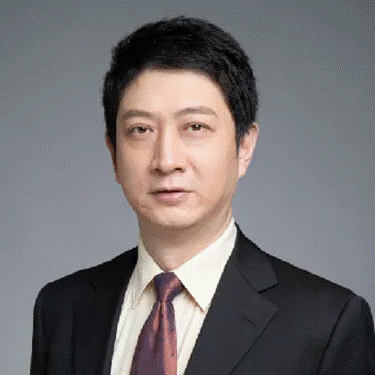
Professor Hai Hu