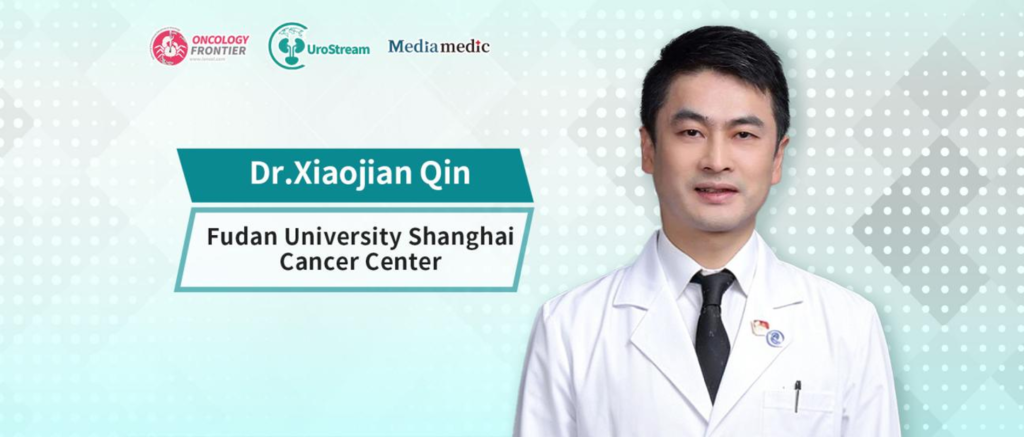
The 2026 Pujiang Prostate Cancer Conference was successfully held in Shanghai, bringing together leading experts to discuss the latest advances and clinical experience in prostate cancer management, further promoting standardized care and technological innovation in China.Following the meeting, UroStream interviewed Prof. Xiaojian Qin from Fudan University Shanghai Cancer Center to discuss the clinical benefits of primary tumor resection in metastatic prostate cancer, patient selection, surgical strategies, and other key issues, with the goal of helping patients achieve greater survival benefits.
UroStream:
At the minimally invasive surgery session of this year’s conference, you presented a lecture titled “Exploring Primary Tumor Resection in Metastatic Prostate Cancer.” Could you share the key clinical considerations for this procedure? Based on your extensive clinical experience and available evidence, what tangible benefits does primary tumor resection offer patients with metastatic prostate cancer?
Prof. Xiaojian Qin:
I believe that primary tumor resection in metastatic prostate cancer is not so much a technological innovation as it is an evolution in treatment strategy.
With continuous advances in surgical techniques and instrumentation, radical prostatectomy has become increasingly mature and minimally invasive. This progress has enabled us to re-evaluate patients who were previously considered unsuitable for surgery because of extensive metastatic disease and to explore the potential clinical value of removing the primary tumor.
It is important to clarify one key point: surgery is not without value in metastatic prostate cancer. However, surgery alone has relatively limited impact. The more meaningful question is whether, within the broader framework of systemic therapy, surgery—particularly primary tumor resection—can improve patients’ quality of life, prolong survival, and enhance overall tumor control. This is precisely the question we need to answer.
This issue is especially important in China because the proportion of patients diagnosed with metastatic prostate cancer remains relatively high. These patients generally experience poorer survival and quality of life, highlighting the urgent need for better treatment strategies. Therefore, while continuing to optimize systemic therapy, we must also explore improvements in our overall treatment approach.
Preliminary studies have already shown that, when combined with systemic therapy, local surgery can provide meaningful survival benefits for selected patients while significantly improving their quality of life.
Moving forward, our goal over the next five years is to identify more precisely which patients are most likely to benefit from local treatment.
UroStream:
For patients with metastatic prostate cancer who undergo primary tumor resection, does local treatment alter subsequent systemic treatment strategies? Which patients are most suitable for this type of surgery?
Prof. Xiaojian Qin:
The addition of local surgery has relatively little impact on the overall systemic treatment strategy. Essentially, surgery serves as an adjunct to an effective systemic therapy regimen, further enhancing treatment outcomes.
Specifically, for patients with metastatic prostate cancer—particularly those with a high tumor burden—primary tumor resection is generally not considered a priority if systemic therapy has produced an inadequate response. In such cases, surgery is typically reserved for selected situations, such as palliation or symptom relief.
Conversely, when systemic therapy achieves a favorable response, particularly in patients with high-volume metastatic disease, we aim to take advantage of this therapeutic window by performing primary tumor resection to consolidate the treatment response.
The availability of PSMA-targeted molecular imaging has made this strategy even more valuable. After systemic therapy, metastatic lesions may demonstrate markedly reduced tumor activity, while the primary tumor may remain biologically active because of its unique protective microenvironment. Under these circumstances, removing the primary tumor can maximize the value of surgery and provide additional clinical benefit.
UroStream:
With the rapid development of precision imaging, novel hormonal therapies, and radioligand therapy, prostate cancer management has entered a new era of comprehensive, longitudinal care. Within the framework of multidisciplinary team (MDT) management, how should surgeons keep pace with these advances and further expand the role of surgery? Looking ahead, what role do you envision for primary tumor resection in the long-term management of prostate cancer?
Prof. Xiaojian Qin:
In metastatic prostate cancer, systemic therapy will continue to be the primary focus of clinical research and therapeutic development.
In recent years, numerous innovative therapies with different mechanisms of action have expanded treatment options for advanced metastatic prostate cancer. Nevertheless, substantial improvements in overall patient outcomes remain challenging.
Accordingly, our efforts should proceed along two parallel paths.
On one hand, we must continue developing more effective drugs and innovative treatment strategies to further improve survival and quality of life for patients with metastatic prostate cancer.
On the other hand, surgery must continue to evolve. Surgeons should embrace new surgical technologies and modernize surgical concepts, allowing procedures to become increasingly refined and minimally invasive while expanding the appropriate indications for surgical intervention.
Ultimately, within a comprehensive systemic treatment strategy, primary tumor resection has the potential to provide selected patients with advanced metastatic prostate cancer with dual benefits—not only prolonging survival but also significantly improving quality of life—thereby offering new hope for these patients.

Prof. Xiaojian Qin