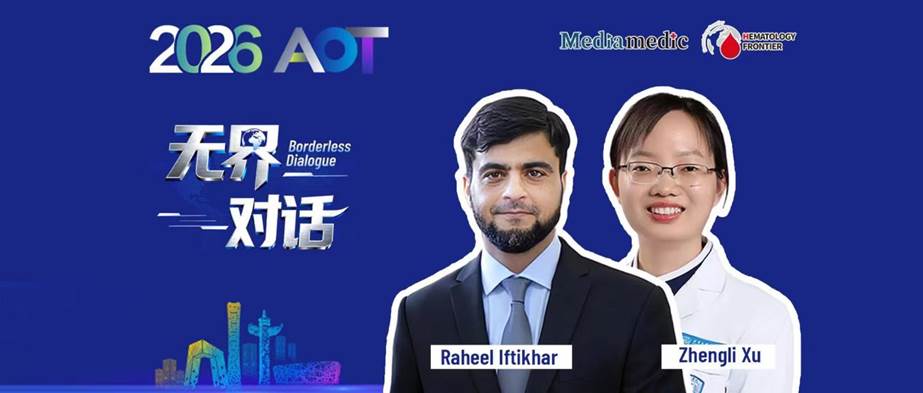
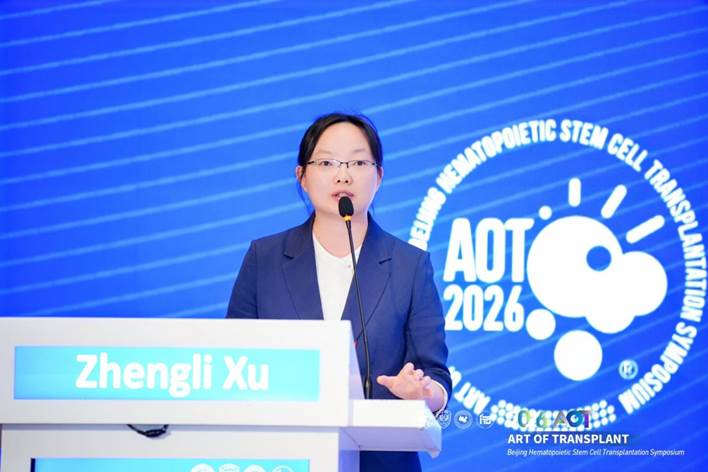
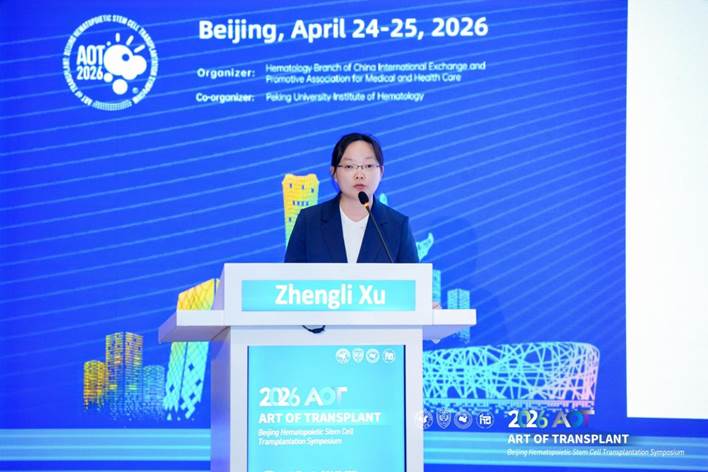
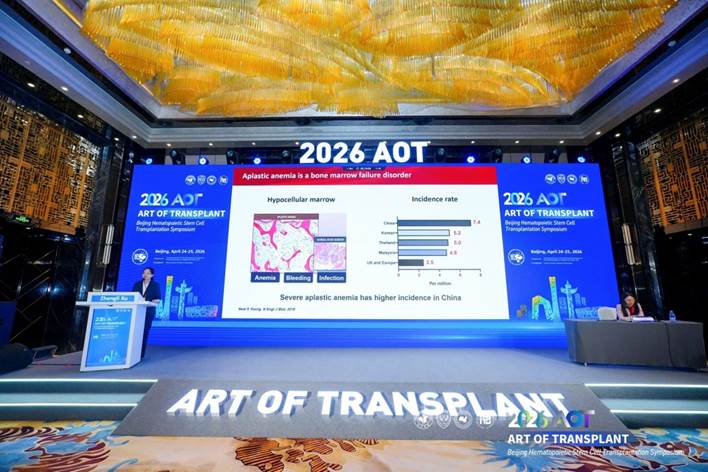
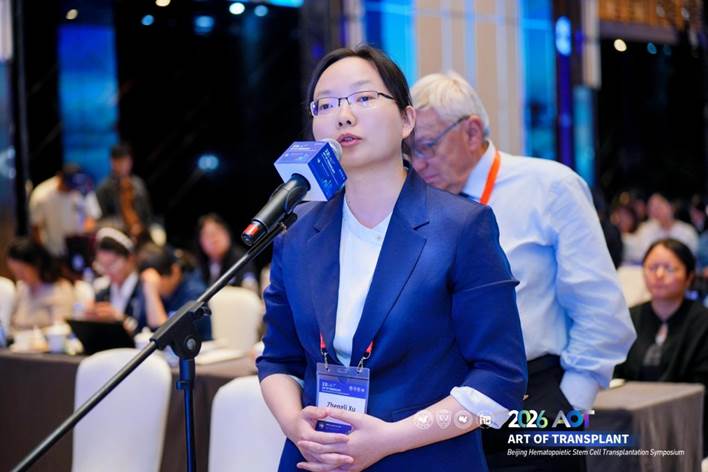
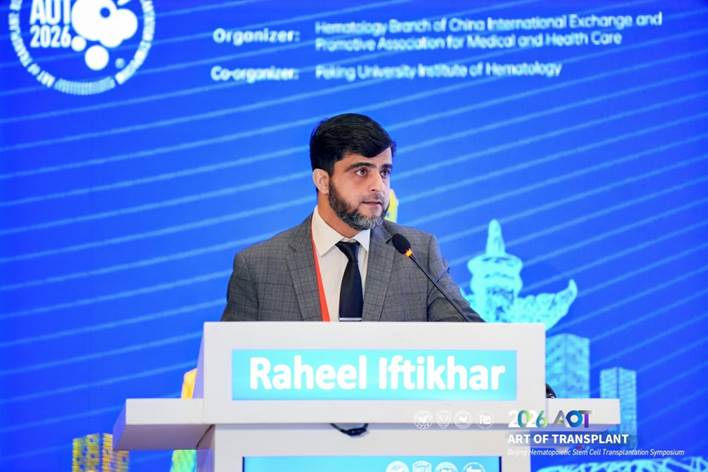
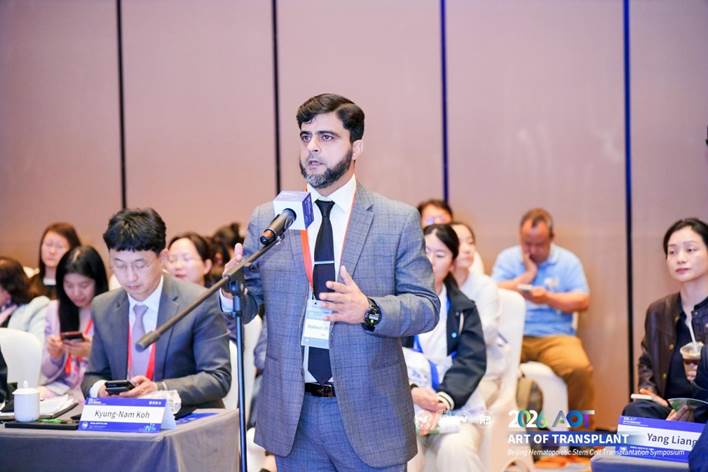
To comprehensively improve public health and strengthen strategies for the prevention and treatment of major diseases, medical innovation and international collaboration have become critical drivers of clinical progress. Against this backdrop, the 2026 Beijing International Hematopoietic Stem Cell Transplantation Conference (AOT) was successfully held in Beijing from April 24 to 25, 2026. The meeting was organized by the Hematology Branch of the China International Exchange and Promotive Association for Medical and Health Care and hosted by the National Clinical Research Center for Hematologic Diseases and the Peking University Institute of Hematology. Centered on the theme “The Art of Transplantation,” the conference brought together leading global experts in hematology to discuss cutting-edge innovations and future trends in hematopoietic stem cell transplantation.During the conference, an in-depth discussion took place between Professor Zhengli Xu from the National Clinical Research Center for Hematologic Diseases and Peking University People’s Hospital, and Professor Raheel Iftikhar from the Armed Forces Bone Marrow Transplant Centre (AFBMTC) in Rawalpindi, Pakistan. Their dialogue focused on the application of haploidentical transplantation in aplastic anemia, exploring strategies for optimization and the potential for global collaboration, with the shared goal of identifying more effective and accessible curative approaches for patients worldwide and advancing the field of transplantation medicine.
In China, haploidentical transplantation has become a recommended first-line treatment strategy owing to its mature technical framework and extensive clinical evidence. This progress has been driven largely by the sustained efforts and innovation of Chinese investigators in the field. Building on this foundation, Professor Zhengli Xu introduced an international comparative perspective, discussing the positioning of first-line immunosuppressive therapy (IST) versus haploidentical transplantation in patients lacking either an HLA-matched sibling donor or a matched unrelated donor.
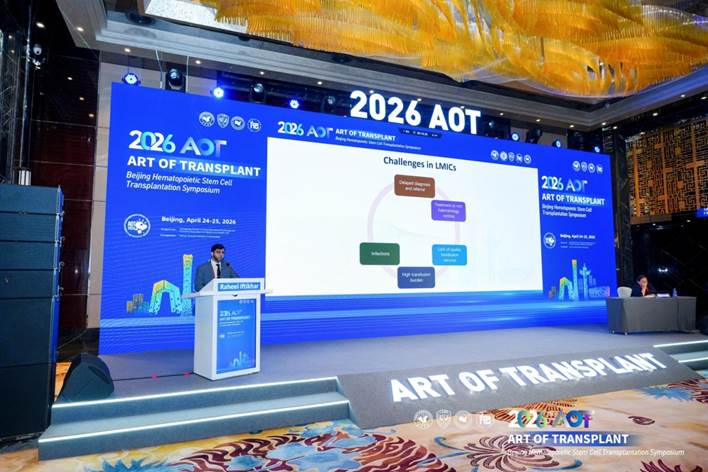
Professor Raheel Iftikhar responded by noting that this challenge is not unique to Pakistan, but is a widespread reality across many low- and middle-income countries. In these regions, access to cord blood and unrelated donor registries remains limited. He emphasized that patients initially treated with IST often face multiple challenges, including high infection risk, suboptimal treatment response, and considerable financial burden. As a result, haploidentical transplantation has effectively become the backbone of transplant therapy for aplastic anemia, fundamentally transforming disease prognosis.
He particularly acknowledged the pioneering role of Chinese research in this area, highlighting that both the “Beijing Protocol” and key data involving post-transplant cyclophosphamide (PTCy) originated in China, providing global confidence in the broader adoption of haploidentical transplantation. At Professor Raheel Iftikhar’s institution, treatment decisions follow a stepwise hierarchy: an HLA-matched sibling donor remains the preferred option, followed immediately by haploidentical transplantation.
Turning to differences in clinical practice, Professor Zhengli Xu noted that approximately 9% of patients in Pakistan had already undergone haploidentical transplantation and asked whether graft-versus-host disease (GVHD) prophylaxis in their setting primarily relied on PTCy, G-CSF/ATG-based regimens, or a combination of both.
Professor Raheel Iftikhar shared that PTCy-based regimens currently predominate. However, the relatively low proportion of haploidentical transplantation reflects the fact that the procedure has not yet been widely implemented across all transplant centers in Pakistan and remains concentrated in a limited number of experienced institutions. He expressed the view that future efforts should move beyond PTCy alone to explore broader application of the “Beijing Protocol.” He also conveyed a strong interest in international collaboration aimed at optimizing treatment strategies and benefiting more patients globally.
Professor Zhengli Xu strongly agreed, pointing out that while numerous comparative studies between PTCy and the Beijing Protocol have already been conducted in malignant hematologic diseases, similar international multicenter collaborations are urgently needed in aplastic anemia to systematically compare and refine haploidentical transplantation approaches. Professor Raheel Iftikhar described this as an extremely important direction and stressed that both sides should work together toward the ultimate goal of substantially improving patients’ chances of cure.
The discussion then shifted to technical details. Professor Raheel Iftikhar asked about the target CD34+ cell dose used in the “Beijing Protocol” (the G-CSF/ATG-based haploidentical transplantation regimen). Professor Zhengli Xu explained that, in clinical practice at Peking University People’s Hospital, the median infused CD34+ cell dose is approximately 5 × 10⁶/kg, with a minimum target of at least 2 × 10⁶/kg. She also noted that some Chinese centers using PTCy protocols employ higher doses exceeding 5 × 10⁶/kg.
Professor Raheel Iftikhar added that, under PTCy-based regimens, commonly used doses range from 5 to 8 × 10⁶/kg. Based on currently available reports, outcomes with the Beijing Protocol in aplastic anemia appear highly encouraging and may offer superior engraftment compared with PTCy-based approaches.
Finally, the conversation focused on post-transplant infection prophylaxis. Professor Raheel Iftikhar specifically inquired about strategies for cytomegalovirus (CMV) prevention, including the use of letermovir and management approaches following CMV reactivation.
Professor Zhengli Xu outlined her center’s protocol in detail: letermovir prophylaxis is administered from approximately day 7 post-transplant through day 100. If CMV reactivation occurs during prophylaxis, letermovir is discontinued and treatment is switched to ganciclovir. Once CMV becomes negative again within the first 100 days, letermovir prophylaxis is resumed.
This dialogue not only provided an in-depth discussion of the key technical aspects and preventive strategies associated with haploidentical transplantation for aplastic anemia, but also highlighted the profound global impact of Chinese-developed treatment approaches—particularly in regions with uneven healthcare resources.
The consensus reached by the two experts extended beyond a simple comparison of techniques and pointed toward a broader vision: transforming validated and optimized treatment strategies into accessible and affordable clinical practice through open international collaboration. This signals a shift in the treatment paradigm for severe aplastic anemia—from “opportunistic cure” dependent on donor availability to “planned cure” supported by mature haploidentical transplantation systems.
Looking ahead, collaborative innovation centered on patient benefit will continue to drive progress in transplantation medicine and ultimately bring hope to every patient awaiting life-saving treatment.
Expert Profiles
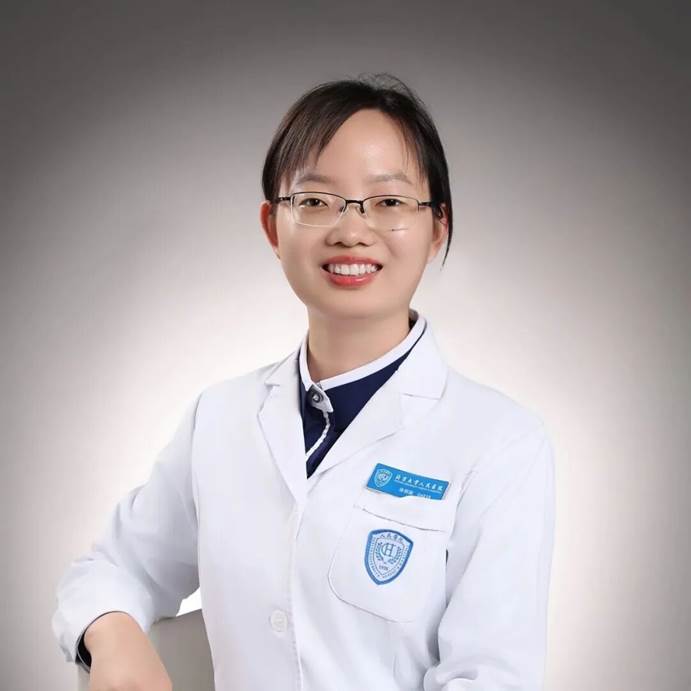
Zhengli Xu, MD
Executive Secretary of the 12th Committee, Chinese Society of Hematology, Chinese Medical Association
Young Committee Member and Secretary of the 9th Hematology Professional Committee, Chinese Society of Integrated Traditional Chinese and Western Medicine
Has published 25 SCI papers as first or corresponding author in journals such as Leukemia, Science Bulletin, and Haematologica
Has presided over 3 projects, including the National Natural Science Foundation Youth Program and the Peking University Clinical Medicine + X Project
Selected for the Beijing High-Level Talent Cultivation Plan – Spring Bud Project
Recipient of the Youth Science and Technology Award of Chinese Medical Association Science and Technology Award
Awarded the 4th Peking University Outstanding Young Physician
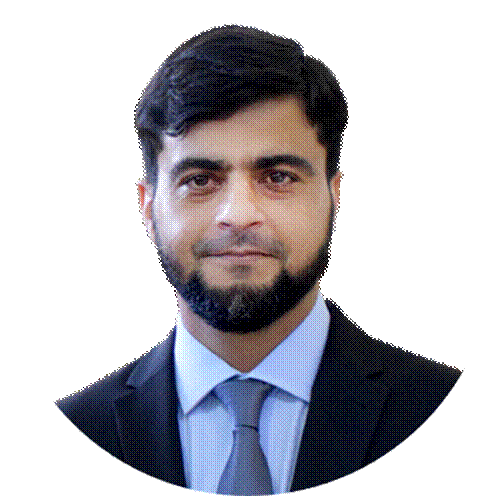
Raheel Iftikhar, MD
Consultant, Armed Forces Bone Marrow Transplant Centre (AFBMTC), Rawalpindi, Pakistan
Serves as the Ambassador in Pakistan for the Society of Hematologic Oncology (SOHO), committed to advancing the field in the region
Specializes in the treatment of benign and malignant hematologic diseases, with particular expertise in advanced therapies and bone marrow transplantation for Aplastic Anemia, Diffuse Large B-Cell Lymphoma (DLBCL), and Multiple Myeloma
Has contributed to the development of multiple national and international clinical practice guidelines for the management of Aplastic Anemia and lymphoma