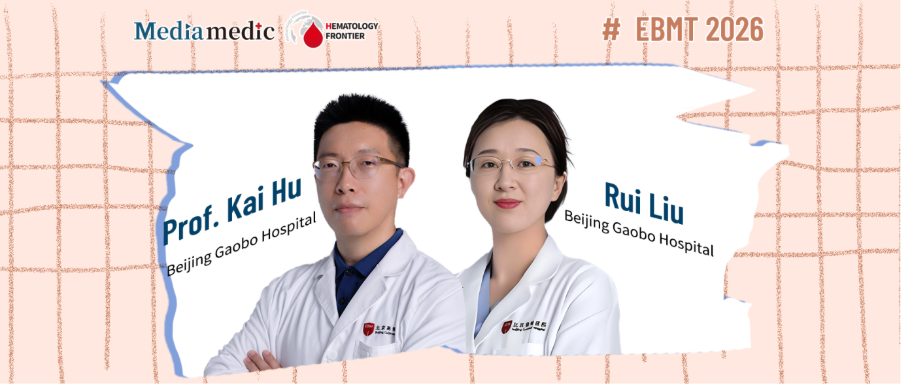
The 52nd EBMT Annual Meeting will be held in Madrid, Spain, from March 22 to 25, 2026. As one of the most prominent international meetings in hematology, EBMT brings together experts from around the world to discuss cutting-edge advances in hematopoietic stem cell transplantation and cellular therapies, driving innovation in clinical practice. At this year’s meeting, the team led by Prof. Kai Hu from Beijing Gaobo Hospital had eight studies accepted. This report presents the work of Dr. Rui Liu, entitled “CD19 CAR-T Therapy in Transformed Follicular Lymphoma: A Real-World Cohort of 43 Patients.”
Abstract Information
Abstract No.: A066 First Author: Rui Liu Corresponding Author: Kai Hu Institution: Beijing Gaobo Hospital
Background
Transformed follicular lymphoma (tFL) is associated with poor prognosis, particularly after multiple lines of therapy, where survival outcomes remain limited. Although CD19 CAR-T therapy has significantly improved outcomes in relapsed or refractory large B-cell lymphoma, real-world evidence in tFL—especially data incorporating molecular characteristics—remains scarce.
Methods
This retrospective study included 43 patients with pathologically confirmed tFL who were treated at our center between 2019 and 2025. The analysis evaluated the efficacy and safety of CD19 CAR-T therapy, along with baseline characteristics, prior treatments, bridging strategies, and molecular features assessed by immunohistochemistry (IHC), fluorescence in situ hybridization (FISH), and next-generation sequencing (NGS).
Overall survival (OS) and progression-free survival (PFS) were estimated using the Kaplan–Meier method.
Results
Baseline Characteristics
The median age was 50 years (range, 26–68), and 53% of patients (23/43) were male. A total of 30% (13/43) had an ECOG performance status ≥2. Primary refractory disease was present in 33% of patients (14/43). The median number of prior treatment lines was 3 (range, 2–7).
Bridging Therapy
Prior to CAR-T infusion, 95% of patients (41/43) received bridging therapy. Patients underwent a median of one cycle of cytoreductive bridging treatment (range, 1–4). The regimens primarily consisted of venetoclax combined with BTK inhibitors and multi-agent chemotherapy. Among these patients, 70% (30/43) received a BCL-2 inhibitor, and 42% (18/43) received a BTK inhibitor.
Molecular Characteristics
Post-transformation immunohistochemistry showed double expression in 12 patients (12/43). FISH analysis was performed in 26 patients (26/43), among whom 3 cases (3/26) had double-hit or triple-hit lymphoma. Among the remaining non–double/triple-hit cases, BCL-2 rearrangement was detected in 8 patients (8/23).
Next-generation sequencing was performed in 36 patients (36/43), revealing TP53 mutations in 19 cases (19/36). The median time from follicular lymphoma to transformation into diffuse large B-cell lymphoma was 1.83 years (range, 0–13.58 years).
Following transformation, the median MYC expression by immunohistochemistry was 30% (range, negative to 80%), and the median Ki-67 expression was 70% (range, 10%–90%).
Safety
Cytokine release syndrome (CRS) occurred in 79.1% of patients (34/43), with grade ≥3 CRS observed in 11.6% (5/43). Immune effector cell-associated neurotoxicity syndrome (ICANS) occurred in 11.6% (5/43), including grade ≥3 events in 9.3% (4/43).
Efficacy
At 3 months, the overall response rate (ORR) was 56%, and the complete response rate (CRR) was 47%.
With a median follow-up of 37.87 months (95% CI, 16.37–59.37), the 1-year PFS and OS rates were 45.4% and 66.9%, respectively. The 3-year PFS and OS rates were 41.7% and 63.2%, respectively.
Subgroup Analysis
When survival was calculated from the time of histologic transformation from follicular lymphoma to diffuse large B-cell lymphoma, both the 3-year and 5-year survival rates were 64.7%.
The 1-year OS rate was 56.4% in patients with TP53 mutations and 76.5% in those without (P = 0.433). Similarly, the 1-year OS rate was 45.5% in patients with BCL-2 rearrangement/translocation and 73.3% in those without (P = 0.235).
Conclusion
Although early response rates were modest, CD19 CAR-T therapy provided durable long-term survival benefit in this cohort of patients with transformed follicular lymphoma. The 3-year overall survival rate reached 63.2%, comparable to or even exceeding outcomes reported in large global real-world cohorts such as those from the CIBMTR.
CD19 CAR-T therapy remains an important treatment option for patients with tFL after multiple lines of therapy.
Expert Profiles
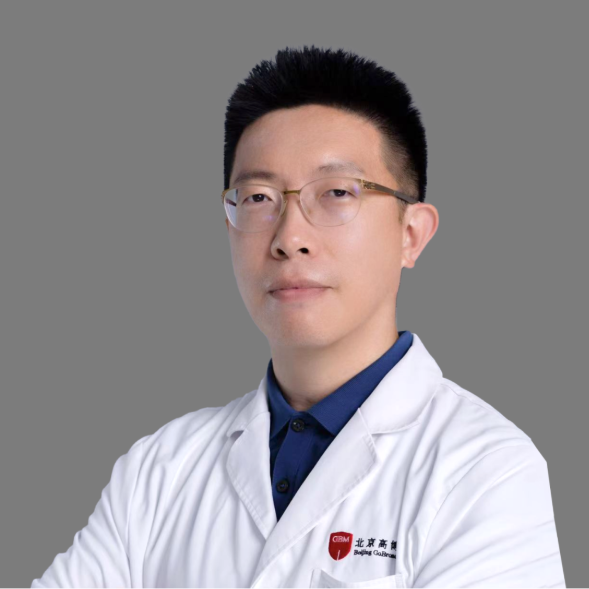
Kai Hu, MD, PhD Director of the Lymphoma and Myeloma Department, Beijing Gaobo Hospital
Prof. Hu has over 20 years of experience in hematologic oncology. His work focuses on the standardized management of hematologic malignancies, including leukemia, lymphoma, and multiple myeloma, with particular expertise in immunotherapy such as CAR-T, antibody-based therapies, and targeted treatments. He is highly experienced in integrating cellular therapy, stem cell transplantation, and targeted approaches, and has extensive clinical experience in managing post-transplant complications.
He has published more than 20 SCI-indexed papers and led nearly 40 clinical trials, while participating in over 100 studies. His work on sequential CAR-T therapy, CAR-T combined with ASCT, and allogeneic CAR-T strategies has gained international recognition.
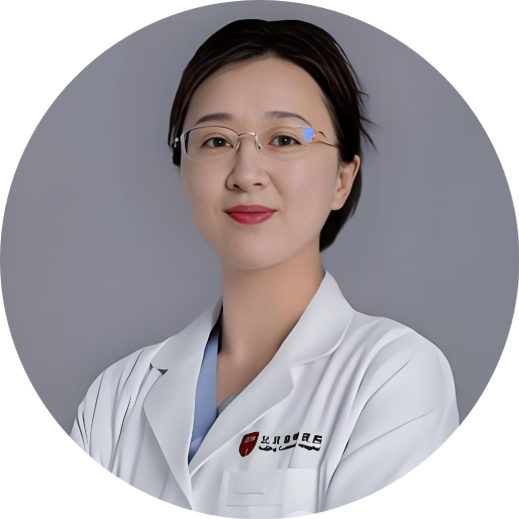
Rui Liu Research Assistant, Lymphoma and Myeloma Department, Beijing Gaobo Hospital
Rui Liu graduated from Shanxi University of Traditional Chinese Medicine with a major in pharmaceutical sciences. She is primarily engaged in research support in lymphoma and myeloma, with expertise in medical data management, scientific communication, and manuscript preparation.
In recent years, she has been actively involved in clinical research related to CAR-T therapy and has developed strong skills in literature synthesis, conference preparation, and research presentation. She is familiar with international research standards and workflows.
As a contributing researcher, she has participated in multiple international academic exchanges. A total of 12 research outputs have been presented as oral presentations or posters at major international conferences, including ASH, EHA, and EBMT. She has co-authored 11 SCI-indexed publications, including 2 as first author.