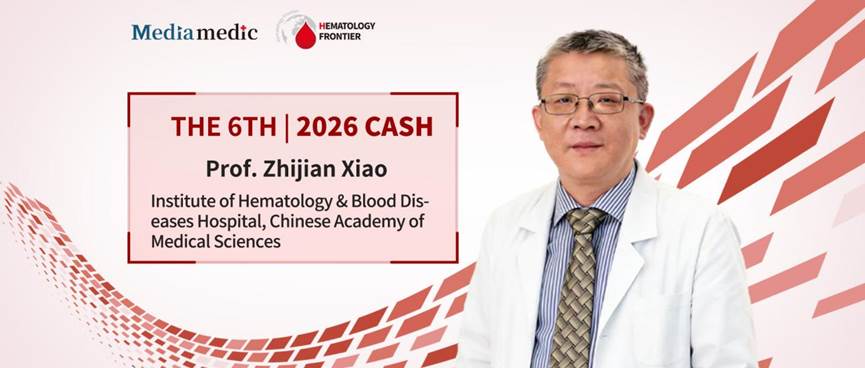
Editor’s Note: From January 9–11, 2026, the 6th China Hematology Discipline Development Conference (CASH) was held in Tianjin, bringing together leading experts to explore cutting-edge advances in hematology aligned with national health priorities. During the meeting, Oncology Frontier – Hematology Frontier invited Professor Zhijian Xiao from the Institute of Hematology & Blood Diseases Hospital, Chinese Academy of Medical Sciences, to provide in-depth insights into recent advances in precision risk stratification for myelodysplastic syndromes (MDS) and emerging targeted and immunotherapeutic strategies, highlighting the growing clinical importance of molecular classification in treatment decision-making.Precision Risk Stratification in MDS: Principles and Clinical Implications
Oncology Frontier – Hematology Frontier:
Precision risk stratification is becoming central to MDS clinical management. Could you outline the current stratification principles and corresponding treatment strategies for different risk categories?
Professor Zhijian Xiao:
The recently developed Molecular International Prognostic Scoring System (IPSS-M) incorporates approximately 40–60 gene mutations that have been validated in large-scale cohorts as having clear prognostic significance. Each mutation is assigned a risk-weighted score based on its relative impact on clinical outcomes.
By integrating molecular genetic data with traditional clinical and cytogenetic prognostic factors, IPSS-M represents a more refined and accurate risk assessment system.
However, in routine clinical practice, treatment decisions are still broadly guided by stratifying patients into lower-risk and higher-risk groups, with tailored therapeutic strategies applied accordingly.
Targeted, Immunomodulatory, and Transplant-Based Advances in MDS
Oncology Frontier – Hematology Frontier:
What progress has been made in targeted therapy, immunomodulation, and hematopoietic stem cell transplantation across different MDS risk groups? How have these advances improved prognosis and quality of life?
Professor Zhijian Xiao:
Many advances in MDS targeted therapy draw on progress made in acute myeloid leukemia (AML), as these diseases share overlapping molecular mutation profiles.
Small-Molecule Targeted Therapies
For example, IDH1 and IDH2 inhibitors—ivosidenib and enasidenib—have demonstrated clinical activity in MDS and were approved abroad following early-phase trials. Additionally, targeted agents against JAK2 and FLT3, although relevant to a smaller subset of MDS patients, provide molecularly guided treatment options for selected individuals.
Antibody-Based and Cellular Therapies
While monoclonal antibodies, bispecific antibodies, antibody–drug conjugates (ADCs), and CAR-T cell therapies have achieved remarkable success in lymphoid malignancies and plasma cell disorders, their application in MDS and other myeloid neoplasms remains challenging. The primary limitation is the lack of highly specific and safe target antigens.
Potential targets such as CD123 are under active clinical investigation; however, efficacy and safety outcomes have not yet matched those seen in lymphoid malignancies.
Splicing Factor Mutations: A Promising New Frontier
One of the most active research directions in MDS involves splicing factor gene mutations. These mutations may generate tumor-specific neoantigens through aberrant RNA splicing, creating novel opportunities for:
- Targeted monoclonal antibodies
- Bispecific antibodies
- CAR-T–based immunotherapies
Early preclinical evidence suggests this may become a breakthrough area, warranting sustained investigation.
Expert Profile

Professor Zhijian Xiao
Institute of Hematology & Blood Diseases Hospital, Chinese Academy of Medical Sciences
- Chief Clinical Expert
- Tenured Professor, Peking Union Medical College
- Chief Physician, PhD Supervisor
- Deputy Director, National Clinical Research Center for Hematologic Diseases
- Vice Chair, Chinese Society of Hematology
- Head, Leukemia & Lymphoma Working Group
- Research focus: Myeloid malignancies, particularly MDS and MPN, including molecular pathogenesis and innovative therapeutic strategies
- Author of 100+ SCI publications in journals including NEJM, Cancer Discovery, Blood, and Leukemia
- Deputy Editor, Chinese Journal of Hematology, International Journal of Transfusion Medicine and Hematology, and Leukemia & Lymphoma
- Recipient of national honors including the New Century Talent Program, Outstanding Young Medical Expert Award, and State Council Special Allowance