From December 6 to 9, 2025, the 67th Annual Meeting of the American Society of Hematology (ASH) was held in Orlando, USA. As the largest and most influential international conference in the field of hematology, the ASH Annual Meeting brings together tens of thousands of experts from around the world each year to share the latest advances and landmark discoveries.
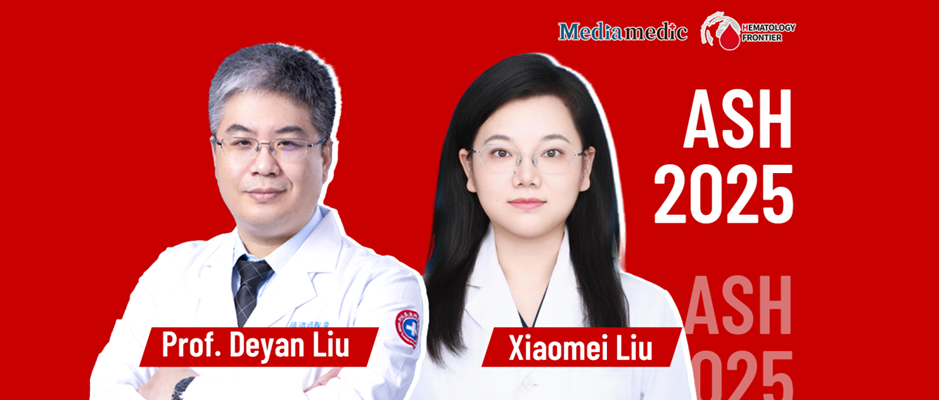
At this year’s meeting, a study conducted by Professor Deyan Liu’s team at Lu Daopei Hospital was selected for poster presentation. The study explored the impact of allogeneic hematopoietic stem cell transplantation (allo-HSCT) on the prognosis of patients with SET::CAN fusion gene–positive hematological malignancies. This article features a detailed introduction to the study by the first author, Dr. Xiaomei Liu.

Improved Prognosis of Patients with SET::CAN Fusion Gene–Positive Hematological Malignancies Following Allogeneic Hematopoietic Stem Cell Transplantation
English Title: Long-Term Outcomes of Allogeneic Hematopoietic Stem Cell Transplantation (allo-HSCT) in SET::CAN–Positive Hematological Malignancies: A 12-Year Single-Center Study of 36 Patients
Background
The SET::CAN fusion gene, also known as SET::NUP214, is a rare chromosomal abnormality most frequently identified in patients with T-cell acute lymphoblastic leukemia (T-ALL), with a reported incidence of approximately 4–6%. This fusion gene is commonly associated with resistance to glucocorticoids and chemotherapy, resulting in poor responses to conventional treatment. The median overall survival of patients receiving chemotherapy alone is reported to be only 10–22 months.
Previous studies have suggested that allo-HSCT may significantly improve outcomes in patients with SET::CAN positivity. However, most available evidence is derived from case reports or small case series. Based on 12 years of accumulated clinical experience at our center, this study aimed to evaluate long-term survival outcomes after allo-HSCT in SET::CAN–positive patients, thereby providing more robust evidence to guide treatment strategies for this rare and highly aggressive group of hematological malignancies.
Methods
This retrospective study included 36 patients with malignant hematological diseases who were identified as SET::CAN–positive by PCR screening and confirmed by quantitative RT-gPCR between October 2012 and August 2024 at Hebei Yanda Lu Daopei Hospital and Beijing Lu Daopei Hospital. All patients received systematic therapy followed by allo-HSCT.
All patients were followed longitudinally after transplantation, with the follow-up cutoff date set at January 1, 2025.
Results
Patient Characteristics
Among the 36 patients included in the analysis, 24 were male and 12 were female, with a median age of 28 years (range, 12–52 years). T-ALL accounted for the largest proportion of cases (50%), followed by mixed phenotype acute leukemia (MPAL, 25%), B/T lymphoblastic lymphoma (13.9%), and acute myeloid leukemia (AML, 11.1%).
Thirty-two patients underwent allo-HSCT for the first time, while four patients received a second transplant. At initial diagnosis, 19.4% of patients presented with complex karyotypes, and 61.1% harbored additional gene mutations. The most frequently detected mutations were PHF6, NOTCH1, and NRAS.
Before transplantation, 29 patients (80.6%) achieved complete remission (CR) after chemotherapy, with a median of two treatment cycles required to reach CR. The remaining seven patients had non-remission or partial remission disease and underwent salvage transplantation.
Most patients received ATG/G-CSF–based haploidentical HSCT, while smaller proportions underwent matched sibling donor or matched unrelated donor transplantation. Conditioning regimens were predominantly TBI-based, with a minority receiving busulfan-based regimens. Standard GVHD prophylaxis consisted of a calcineurin inhibitor combined with mycophenolate mofetil and short-course methotrexate.
The median infused mononuclear cell dose was 8.24 × 10⁸/kg, and the median CD34⁺ cell dose was 4.38 × 10⁶/kg. Median times to neutrophil and platelet engraftment were 15 days and 14 days, respectively. The cumulative incidence of grade III–IV acute GVHD by day 100 was 16.67%, while the incidence of moderate-to-severe chronic GVHD was 14.49%. By day 180, CMV and EBV viremia occurred in 33.33% and 16.67% of patients, respectively.
Prognostic Outcomes
As of January 2025, the median follow-up duration was 12.5 months, with one patient lost to follow-up after discharge at 12 months post-transplant. A total of 23 patients died, and nearly two-thirds of these deaths occurred within the first year following transplantation. The day 100 transplant-related mortality rate was 11.1%.
Among the 13 surviving patients, the median follow-up time was 83.8 months. Survival outcomes varied by disease subtype, with AML and MPAL showing approximately 50% 2-year overall survival, which was slightly higher than that observed in T-ALL patients. Patients with B/T lymphoblastic lymphoma had the poorest outcomes, with a 2-year overall survival of only around 20%.
Patients who underwent transplantation without achieving remission prior to HSCT had extremely poor prognoses. All seven patients in the NR/PR group died within 12 months post-transplant, with markedly low 6-month overall and leukemia-free survival rates and very high relapse and non-relapse mortality.
In contrast, patients who achieved CR before transplantation demonstrated significantly better outcomes. In this group, the 1-, 2-, 3-, and 5-year overall survival rates were 82.76%, 50.83%, 42.35%, and 42.35%, respectively, while leukemia-free survival rates remained above 37% at five years. Both relapse incidence and non-relapse mortality were substantially lower than those observed in NR/PR patients, and these differences were statistically significant.
Patients who were SET::CAN–negative prior to transplantation showed a consistent trend toward improved overall and leukemia-free survival compared with those who remained SET::CAN–positive. Although these differences did not reach statistical significance, the survival advantage was evident on long-term follow-up.
Conclusions
Patients with SET::CAN fusion gene–positive hematological malignancies have an overall poor prognosis. Among disease subtypes, B/T lymphoblastic lymphoma appears to have the worst outcomes, even after allo-HSCT, indicating the need for further investigation in larger cohorts. Prognosis in AML and MPAL may be more favorable than in T-ALL.
Achieving complete remission or molecular remission prior to transplantation is associated with significantly improved overall and leukemia-free survival. However, given the high risk of relapse within the first two years after transplantation, post-transplant maintenance therapy and long-term follow-up remain essential.
Corresponding Author

Deyan Liu, MD, PhD Lu Daopei Hospital
Professor Liu is Director of the Department of Hematopoietic Stem Cell Transplantation at Lu Daopei Hospital. With more than 17 years of clinical experience, he has performed over 800 allo-HSCT procedures. His expertise covers both malignant and non-malignant hematological diseases, as well as rare inherited disorders. His primary research interests include intensified conditioning regimens for refractory leukemia and lymphoma and the prevention and treatment of severe graft-versus-host disease.
First Author

Xiaomei Liu, MD Lu Daopei Hospital
Dr. Liu is an attending physician at Hebei Yanda Lu Daopei Hospital. Since completing her postgraduate training, she has been actively involved in the diagnosis and treatment of hematological diseases under the mentorship of Professor Deyan Liu. The youngest transplant patient she has managed was 18 months old, and the oldest was 75 years old. Her research was successfully presented at the 2025 ASH Annual Meeting.