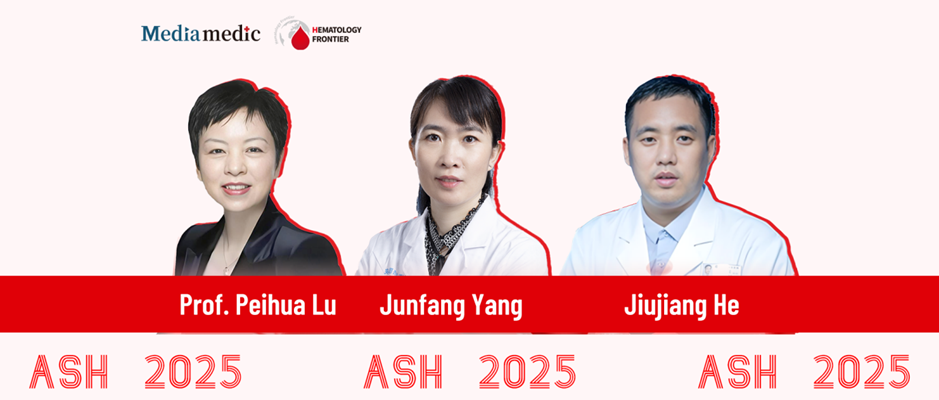
From December 6 to 9, 2025, the 67th Annual Meeting of the American Society of Hematology (ASH) was held in Orlando, USA. As the world’s largest and most influential international conference in hematology, the ASH annual meeting brings together tens of thousands of experts each year to share the latest advances and breakthroughs in the field. At this year’s meeting, two studies from the team of Professor Lu Peihua and Professor Yang Junfang, together with Dr. He Jiujiang from Lu Daopei Hospital, were selected for presentation. One was delivered as an oral presentation and investigated the high efficacy of CD7-targeted CAR-T cell therapy in patients with relapsed or refractory T-cell lymphoblastic leukemia/lymphoma with central nervous system involvement. The other, presented as a poster, explored the survival benefit of allogeneic hematopoietic stem cell transplantation in patients with NUP214::ABL1-positive acute leukemia. This article highlights these two studies for academic exchange and discussion.
Study 1: CD7-Targeted CAR-T Cell Therapy Showed High Efficacy in 30 Patients With Relapsed or Refractory Central Nervous System T-Cell Lymphoblastic Leukemia/Lymphoma
Type: Oral presentation
First author: Yang Junfang
Corresponding author: Lu Peihua
Introduction
CD7-targeted chimeric antigen receptor (CAR) T-cell therapy has demonstrated efficacy and safety in the treatment of T-cell acute lymphoblastic leukemia/lymphoma (T-ALL/LBL). However, evidence remains limited regarding whether CD7 CAR-T cells can cross the blood–brain barrier, effectively eradicate central nervous system (CNS) involvement in T-ALL/LBL, and do so without exacerbating neurotoxicity. In this study, investigators evaluated the efficacy and safety of CD7 CAR-T cells in pediatric and adult patients with relapsed or refractory (R/R) T-ALL/LBL with CNS involvement through two phase I/II clinical trials (NCT04572308 and NCT04916860).
Methods
Peripheral blood mononuclear cells were collected from enrolled patients by leukapheresis. A novel approach was used to generate “naturally selected” CD7 CAR (NS7CAR)-T cells, which overcome CD7-directed fratricide without the need for gene editing. NS7CAR is a second-generation murine CAR-T construct incorporating 4-1BB and CD3ζ costimulatory domains. Patients who relapsed after allogeneic hematopoietic stem cell transplantation (allo-HSCT) without active graft-versus-host disease were also eligible. All patients received lymphodepleting conditioning with intravenous fludarabine (30 mg/m²/day) and cyclophosphamide (300 mg/m²/day) on days −5 to −3 prior to NS7CAR-T infusion. Bridging therapy was permitted between leukapheresis and conditioning to control rapidly progressive disease. Flow cytometry was used to monitor CAR-T cell expansion and blast clearance in cerebrospinal fluid (CSF).
Results
Thirty patients with CNS involvement, including 24 with T-ALL and 6 with T-LBL, received NS7CAR-T cell infusion. The median age was 23 years, ranging from 4 to 44 years. At enrollment, 13 patients had CNS-3 disease, defined as CSF white blood cell counts ≥5/μL, and 17 had CNS-2 disease with CSF white blood cell counts <5/μL. Seven patients had relapsed after prior allo-HSCT. High-risk features included the presence of the STIL::TAL1 fusion gene in seven patients and a TP53 mutation in one patient. Nineteen patients had bone marrow involvement, with a median blast percentage of 38%, and ten patients had extramedullary disease outside the CNS. Bridging therapy was administered in 25 patients.
All patients received a single NS7CAR-T infusion at either a low dose of 5×10⁵ cells/kg or a medium dose of 1–1.5×10⁶ cells/kg. CAR-T cell expansion in CSF was evaluable in 28 patients. The median peak proportion of NS7CAR-T cells in CSF was 40.5%, occurring at a median of 19 days after infusion. Approximately one month after infusion, all 30 patients achieved complete remission in the CSF, and 89.5% of evaluable patients achieved minimal residual disease–negative complete remission in the bone marrow. Among patients with non-CNS extramedullary disease, the overall response rate was 90%.
With a median follow-up of 276.5 days, the 1-year overall survival and progression-free survival rates were 83.0% and 52.8%, respectively, while the 3-year rates were 67.1% and 45.3%. Among 24 patients who achieved complete remission in both bone marrow and extramedullary disease, 18 underwent consolidative allo-HSCT within three months after CAR-T therapy, achieving 1-year overall survival and progression-free survival rates of 87.0% and 75.1%, respectively. Relapse occurred in eight patients, predominantly outside the CNS, and was particularly frequent and early among patients harboring the STIL::TAL1 fusion.
Most patients experienced mild cytokine release syndrome, with severe cases being uncommon and manageable. Neurotoxicity was rare and effectively controlled with standard interventions.
Conclusion
This study establishes NS7CAR-T cell therapy as a promising treatment option for patients with R/R T-ALL/LBL with CNS involvement, demonstrating high efficacy and manageable safety. Relapses occurred mainly outside the CNS, and the STIL::TAL1 fusion gene emerged as a potential predictor of early relapse. Longer follow-up and larger cohorts are needed to further define the durability of responses.
Study 2: Improved Survival Outcomes With Allogeneic Hematopoietic Stem Cell Transplantation in NUP214::ABL1-Positive Acute Leukemia
Type: Poster presentation
First author: He Jiujiang
Corresponding author: Yang Junfang
Background
The NUP214::ABL1 fusion gene, resulting from the fusion of nucleoporin NUP214 and tyrosine kinase ABL1, confers kinase activity similar to BCR::ABL1 and drives leukemogenesis. This fusion is rare but highly aggressive, most commonly observed in acute lymphoblastic leukemia. Although tyrosine kinase inhibitors such as imatinib and dasatinib can induce responses, relapse and resistance remain common. Allogeneic hematopoietic stem cell transplantation is considered a potentially curative strategy, but clinical data remain limited.
Methods and Results
Between January 2020 and January 2024, seven patients with NUP214::ABL1-positive acute leukemia were identified among more than 4,500 newly diagnosed cases at the authors’ center. Most patients presented with high leukocyte counts and heavy disease burden. Several patients achieved complete remission with CAR-T therapy followed by allo-HSCT, resulting in excellent long-term survival. A pooled analysis combining institutional cases with published literature yielded a total of 32 patients. Compared with chemotherapy alone, allo-HSCT was associated with improved leukemia-free survival and a significantly lower cumulative incidence of relapse.
Conclusion
NUP214::ABL1-positive acute leukemia is rare and aggressive, often presenting with high disease burden. In this study, patients who underwent allo-HSCT in complete remission, particularly those bridged with CAR-T therapy, achieved excellent long-term outcomes. These findings suggest that allo-HSCT offers meaningful benefit in this high-risk population, although confirmation in larger prospective studies is needed.
Expert Profiles
Professor Lu Peihua

Lu Daopei Hospital, Beijing Lu Daopei Institute of Hematology
Executive Medical President of Lu Daopei Hospital and Director of the Beijing Lu Daopei Institute of Hematology. Trained at Peking University Health Science Center, with residency at the University of Nebraska Medical Center and fellowship at Stanford University. Board-certified in hematology and oncology in the United States, with extensive leadership roles in national hematology and oncology organizations in China.
Professor Yang Junfang

Lu Daopei Hospital
Director of the General Hematology Department and Associate Chief Physician. She has extensive experience in hematologic malignancies and cellular immunotherapy, particularly CAR-T therapy, and has led multiple pioneering clinical studies with internationally recognized outcomes.
Dr. He Jiujiang

Lu Daopei Hospital, Hebei Yanda Lu Daopei Hospital
Attending physician specializing in hematologic diseases and CAR-T therapy, with expertise in comprehensive diagnostic evaluation and individualized treatment of hematologic malignancies, and active participation in multiple clinical trials.