Editor’s Note At the dawn of the new year, leading experts convened in Tianjin. From January 9 to 11, 2026, the 6th China Congress on the Advancement of Hematology (CASH) was grandly held in Tianjin. The congress brought together top hematology specialists from China and abroad, focusing on cutting-edge scientific advances and national health priorities, and fostering in-depth academic exchange to explore new directions for the discipline.
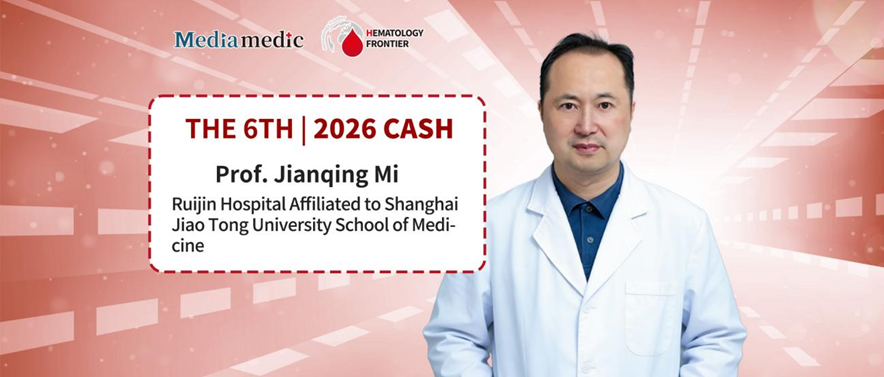
With continuous progress in therapeutic technologies, chimeric antigen receptor T-cell (CAR-T) therapy has become an effective treatment modality for a variety of hematologic malignancies, demonstrating particularly remarkable efficacy in refractory diseases such as multiple myeloma. During the conference, Oncology Frontier – Hematology Frontier invited Jianqing Mi, Professor at Ruijin Hospital, Shanghai Jiao Tong University School of Medicine, to provide an in-depth interpretation of recent advances and share insights on the future development of CAR-T cell therapy in multiple myeloma.
Oncology Frontier – Hematology Frontier:
Your team led a first-in-human phase I clinical study of fully human GPRC5D-targeted CAR-T therapy for relapsed/refractory multiple myeloma, published in Blood, demonstrating excellent efficacy and safety—particularly offering new hope for patients who relapse after BCMA CAR-T therapy. Based on this landmark study, could you elaborate on the key breakthroughs in target innovation and CAR structural optimization, and how these advances help address treatment resistance?
Professor Jianqing Mi: This is an excellent question, as it directly addresses a major unmet clinical need: how to manage patients who relapse after conventional BCMA-targeted CAR-T therapy. Our recently published study specifically focused on this challenge by exploring whether alternative effective targets remain viable following BCMA failure.
Our findings demonstrated that GPRC5D, as a secondary target, exhibits significant antimyeloma activity and can induce meaningful clinical responses. Importantly, we further optimized the CAR construct based on this target. Earlier designs employed murine-derived CAR structures, which we found were prone to inducing anti-drug antibodies (ADAs). The development of ADAs significantly increases the risk of relapse. As early as 2019, our work published in Proceedings of the National Academy of Sciences (PNAS) showed that ADA-positive patients experienced markedly higher relapse rates than ADA-negative patients.
In the present study, we therefore optimized the construct to a fully human CAR-T design, representing a critical advancement that effectively reduces ADA formation in patients. Moreover, after switching the therapeutic target from BCMA to GPRC5D, we observed that some patients were able to achieve durable remission once again, thereby maximizing progression-free survival and overall survival. This has substantial clinical significance.
We believe that as such products are further developed and applied in clinical practice, patient survival will continue to improve and quality of life will be significantly enhanced, potentially reshaping existing treatment paradigms. From a clinician’s perspective, these advances allow us to better serve patients with relapsed or refractory multiple myeloma.
Oncology Frontier – Hematology Frontier:
Despite these advances, CAR-T therapy still faces challenges related to accessibility, development of off-the-shelf products, and exploration of combination strategies. Based on your clinical and research experience, where do you see the future directions of CAR-T therapy in multiple myeloma? How can technological innovation and optimization of care models enable more patients to achieve long-term, high-quality survival—or even clinical cure?
Professor Jianqing Mi: In the field of CAR-T therapy for multiple myeloma, we have progressed from an initial stage of limited understanding to a much deeper level of insight, yet there remains considerable room for further development. Ultimately, any treatment strategy represents a balance among multiple factors. What I often refer to as the “middle path” involves integrating the strengths of different approaches to select the most appropriate option for each patient.
At present, CAR-T technologies include several modalities, such as autologous CAR-T, universal (allogeneic) CAR-T, and the emerging concept of in vivo CAR-T. Each approach has its own advantages. The key lies in selecting the most suitable therapy for the right patient at the right time to achieve optimal outcomes. As we often say, choosing the correct timing, method, and patient population is central to successful treatment.
From a development perspective, further optimization of autologous CAR-T therapy remains essential, particularly improvements in CAR structural design to enhance efficacy. In parallel, we are actively advancing research on universal CAR-T, with the goal of refining the technology so that it may eventually replace autologous CAR-T for certain patients—especially those unable to generate autologous CAR products—while also reducing treatment costs.
In recent years, in vivo CAR-T therapy has emerged as a major research focus. Its advantages are notable: first, it has the potential to significantly lower costs; second, it addresses the needs of patients who cannot wait for autologous CAR-T manufacturing, which typically requires three to four weeks. In contrast, universal CAR-T or future in vivo CAR-T approaches could be readily available off-the-shelf, enabling rapid treatment initiation and timely clinical benefit.
Looking ahead, as CAR-T technologies continue to evolve, we must systematically evaluate the various CAR-T modalities, comprehensively assess individual patient characteristics, and select the most appropriate treatment approach. I believe these different CAR-T strategies will coexist and provide truly personalized, tailored treatment options—ultimately enabling us to better serve patients with multiple myeloma.
Expert Profile

Jianqing Mi, MD, PhD Professor, Chief Physician, Doctoral Supervisor Ruijin Hospital, Shanghai Jiao Tong University School of Medicine
- Director, Department of Hematology, Ruijin Hospital
- Director, Shanghai Key Laboratory of Gene Editing and Cell Therapy for Hematologic Diseases
- Deputy Director, Shanghai Institute of Hematology
- National Committee Member, Hematology Branch, Chinese Medical Association
- Deputy Head, Plasma Cell Disorders Group, Hematology Branch, Chinese Medical Association
- Vice President, Hematology Physicians Branch, Chinese Medical Doctor Association
- Vice Chair, Myeloma Expert Committee, Chinese Society of Clinical Oncology
- President-Elect, Hematologic Disease Prevention Committee, Chinese Preventive Medicine Association