

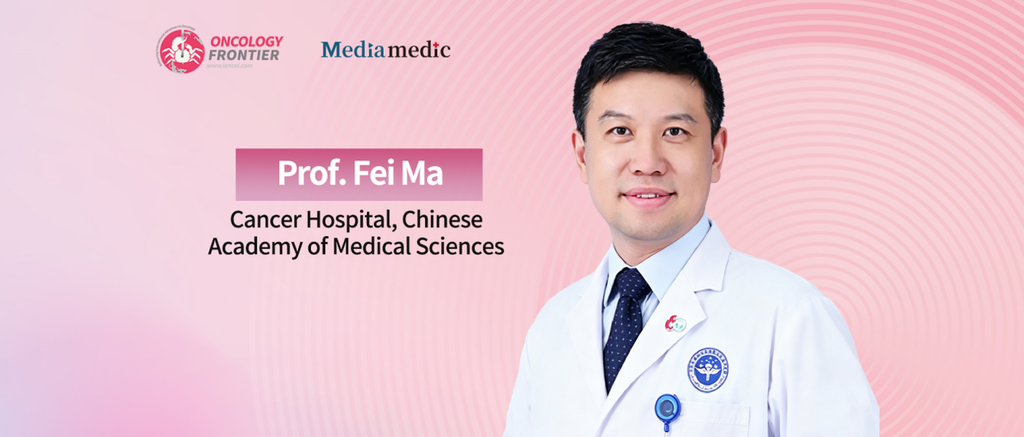
Editor's Note: Breast cancer is one of the most commonly diagnosed malignancies among women in China. Standardized diagnosis and treatment, together with quality control, are essential for improving patient survival and strengthening the national cancer prevention and control system. Recently, the 2026 Conference on Standardized Breast Cancer Diagnosis, Treatment, and Quality Control was held in Beijing. The meeting took place at a pivotal stage in China's efforts to promote standardized cancer diagnosis and treatment through a breast cancer pilot program, drawing widespread attention from the medical community. Oncology Frontier invited Professor Fei Ma from the National Cancer Center/Cancer Hospital, Chinese Academy of Medical Sciences, and Chair of the Conference, for an in-depth interview. He shared his perspectives on the conference's academic agenda, key aspects of comprehensive breast cancer management, and the annual quality control report.01
Oncology Frontier:
As the conference chair, what were the main considerations behind this year’s academic program? How will the meeting help advance standardized breast cancer diagnosis, treatment, and quality control?
Professor Fei Ma: This year’s annual conference comes at an important turning point for the field. It marks both the conclusion of the 14th Five-Year Plan and the beginning of the 15th Five-Year Plan. It is also the eighth year of China’s initiative to promote standardized cancer diagnosis, treatment, and quality control, with breast cancer serving as the pilot disease. This is an important opportunity to systematically review the progress made in cancer prevention and control during this period.
At the previous National Conference on Health and Wellness, national leaders outlined important plans for the future development of healthcare. Breast cancer quality control work also needs to be appropriately planned and adjusted at this critical juncture. Against this background, the conference program focused primarily on two directions: reviewing previous achievements and advancing future initiatives.
The Quality Control Conference provides a platform for colleagues from across China to exchange ideas both online and in person. We arranged several sessions with far-reaching implications for the field, including the launch and release of updated guidelines and the introduction of new publications. We also included patient presentations highlighting the achievements of our work, allowing colleagues nationwide to see the progress and results of quality control initiatives. In addition, we organized small-scale thematic discussions, particularly on hereditary breast cancer and fertility preservation for patients with cancer, with the aim of advancing these specialized initiatives through more practical and actionable approaches.
02
Oncology Frontier:
At the conference, you delivered a presentation entitled “A Growing Trend: Early Screening and Diagnosis of Breast Cancer and Comprehensive Management of Hereditary Breast Cancer.” From the perspective of clinical practice, what are the main challenges currently facing the implementation of comprehensive management for hereditary breast cancer? What should be prioritized moving forward?
Professor Fei Ma: Cancer is a disease closely associated with genetic factors, and hereditary cancers deserve considerable attention. Among hereditary cancers, breast cancer research began relatively early, and the field has developed a comparatively mature framework that has already been partially implemented in clinical practice. Therefore, advancing comprehensive management of hereditary breast cancer has important strategic value for the overall prevention and control of hereditary cancers in China.
At present, the clinical implementation of comprehensive hereditary breast cancer management still faces several challenges.
First, access to relevant genetic testing remains inadequate, and detection rates in the target population are insufficient.
Second, the evidence base for treatment strategies in this population still needs to be strengthened. This includes comparisons of different breast-conserving surgical approaches, the implementation of specific radiotherapy strategies, and the selection of chemotherapy and targeted therapy regimens.
Third, supporting evidence for comprehensive prevention and management throughout the patient journey remains insufficient. This includes genetic counseling, fertility preservation, and the application of assisted reproductive technologies, all of which require adequate evidence-based support.
Regarding future priorities, I believe comprehensive management of hereditary breast cancer should be placed high on the agenda. We need to advance its implementation through sustained communication and collaboration. This will not only support diagnosis, treatment, and rehabilitation for this patient population but also provide a model and demonstrate leadership for the broader prevention and control of hereditary cancers in China.
03
Oncology Frontier:
At the conference, you released the 2026 Report on Standardized Breast Cancer Diagnosis, Treatment, and Quality Control in China. Compared with previous years, what aspects of this year’s quality control framework have been maintained, and what adjustments have been introduced? What were the main considerations behind these decisions?
Professor Fei Ma: China’s breast cancer quality control initiative has undergone several years of practical implementation, and this year marks the release of its sixth quality control yearbook. Overall, the main strategic directions have remained consistent, while individual initiatives have continued to evolve and expand based on the existing framework.
There are three main areas of continuity.
First, we are continuing to improve the system of guidelines and standards led by national health administrative authorities and supported by administrative requirements. This includes national quality control indicators, relevant indicators established by the National Health Commission, and indicators incorporated into the national performance assessment. The overall framework remains stable, while its content is gradually being enriched and refined through practice.
Second, we are continuing to strengthen the organizational and information technology infrastructure. This involves improving the four-tier cancer prevention and control system at the national, provincial, prefecture-level, and county levels. At the same time, we are enhancing digital infrastructure by improving cancer monitoring networks and the breast cancer quality control data platform. Intelligent clinical decision support systems and opportunistic screening systems developed on the basis of this platform are gradually being implemented nationwide and integrated into clinical workflows, further advancing quality control.
Third, we are continuing to promote the implementation of standardized systems through pilot centers, expanding from individual centers to broader regions and following a top-down approach. Over the past few years, we have established leading hospitals in major prefecture-level cities across the country. Going forward, these hospitals will serve as core centers for further regional outreach and the extension of standardized care to primary-level healthcare institutions.
While maintaining stability in the overall strategic direction, we have also adjusted our priorities in three main areas.
First, the standardization and consistency of breast cancer diagnosis and treatment in China have improved substantially. Moving forward, we need to conduct more nationwide collaborative clinical explorations and studies based on actual clinical needs, continuously improving breast cancer prevention, control, and treatment outcomes in China.
Second, we need to promote the optimization of cancer diagnosis and treatment models, using breast cancer as the pilot, and facilitate a shift from a disease-centered approach to one centered on people’s overall health. Issues such as fertility among patients with cancer and patients’ quality of life will be important areas of focus in the future.
Third, our focus is expanding from addressing China’s own major challenges to assuming a greater role and responsibility in global breast cancer prevention and control. Through the Belt and Road Initiative, we aim to participate more actively in global breast cancer prevention and control efforts and contribute to building a community with a shared future for humanity.