Editor’s Note: From November 6–9, 2025, the China Conference on Holistic and Integrative Oncology (CCHIO 2025) was held in Kunming. The conference was hosted by the Chinese Anti-Cancer Association (CACA) and the Tengchong Scientist Forum Organizing Committee, co-hosted by the World Association of Integrative Oncology (WAIO) and the China Institute of Integrative Medicine Strategy, and jointly organized by Yunnan Cancer Hospital, Kunming Medical University, and the Yunnan Anti-Cancer Association.
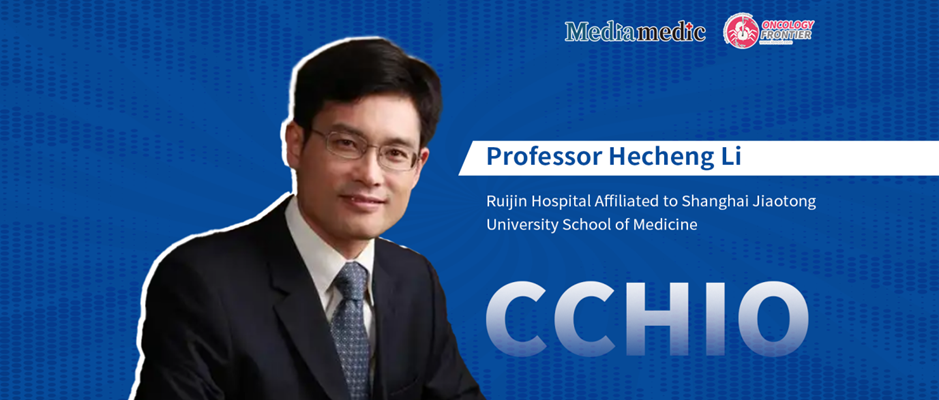
As lung cancer remains the most frequently diagnosed cancer in China and worldwide, its early detection, diagnosis, and treatment were among the most closely watched topics at CCHIO 2025. During the conference, Oncology Frontier invited Professor Li Hecheng, Chief of Thoracic Surgery at Ruijin Hospital, Shanghai Jiao Tong University School of Medicine, to discuss the future of early lung cancer detection and treatment from the perspective of integrative medicine. He also shared insights on optimized MDT models and surgical strategies for early-stage lung cancer.
01
Oncology Frontier: As a senior expert in lung cancer diagnosis and treatment, how should the principles of integrative medicine be reflected in the management of early-stage lung cancer?
Professor Li Hecheng:
My keynote presentation at this year’s conference focused specifically on the diagnosis and treatment of early-stage lung cancer. With advances in lung cancer screening, early-stage disease now accounts for more than 50% of all newly diagnosed lung cancers. However, earlier diagnosis does not automatically mean easier treatment. Surgical management of early-stage lung cancer still faces challenges: inaccurate intraoperative localization, conventional resection ranges that fail to match early tumor characteristics, and non-standardized surgical approaches. Continuous refinement in these areas is essential to improving postoperative recovery and long-term survival.
Importantly, early-stage lung cancer care is not the responsibility of surgeons alone. It requires close collaboration across disciplines and incorporation of innovative technologies. For example:
- AI-assisted CT 3D reconstruction can help precisely delineate resection margins
- The combination of electromagnetic navigation, bronchoscopy, and 3D reconstruction enables highly accurate lesion localization
- Augmented reality (AR) glasses allow “real-time visualization” of pulmonary nodules during surgery
Only through integration of advanced technologies with clinical practice can we deliver precision treatment for lung cancer. Integration is therefore the inevitable direction of lung cancer care — truly achieving “winning through integration.”
02
Oncology Frontier: For patients, true surgical success means achieving long-term survival with good quality of life. As a surgeon, how do you balance complete tumor removal with preserving lung function and accelerating recovery? And in “gray zones” where resectability is uncertain, what principles should guide decision-making?
Professor Li Hecheng:
As Academician Fan Daiming emphasized, cancer treatment must be human-centered. Surgery is not simply about “removing a tumor”; it is about preserving function, preserving organs, and ultimately preserving the person. This requires comprehensive strategic planning before surgery.
A multidisciplinary, multi-stage perioperative treatment strategy should be designed based on each patient’s condition. For example:
- Preoperative MDT discussions determine the treatment roadmap
- Patients are assessed holistically to guide prehabilitation or preparatory therapies
- For patients eligible for surgery, individualized surgical plans can be optimized using electromagnetic navigation, robotic surgery, or other methods to achieve precise resection and organ preservation
- Postoperative rehabilitation teams support patients in achieving rapid recovery
This is how multidisciplinary collaboration plays a central role throughout the treatment process.
03
Oncology Frontier: How does the Thoracic Surgery Department at Ruijin Hospital lead and deeply engage in early lung cancer MDT practices, ensuring that MDT remains effective rather than procedural? Could you share examples where MDT reshaped treatment decisions for locally advanced or complex cases?
Professor Li Hecheng: A mature thoracic oncology MDT requires strong leadership. As the MDT lead at Ruijin Hospital, I coordinate team discussions whenever issues arise. We also hold a weekly Monday afternoon MDT clinic, where complex cases are reviewed — many patients have benefited directly from this system.
For instance, in the past, cases involving tumor invasion of major vessels or the trachea were often considered inoperable, with poor expected outcomes. But a few months ago, we managed a patient whose tumor invaded a major vessel. Through MDT discussion, we designed an integrative treatment plan:
- The patient first underwent needle biopsy with genomic and biomarker profiling
- This was followed by neoadjuvant immunotherapy plus chemoradiotherapy
- After four cycles, the tumor shrank significantly and met surgical criteria
- Postoperative pathology confirmed pathologic complete response (pCR), indicating excellent prognosis and even potential cure
Without MDT-driven integration of multi-modality therapy, this patient might have missed the opportunity for curative surgery.
04
Oncology Frontier: Given the rapid development of lung cancer systemic therapies—especially targeted therapy and immunotherapy used in neoadjuvant settings—how do you envision the evolving role of thoracic surgeons in the comprehensive management of lung cancer?
Professor Li Hecheng:
My hope is that the need for surgical intervention will gradually decrease — because surgery inevitably carries trauma. Although surgery remains the cornerstone of current guidelines for lung cancer treatment, the landscape is changing. With advances in targeted and immunotherapy, we are seeing more patients achieve pCR after neoadjuvant treatment.
This raises an important question: How can we accurately identify patients who may no longer require surgery?
Exploring organ-preserving and surgery-sparing approaches will inevitably become a major direction. Thoracic surgeons will collaborate more closely with other disciplines to refine timing and treatment intensity, using less invasive methods whenever possible.
This aligns with the central theme of my keynote report: advancing early lung cancer detection and treatment through integrative medicine. Our collective goal should be to maximize patient benefit at the smallest possible cost by leveraging the power of integrated disciplines.
Professor Li Hecheng
Chief, Department of Thoracic Surgery Ruijin Hospital, Shanghai Jiao Tong University School of Medicine