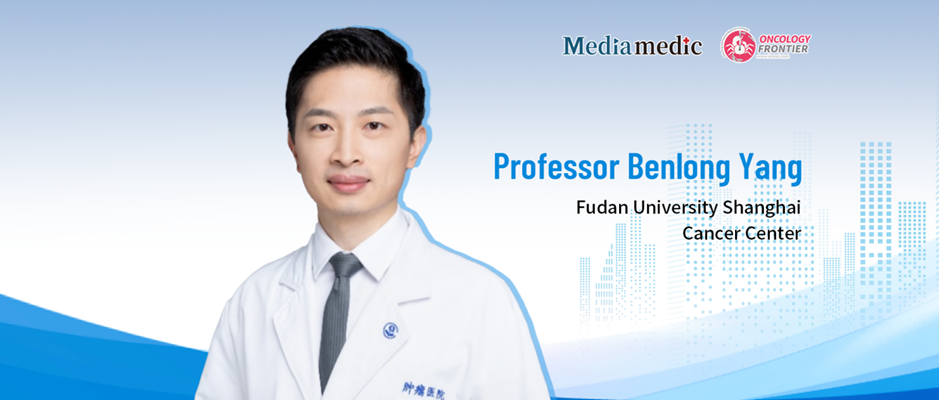
Professor Benlong Yang: Advancing Personalized Breast Reconstruction Through Innovative Techniques and Global Collaboration**
Editor’s Note: The 17th Shanghai Breast Reconstruction Forum was held on November 12–13, 2025, in Shanghai. With the theme “Innovation, Collaboration, Development,” the forum highlighted cutting-edge techniques and clinical challenges in oncoplastic breast surgery and breast reconstruction. It provided a high-level, multidisciplinary platform for breast surgeons, plastic surgeons, and related specialists. During the meeting, the Breast Cancer Surgeon Taskforce (BEST) was officially launched, marking a major milestone in enhancing global collaboration in China’s breast surgery community. Oncology Frontier interviewed Professor Benlong Yang of Fudan University Shanghai Cancer Center, who shared his insights on frontier reconstruction techniques, the progress and controversies in implant-based reconstruction, and the significance of establishing an international surgical collaboration platform.01
Oncology Frontier: Your lecture focused on “Frontier Choices in Breast Reconstruction Techniques.” For Chinese patients today, which emerging reconstruction approaches hold the greatest promise, and what are their key advantages?
Professor Benlong Yang:
Thank you for your interest in the field of breast reconstruction. The Shanghai Breast Reconstruction Forum has now entered its 17th year, during which we have witnessed continuous evolution in reconstruction techniques.
In recent years, minimally invasive breast surgery has advanced rapidly, including endoscopic surgery, robot-assisted techniques, and oncoplastic breast-conserving procedures. These developments have greatly energized breast surgeons in China and significantly increased reconstruction rates nationwide. For this reason, both the live surgery sessions and the plenary presentations—as well as voting sessions on controversial issues—focused heavily on these frontier techniques. Our goal is to drive consensus-building on technical details and current areas of debate.
One major highlight of this year’s live surgery program was the demonstration of a wide spectrum of oncoplastic breast-conserving techniques by several international experts. Within the overall framework of breast reconstruction, we emphasize a core principle: “Do smaller rather than larger procedures—preserve the breast whenever possible.” If a patient can undergo breast-conserving surgery, we should avoid procedures that permanently remove the breast.
With the advancement of various volume-replacement oncoplastic techniques, even when one-quarter, one-third, or up to half of the breast tissue must be removed, reconstruction can be achieved using tissue–fascia flaps such as intercostal artery perforator (ICAP) flaps from adjacent donor sites. I firmly believe that “a patient’s own tissue is always the best tissue.” When most of the breast can be preserved and defects repaired using these perforator flap techniques, outcomes often surpass those of implant-based reconstruction after total mastectomy.
Of course, many patients are not suitable candidates for breast-conserving surgery due to disease factors. For them, we now offer a wide array of reconstruction strategies—including implant-based reconstruction, autologous flap procedures, and latissimus dorsi flap reconstruction—to help recreate a natural and aesthetically pleasing breast.
Looking back at the 17-year history of the Shanghai Breast Reconstruction Forum, the trajectory is clear: techniques are becoming more refined, less invasive, and more aligned with aesthetic goals. The continuous emergence of new methods and new ideas has enabled us to deliver more personalized and satisfactory reconstruction options for our patients, which is truly rewarding.
02
Oncology Frontier: This year’s forum also marked the inauguration of the “Breast Cancer Surgeon Taskforce.” As the host of the launch ceremony, how do you envision this platform promoting innovation and development in China’s breast surgery community, especially in the field of breast reconstruction?
Professor Benlong Yang:
Under the leadership of Professor Wu Jiong, we collaborated with major professional societies—including the CACA-CIBC, CCS-BC, ASBrS, and BSI—to establish the Breast Cancer Surgeon Taskforce (BEST). We also welcomed Professor Tibor Kovacs, former president of ESSO and a long-standing friend of the Shanghai forum, to join the initiative.
The vision of BEST is to create a global collaborative platform for breast surgeons. This platform will support sharing of the latest scientific evidence, facilitate joint clinical research, encourage mutual learning, and provide valuable development opportunities for young surgeons.
We hope that through BEST, Chinese breast surgeons—particularly early- and mid-career clinicians—can actively participate in various academic activities. Going forward, we plan to host surgical video symposia, debates on controversial surgical issues, and small focused workshops. We encourage everyone to participate enthusiastically, to project China’s voice, contribute China’s data, and ultimately help shape future international guidelines.
03
Oncology Frontier: For patients considering implant-based reconstruction, how do you explain the latest advances and available options? How do you help them understand and weigh the current controversies—such as capsular contracture and long-term safety—to make the best personalized decision?
Professor Benlong Yang:
Breast reconstruction is very different from oncologic surgery. Reconstruction depends heavily on the patient’s personal preferences and individualized needs. For example:
- Some patients want to maintain an active lifestyle after surgery; in such cases, we aim to minimize muscle injury.
- Others prioritize natural appearance and feel, and may prefer autologous tissue reconstruction—even if the procedure is more complex. Therefore, breast surgeons must continue expanding their technical skill set to meet the diverse needs of different patients.
Implant-based reconstruction has benefited tremendously from advances in minimally invasive techniques, biomaterials, and acellular dermal matrices. In our center, 70–80% of patients choose implant-based reconstruction because it is less invasive. Even in worst-case scenarios—if implants must be removed—their oncologic safety is not compromised.
However, implant reconstruction does have limitations, such as suboptimal long-term texture and risks including capsular contracture. For patients with high tumor burden who require radiotherapy, complication risks may increase.
Thus, personalized evaluation is crucial. We optimize surgical outcomes through measures such as:
- Choosing concealed incisions
- Avoiding visible incisions on the breast surface
- Performing conservative mastectomies that preserve more fat and skin
- Maintaining natural breast contour during the primary surgery
These refinements substantially reduce complication rates. Even when complications do arise, we now have multiple remedial and revision strategies.
Before surgery, it is essential to communicate all potential complications—and how each can be managed. For me, the frightening scenario is not the occurrence of complications, but having complications without solutions. Through academic meetings and expert exchanges, we are working to develop the best reconstruction strategies for patients with different needs and conditions.
Expert Biography

Professor Benlong Yang Breast Surgery Department Fudan University Shanghai Cancer Center