Yixian Breast Cancer Conference 2025 | Professor Chang Gong: Stratified Optimization and Precision Escalation/De-Escalation in HER2-Positive Breast Cancer

Yixian Breast Cancer Conference 2025 | Professor Chang Gong: Stratified Optimization and Precision Escalation/De-Escalation in HER2-Positive Breast Cancer

HER2-positive breast cancer was once associated with aggressive behavior and poor prognosis. However, with the rapid advancement of targeted therapies—particularly antibody–drug conjugates (ADCs)—this subtype has evolved into a highly treatable and potentially curable disease. In 2025, landmark studies across neoadjuvant, adjuvant, and metastatic settings have reshaped treatment paradigms toward greater precision and individualization. During the 2025 Yixian Breast Cancer Conference and CSCO BC South Forum, Oncology Frontier interviewed Professor Chang Gong from Sun Yat-sen Memorial Hospital, Sun Yat-sen University, who summarized the most impactful annual advances in HER2-positive breast cancer treatment.
Professor Lugui Qiu: Upholding Integrity, Driving Innovation—CSCO Myeloma Expert Committee 2025 Work Summary and 2026 Strategic Plan

Professor Lugui Qiu: Upholding Integrity, Driving Innovation—CSCO Myeloma Expert Committee 2025 Work Summary and 2026 Strategic Plan

From January 16–18, 2026, the CSCO Leukemia, Lymphoma, and Myeloma Expert Committee Working Meeting and the 2026 CSCO Hematologic Oncology Conference were held in Haikou. As a malignant plasma cell disorder predominantly affecting older adults, multiple myeloma (MM) requires continuous advancement in standardized diagnosis, scientific innovation, and patient-centered management, all of which are critical to the high-quality development of hematologic oncology in China.
Professor Xieqiao Yan: Optimizing Post-Failure Treatment Strategies in Renal Cell Carcinoma After Targeted-Immunotherapy—Exploring New Pathways for Later-Line Therapy

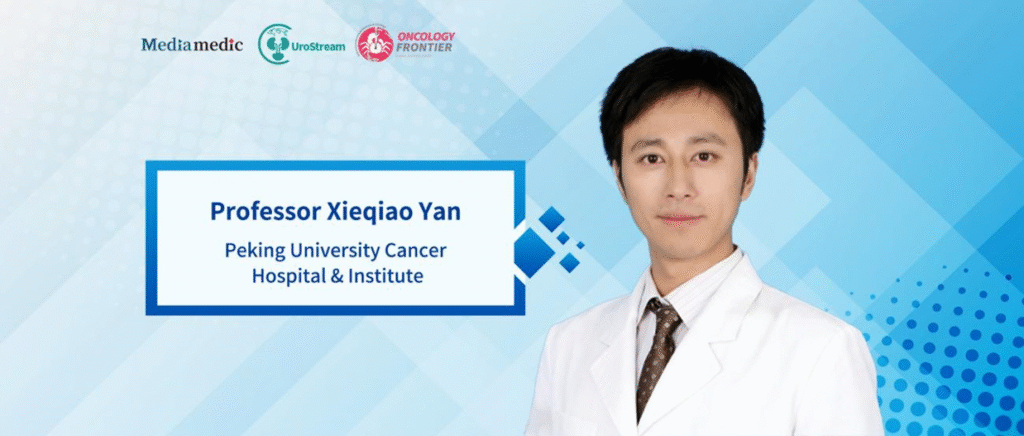
Professor Xieqiao Yan: Optimizing Post-Failure Treatment Strategies in Renal Cell Carcinoma After Targeted-Immunotherapy—Exploring New Pathways for Later-Line Therapy

From January 10 to 11, 2026, the Beijing Young Urologic Oncology Physicians Academic Exchange Conference was successfully held in Beijing. The meeting brought together leading experts and young physicians in urologic oncology to discuss cutting-edge scientific advances and key clinical challenges, with the goal of fostering academic innovation and supporting the growth of emerging clinicians.
SABCS 2025 Insight Broadcast丨Professor Junjie Li: Exploring Precision Biomarkers for Neoadjuvant Therapy in HER2-Positive Breast Cancer

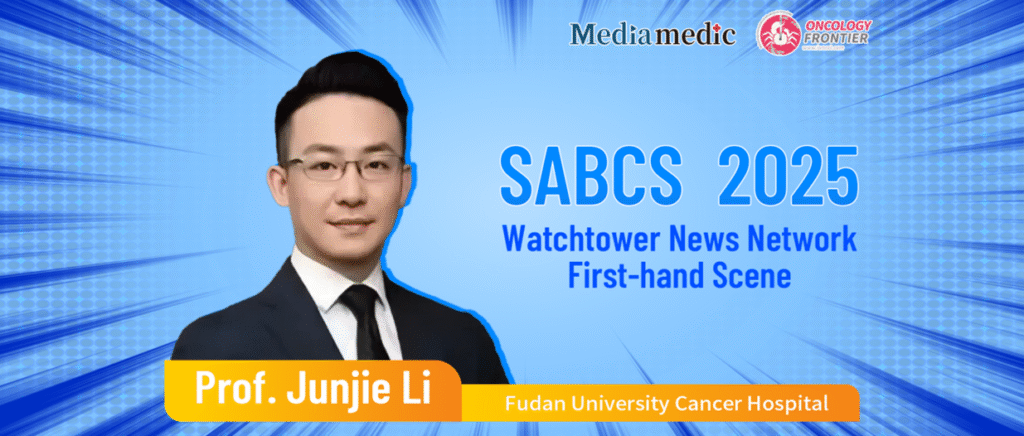
SABCS 2025 Insight Broadcast丨Professor Junjie Li: Exploring Precision Biomarkers for Neoadjuvant Therapy in HER2-Positive Breast Cancer

Spotlight on SABCS, insights delivered live. The 48th San Antonio Breast Cancer Symposium (SABCS) was held from December 9 to 12, 2025, in San Antonio, USA, bringing together cutting-edge research findings and clinical insights from across the global breast cancer community. To efficiently convey the highlights of the meeting, this edition of Insight Broadcast invited Professor Junjie Li from Fudan University Shanghai Cancer Center as an on-site expert commentator. Focusing on neoadjuvant therapy for HER2-positive breast cancer, Professor Li provides an in-depth interpretation of the latest research advances on the use of biomarkers such as tumor-infiltrating lymphocytes (TILs) and circulating tumor DNA (ctDNA) to enable more precise patient selection and response prediction, while critically examining their potential, limitations, and future directions from a clinical perspective.
SABCS Hot Commentary:Professor Xiaoyun Mao: A Breakthrough in “Intensified” First-Line Maintenance Therapy for HER2-Positive Metastatic Breast Cancer

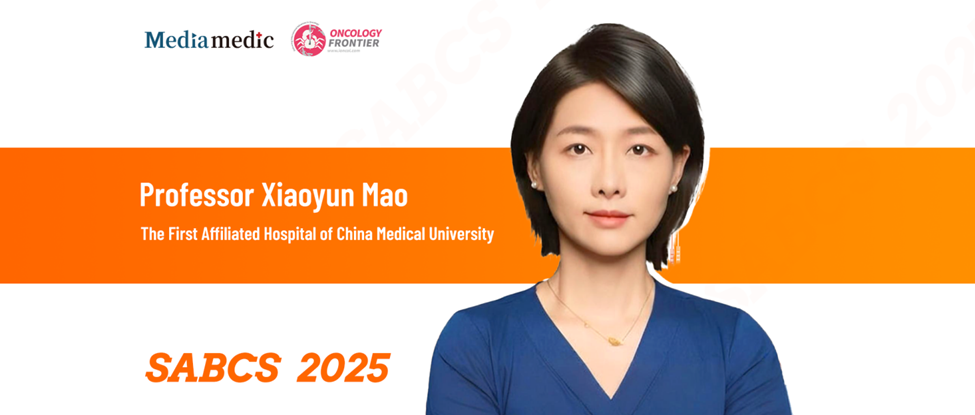
SABCS Hot Commentary:Professor Xiaoyun Mao: A Breakthrough in “Intensified” First-Line Maintenance Therapy for HER2-Positive Metastatic Breast Cancer

At the 2025 San Antonio Breast Cancer Symposium (SABCS 2025), results were presented from a study titled “HER2CLIMB-05: A Randomized, Double-Blind Phase III Study of Tucatinib versus Placebo in Combination with Trastuzumab and Pertuzumab as Maintenance Therapy for HER2-Positive Metastatic Breast Cancer” (Abstract No. GS1-01). This study explored an intensified strategy for first-line maintenance therapy in patients with HER2-positive metastatic breast cancer (HER2+ MBC). Oncology Frontier invited Professor Xiaoyun Mao from The First Hospital of China Medical University to provide a detailed overview and expert commentary on the study, with the aim of optimizing clinical decision-making.
CASH 2026 | Prof. Wang Tianyou: Forty Years of Change in China’s Pediatric Disease Spectrum and Strategic Responses

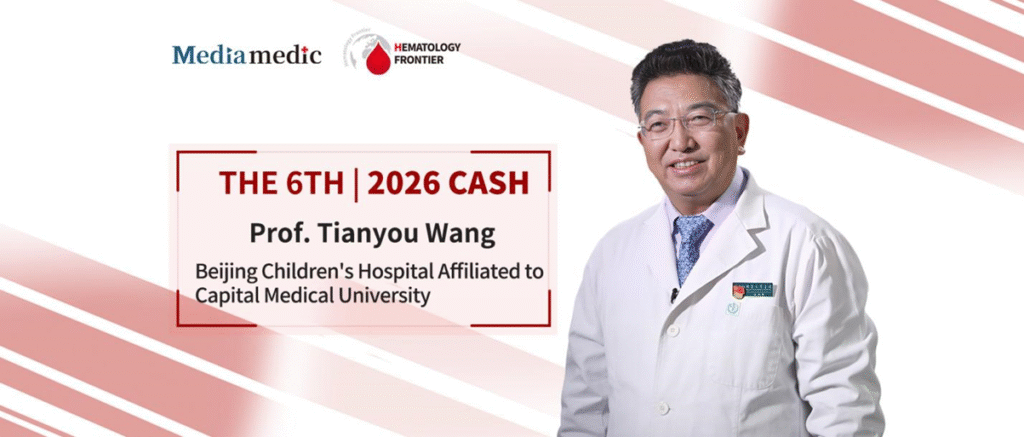
CASH 2026 | Prof. Wang Tianyou: Forty Years of Change in China’s Pediatric Disease Spectrum and Strategic Responses

With the dawn of the new year, Tianjin once again became a hub for academic exchange. From January 9 to 11, 2026, the 6th China Annual Conference on the Development of Hematology (CASH) was grandly held in Tianjin. Bringing together leading experts in hematology from China and abroad, the conference focused on disciplinary frontiers and national health strategies, fostering in-depth discussions on the latest research advances and future directions.
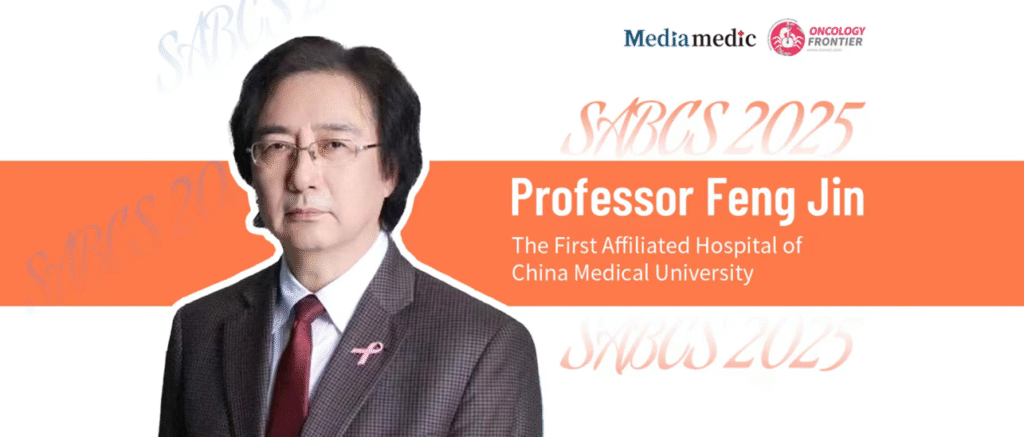
SABCS Expert Commentary |Professor Jin Feng: Deep Learning Accurately Predicts Late Distant Metastasis in HR-Positive Early Breast Cancer and Guides Decisions on Extended Endocrine Therapy

SABCS Expert Commentary |Professor Jin Feng: Deep Learning Accurately Predicts Late Distant Metastasis in HR-Positive Early Breast Cancer and Guides Decisions on Extended Endocrine Therapy

At the 2025 San Antonio Breast Cancer Symposium (SABCS 2025), a study based on data from the NSABP B-42 and TAILORx trials (Abstract No. RF3-07) reported the development and validation of a multimodal, multitask deep learning model (Clarity BCR). By integrating routine digital pathology images with key clinical variables, this model accurately predicts the risk of late distant recurrence (late DR) in patients with hormone receptor–positive (HR+) early breast cancer and effectively identifies those who may benefit from extended endocrine therapy (EET).
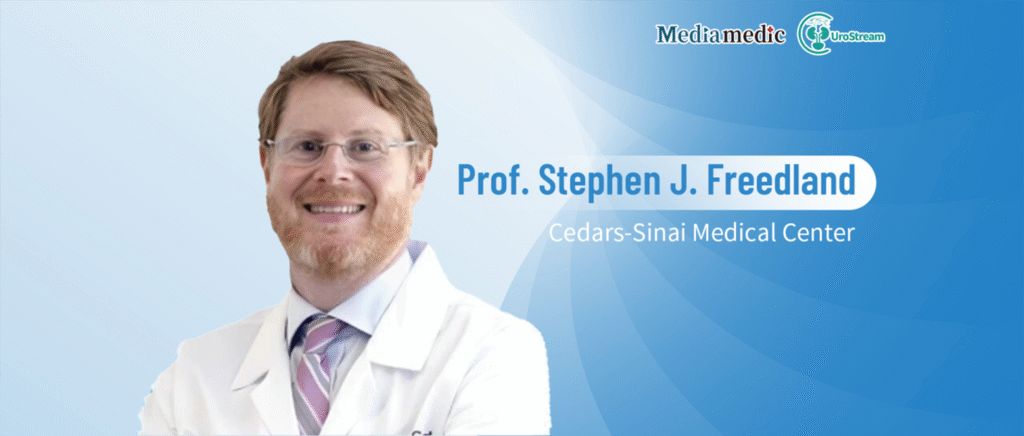
Professor Stephen J. Freedland: The EMBARK Study Opens a New Chapter of Intensified Therapy for High-Risk BCR Prostate Cancer

Professor Stephen J. Freedland: The EMBARK Study Opens a New Chapter of Intensified Therapy for High-Risk BCR Prostate Cancer

In the treatment pathway of prostate cancer, biochemical recurrence (BCR) represents a critical turning point. Especially for high-risk BCR patients with a short PSA doubling time, how to delay disease progression and improve overall survival (OS) has long been a major clinical concern. At the recent 15th Shanghai Urological Oncology Academic Conference, Oncology Frontier – UroStream invited Professor Stephen J. Freedland from Cedars-Sinai Medical Center to provide an in-depth interpretation of the EMBARK study, including its study rationale, clinical benefits, and individualized treatment strategies for high-risk BCR patients.
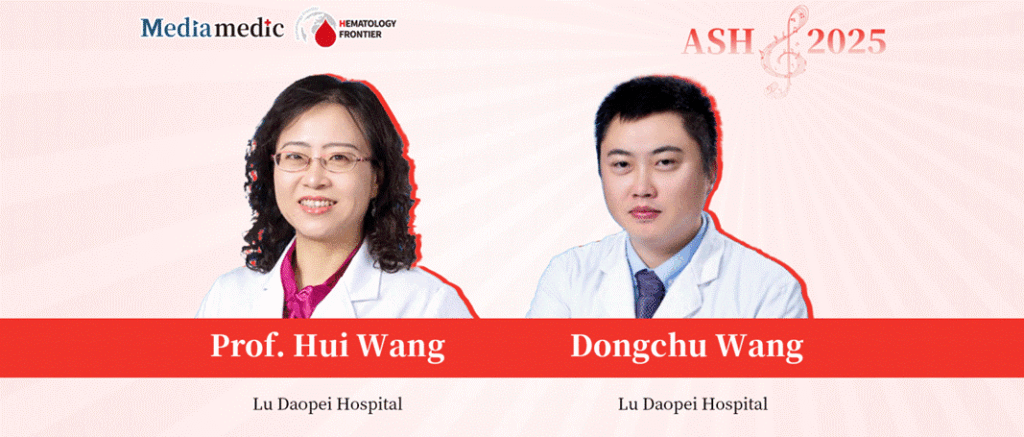
Voice of China at ASH |Professor Wang Hui / Wang Dongchu: From MRD Monitoring to Early CRS Identification—Unlocking New Paradigms in Immunologic Diagnosis and Therapy

Voice of China at ASH |Professor Wang Hui / Wang Dongchu: From MRD Monitoring to Early CRS Identification—Unlocking New Paradigms in Immunologic Diagnosis and Therapy

From December 6 to 10, 2025, the 67th Annual Meeting of the American Society of Hematology (ASH) was held in Orlando, USA. The meeting highlighted the latest advances in both clinical hematology and basic research, driving progress in the diagnosis and treatment of hematologic diseases as well as translational research.In this issue, we feature the research achievements of Professor Wang Hui’s team, covering cutting-edge technologies such as 16-color full-spectrum flow cytometry, a weighted cytokine scoring system, and other innovative approaches. These studies provide solid scientific evidence for early precise diagnosis, treatment response assessment, and timely clinical intervention, demonstrating the critical role of technological innovation in modern hematology. We warmly invite readers to engage in further discussion and exchange.